Tourism and Maritime Experience Earn You an RPL Diploma in Hobart
Hobart’s economy runs on people who work hard in tourism, hospitality, and maritime operations — but rarely stop to think their day-to-day experience could translate into a formal qualification. It can. Through Recognition of Prior Learning (RPL), Hobart professionals are converting years of on-the-job knowledge into nationally recognised diplomas, without sitting in a classroom or completing lengthy coursework.
Direct answer: Yes, tourism and maritime experience in Hobart can earn you an RPL diploma. The purpose of RPL assessment is to formally recognise skills and knowledge you already hold from paid work, volunteering, or informal training, converting them into a nationally recognised qualification under the Australian Qualifications Framework (AQF) — often within weeks, not years.
This matters because Hobart’s workforce is built on practical, hands-on experience. Tour guides, hospitality supervisors, ferry operators, port workers, and marine science support staff all develop management, safety, and leadership skills that traditional study pathways often ignore. Recognition of prior learning exists precisely to close that gap — turning recognition of prior experience into a certificate or diploma that opens doors to promotion, higher pay, and career mobility.
If you’ve spent years managing rosters, handling safety compliance, leading teams, or coordinating logistics in Hobart’s tourism or maritime sectors, you may already be eligible. Start with a free RPL eligibility assessment to find out where you stand before committing to anything.
What Is the Purpose of RPL Assessment for Hobart’s Tourism and Maritime Workers?
The purpose of RPL assessment is to formally verify that your existing skills and knowledge meet the requirements of a nationally recognised qualification. Rather than forcing you to relearn what you already know, RPL assesses documented evidence of your workplace competence against the AQF standards for a specific certificate or diploma. This makes it particularly relevant for Hobart’s tourism and maritime industries, where skills are typically learned through direct experience rather than classroom instruction.
Consider a tourism operations supervisor in Hobart who has spent five years managing bookings, coordinating tour logistics, training new staff, and handling customer complaints. These responsibilities align closely with units of competency found in a Diploma of Leadership and Management. RPL assessment identifies these overlaps and builds a case, using real workplace evidence, to award the qualification without repeating the study you’ve effectively already completed on the job.
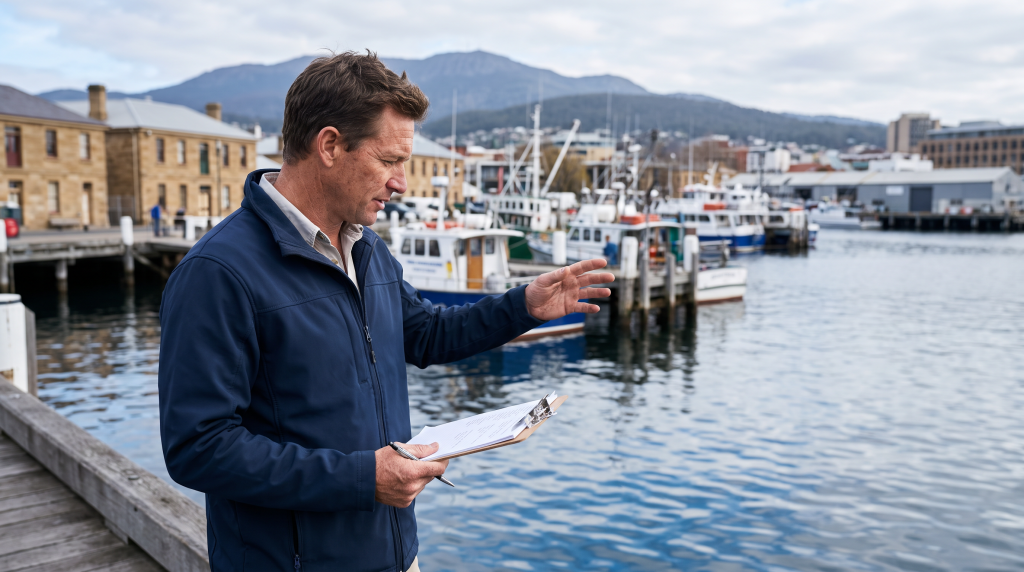
The same logic applies to maritime workers. A vessel operations coordinator, wharf supervisor, or marine logistics officer often manages compliance, safety procedures, and team coordination on a daily basis. These are transferable, assessable skills. RPL assessment exists to ensure that experience is not wasted simply because it wasn’t gained inside a training room.
Ultimately, the purpose of RPL assessment is fairness and efficiency. It prevents skilled workers from being locked out of career progression simply because they lack a piece of paper. It also benefits employers and the broader Tasmanian economy, ensuring the workforce is formally credentialed to industry standards recognised right across Australia.
Entity Definition: What Is Recognition of Prior Learning in the Australian VET System?
Recognition of Prior Learning (RPL) is a formal assessment process within Australia’s Vocational Education and Training (VET) system. It evaluates an individual’s existing skills, knowledge, and experience — gained through work, volunteering, or informal training — against the requirements of a nationally recognised qualification under the AQF. RPL is regulated by the Australian Skills Quality Authority (ASQA) and delivered by Registered Training Organisations (RTOs).
Anyone with relevant industry experience, including tourism, maritime, government, health, or emergency services workers, may qualify. Assessment relies on documented workplace evidence rather than exams or coursework. In Hobart, RPL services such as those delivered by 3CIR — under Asset College (RTO 31718) — allow professionals to gain qualifications, such as a Diploma of Leadership and Management, entirely online, typically within weeks.
How Does Recognition of Prior Learning Turn Real-World Experience into a Diploma?
Recognition of prior learning works by mapping your existing capabilities against the specific units of competency required for a diploma. This is a structured, evidence-based process — not a shortcut or informal favour. Assessors compare what you can already demonstrate against what the AQF-aligned qualification demands.
The process begins with a free eligibility check, where your work history and role responsibilities are reviewed against a relevant qualification. From there, an assessor identifies which units of competency you can likely satisfy through existing evidence. This step alone often reveals that Hobart professionals are far closer to a diploma than they realised.
Evidence gathering follows. This typically includes position descriptions, rosters, incident reports, training records, references, and any workplace documentation demonstrating your skills in practice. For a tourism supervisor, this might include customer service logs and staff training records. For maritime workers, it may include safety compliance reports, vessel logs, or supervisory sign-offs.
Once evidence is submitted, a qualified assessor reviews it against the AQF criteria. If gaps exist, you may be asked to provide additional evidence or complete a short task to demonstrate a specific skill. This is far less demanding than traditional coursework — it’s about proving what you already know, not learning something new.
The result is a nationally recognised qualification issued by an RTO and recorded against your Unique Student Identifier (USI). This is not a watered-down or “recognition-only” certificate — it carries the same authority as one earned through years of classroom study, because it meets the same AQF benchmarks.
Why Are Tourism and Maritime Skills So Valuable Under Recognised Prior Learning in Australia?
Recognised prior learning australia is particularly well-suited to tourism and maritime workers because these industries demand practical, high-stakes skills daily. Tourism supervisors manage people, safety, and customer experience simultaneously. Maritime workers operate under strict compliance and safety frameworks, often with direct responsibility for the well-being of others. Both sectors produce highly transferable, diploma-relevant competencies.
Hobart’s tourism sector, bolstered by Tasmania’s growing visitor economy, Antarctic and marine science activity, and cruise ship traffic, has created a workforce skilled in logistics, hospitality management, and customer service leadership. These are core components of qualifications such as the Diploma of Leadership and Management and the Diploma of Project Management — both highly relevant to career progression in Hobart.
Maritime experience is equally valuable. Port operations, vessel logistics, and marine safety compliance require the same skill sets assessed in leadership, WHS, and operational management qualifications. Workers in these roles frequently already meet or exceed the competency requirements for a diploma-level qualification, simply through years of hands-on responsibility.
The Australian labour market increasingly rewards formal qualifications, even when the underlying skills were learned informally. According to the Australian Bureau of Statistics (Employee Earnings, August 2025), Australians holding a diploma earn a median of $1,462 per week compared to $1,000 for those without a post-school qualification — a gap exceeding $24,000 annually. For Hobart’s tourism and maritime workers, formalising existing skills through RPL is one of the fastest ways to close that earnings gap.
What Career and Salary Benefits Come from Turning Recognition of Prior Experience into a Formal Qualification?
Recognition of prior experience delivers measurable career and financial benefits when converted into a formal qualification. The most immediate benefit is eligibility for roles that specify a diploma or certificate as a minimum requirement — positions that may otherwise be closed off despite years of relevant, hands-on experience.
Salary data supports this. Tasmania’s average full-time weekly earnings sit at $1,821 (ABS Average Weekly Earnings, November 2025), while national professional, scientific, and technical services earnings average $2,053 per week. Holding a diploma positions Hobart tourism and maritime workers to compete for higher-paying supervisory and management roles, rather than remaining capped at entry-level pay bands despite demonstrated capability.
Beyond salary, a formal qualification improves job security and mobility. A Diploma of Leadership and Management or a Diploma of Project Management is transferable across industries and states, making your Hobart-based tourism or maritime experience portable and opening doors interstate or in adjacent sectors such as government or logistics.
There’s also a confidence dividend. Many workers underestimate their own capabilities until an assessor formally validates them against national standards. Turning recognition of prior experience into a diploma provides documented proof — for promotion panels, tender applications, or interstate job applications — that your skills meet a nationally benchmarked standard, not just your employer’s internal expectations.
Is Recognition of Previous Learning Properly Regulated and Nationally Recognised in Australia?
Yes, recognition of previous learning is tightly regulated and fully nationally recognised across Australia. RPL is not an informal or discretionary process — it operates within the same regulatory framework governing all vocational education and training (VET) delivery in the country.
The Australian Skills Quality Authority (ASQA) regulates RTOs and ensures RPL assessments meet strict evidentiary and quality standards. This means an RPL-issued diploma must satisfy the exact same competency requirements as one earned through classroom study. There is no shortcut around quality — only a faster, evidence-based pathway to the same outcome.
Qualifications gained through RPL sit within the Australian Qualifications Framework (AQF), Australia’s national policy for regulated qualifications from Certificate I through to Doctoral level. You can verify any qualification’s national recognition status directly on training.gov.au, the official government register of RTOs and accredited courses.
Every RPL qualification is also recorded against your Unique Student Identifier (USI), a lifelong reference number ensuring your qualification is permanently verifiable by employers, other RTOs, or government agencies. This regulatory rigour is precisely why recognition of previous learning carries genuine weight — it is not a “participation certificate,” but a fully accredited outcome recognised Australia-wide.
How Do Hobart Professionals Use Workplace Evidence to Prove Recognition of Prior Learning?
Workplace evidence forms the backbone of any successful RPL application. Hobart professionals typically draw from existing documentation already sitting in their personnel files, rather than creating anything new from scratch. This is one of the most misunderstood aspects of the process — most people already hold everything they need.
Position descriptions and employment contracts are a strong starting point, as they outline formal responsibilities and the scope of authority. Rosters and staff schedules demonstrate supervisory and organisational competence, which is particularly relevant for tourism operations and hospitality leadership roles. Incident reports and safety compliance records are especially valuable for maritime workers, as they reflect direct experience managing risk and regulatory obligations.
References and performance reviews from supervisors add credibility, confirming that your day-to-day conduct aligns with the standard expected at the diploma level. Training certificates, toolbox talks, and internal competency sign-offs — even informal ones — can also count as supporting evidence, particularly when demonstrating specific technical or safety-related skills.
For Hobart’s maritime sector, logbooks, vessel handover reports, and compliance audits often provide the clearest evidence trail. Tourism professionals frequently rely on customer service records, training documentation for junior staff, and operational reports demonstrating logistics and coordination skills. An experienced assessor knows exactly what to look for and will guide you through gathering the right documents rather than leaving you guessing.
Why Is 3CIR the Leading Provider for RPL Diplomas in Hobart’s Tourism and Maritime Sectors?
3CIR has built a reputation as a trusted, veteran-owned Registered Training Organisation that delivers RPL pathways to workers across Australia, including in Hobart’s tourism and maritime industries. Training is delivered under a third-party arrangement with Asset College (RTO 31718), ensuring every qualification issued is fully compliant and nationally recognised.
3CIR’s process is built specifically around real Australian workforce experience. Rather than generic online courses, the assessment pathway is tailored to industries like tourism, hospitality, government, health, and maritime operations — sectors that dominate Hobart’s economy. This industry-specific approach means assessors understand the evidence unique to your role, rather than applying a one-size-fits-all framework.
Being veteran-owned and veteran-operated gives 3CIR a distinct perspective on translating practical, real-world experience into formal recognition — a philosophy that extends naturally to tourism and maritime professionals whose skills were also built through direct, hands-on responsibility rather than classroom study.
3CIR also holds a 5.0-star rating across verified Google and independent reviews, reflecting consistent student outcomes and support throughout the assessment journey. With over 37 qualifications available — from Certificate II through to Graduate Diploma level — Hobart professionals have a genuine pathway to formal recognition, backed by a provider that understands both the regulatory requirements and the practical realities of their industry.
What Makes 3CIR’s RPL Process Faster, More Flexible and More Affordable Than Traditional Study?
Speed is one of the most significant advantages of 3CIR’s RPL model. Most Hobart professionals complete their qualification in a matter of weeks, compared to the six to twelve months typically required for traditional coursework. This is because RPL assesses existing competency rather than teaching new content from scratch.
Flexibility is built into every stage. The entire process is delivered online, meaning Hobart-based tourism and maritime workers can complete assessments around shift work, seasonal demands, or irregular rosters — a critical factor for industries where standard nine-to-five study simply isn’t realistic.
Affordability is equally compelling. Pricing is fixed and transparent, starting from $495 for a Certificate II and reaching $3,285 for a Graduate Diploma. A Certificate IV sits at $1,035, while a Diploma — the most relevant qualification for many tourism and maritime supervisors — is priced at $1,350. Flexible payment options, including Afterpay, Klarna, Zip, GoCardless, and DebitSuccess, make the investment manageable without high upfront costs.
Compared to traditional study, which often demands thousands of dollars and a year or more of your time, RPL offers a faster, evidence-based route to the exact same AQF-recognised outcome — without sacrificing quality or national recognition.
How Does 3CIR Align with Tasmania’s Growing Workforce and Industry Needs?
Tasmania’s economy is diversifying rapidly, with tourism, health, government, and maritime/Antarctic science sectors all expanding. The Royal Hobart Hospital, University of Tasmania (UTAS), and Hobart’s growing role as an Antarctic gateway have created strong demand for formally qualified supervisors, managers, and safety-compliant operators across multiple industries.
3CIR’s RPL pathways align directly with this workforce shift. As Hobart’s tourism sector grows — driven by cruise ship arrivals, Antarctic expedition support, and hospitality expansion — demand for qualified leadership and management professionals is increasing in parallel. A Diploma of Leadership and Management or Diploma of Project Management positions workers to step into these expanding roles with formal, verifiable credentials.
Maritime and logistics operations supporting Tasmania’s Antarctic and marine science sector also require personnel who can demonstrate competence in compliance, safety, and operational management. RPL provides a fast, credible pathway for experienced maritime workers to meet these formal requirements without stepping away from their careers to study full-time.
By offering a flexible, online, evidence-based RPL model, 3CIR’s RPL services directly support Tasmania’s need for a formally qualified, mobile workforce — helping close skills gaps without forcing experienced workers to restart their careers from the classroom.
Your Pathway: What Is RPL, Who Qualifies, and How Do You Get Started?
Recognition of Prior Learning is 3CIR’s flagship service, designed to convert your existing work experience into a nationally recognised qualification without traditional study. If you’ve worked in tourism, hospitality, maritime operations, government, or health in Hobart, you likely already qualify.
Who qualifies: Anyone with at least two to three years of relevant workplace experience, supported by documentation such as position descriptions, training records, or supervisor references, is typically eligible for RPL assessment.
The process:
- Free eligibility check — a quick review of your role and experience against a relevant qualification.
- Expert assessment — a qualified assessor maps your experience against AQF units of competency.
- Evidence gathering — you supply workplace documentation with guided support from 3CIR.
- Certification — your nationally recognised qualification is issued under Asset College (RTO 31718).
Most Hobart professionals complete this process in weeks. Start your free RPL assessment with 3CIR today to find out exactly which qualification your experience already supports.
How Do Veterans and Emergency Services Workers in Hobart Benefit from 3CIR’s RPL Pathways?
3CIR is proudly veteran-owned and veteran-operated, giving it a unique understanding of how military and emergency services experience translates into civilian qualifications. ADF veterans transitioning out of service often hold leadership, logistics, and safety management experience directly comparable to civilian diploma-level competencies — particularly relevant to Hobart’s maritime and government sectors.
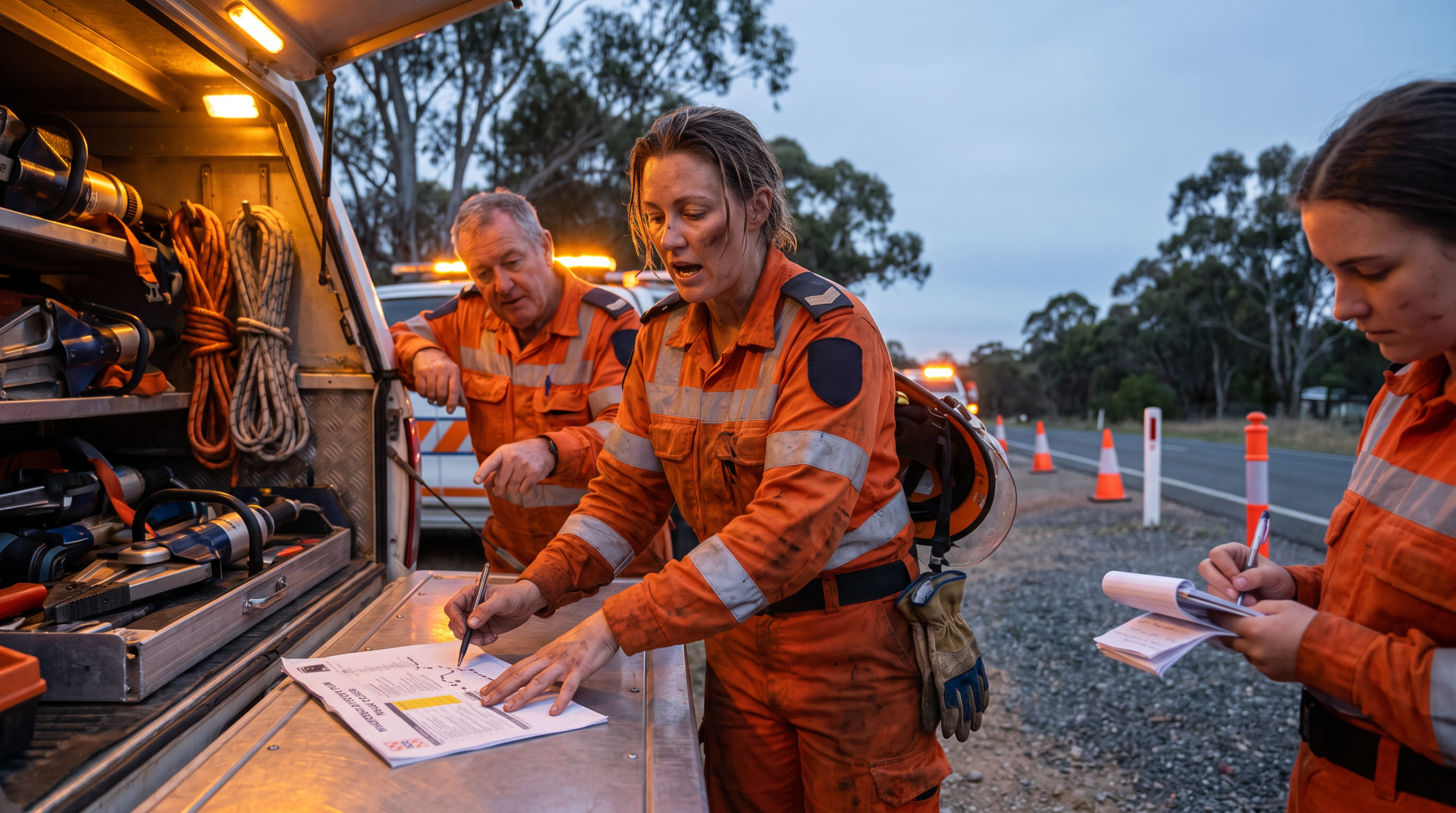
Emergency services personnel, including police, ambulance, and fire and rescue workers, frequently manage teams, coordinate incidents, and enforce compliance under pressure — skills that map directly onto qualifications like the Diploma of Leadership and Management or WHS-related certificates. RPL allows this experience to be formally recognised without requiring a return to full-time study.
3CIR offers a 25% discount for current and former defence and emergency services personnel, reflecting its commitment to supporting career transition for those who have served. This makes formal qualifications even more accessible for veterans and emergency workers relocating to or already based in Hobart.
For those preferring an in-person option, 3CIR also offers face-to-face training in Brisbane, complementing its Australia-wide online RPL model. Whether you’re a veteran transitioning to a Tasmanian maritime role or an emergency services worker moving into tourism operations management, 3CIR’s pathway is built to recognise the leadership and discipline you’ve already demonstrated in service.
Frequently Asked Questions About RPL Diplomas in Hobart
What is RPL and how does it work in Australia?
RPL, or Recognition of Prior Learning, formally assesses your existing skills and experience against the requirements of a nationally recognised qualification. It works by reviewing workplace evidence — such as job descriptions, reports, and training records — against AQF competency standards, without requiring you to complete traditional coursework.
Can tourism and maritime experience really count towards a diploma?
Yes, tourism and maritime experience regularly qualify for RPL diplomas. Supervisory, safety, logistics, and customer service responsibilities in these industries closely align with units of competency in qualifications such as the Diploma of Leadership and Management, making them highly assessable through RPL.
How long does it take to get a diploma through RPL?
Most Hobart professionals complete their RPL diploma within a few weeks. This is significantly faster than traditional study, which typically takes six to twelve months, because RPL assesses existing skills rather than teaching new content.
Is an RPL qualification nationally recognised?
Yes, RPL qualifications are fully nationally recognised under the Australian Qualifications Framework. They are regulated by ASQA and issued by RTOs, meaning they carry the same recognition as qualifications earned through traditional classroom study.
How much does an RPL diploma cost with 3CIR?
3CIR’s RPL pricing is fixed and transparent, with a Diploma costing $1,350. Certificate II qualifications start at $495, while a Graduate Diploma costs $3,285, with flexible payment options, including Afterpay and Zip.
Do ADF veterans get a discount on RPL qualifications?
Yes, 3CIR offers a 25% discount for current and former defence and emergency services personnel. This reflects 3CIR’s veteran-owned status and its commitment to supporting career transition for those leaving service.
What evidence do I need for an RPL assessment?
You typically need workplace documentation such as position descriptions, rosters, incident reports, training certificates, and supervisor references. Most people already have sufficient evidence in their existing employment records, so there’s no need to create anything new.
Can emergency services experience count towards a qualification?
Yes, emergency services experience frequently qualifies for RPL. Incident coordination, team leadership, and compliance management skills developed in police, ambulance, or fire and rescue roles align closely with leadership, WHS, and management diplomas.
Is 3CIR a legitimate and trusted RTO?
Yes, 3CIR delivers training under a third-party arrangement with Asset College (RTO 31718), a nationally registered training organisation regulated by ASQA. 3CIR holds a 5.0-star rating across verified Google and independent reviews from real Australian students.
What qualifications can I get through RPL with 3CIR?
3CIR offers over 37 qualifications through RPL, including the Diploma of Leadership and Management, Diploma of Project Management, and Certificate IV in Cyber Security. A free eligibility check will confirm which qualification best matches your experience.
Take the Next Step Towards Your RPL Diploma in Hobart
Your tourism or maritime experience in Hobart may already meet the standard for a nationally recognised diploma — the only step remaining is formal assessment. With RPL, there’s no need to pause your career or invest months into study you don’t need.
Start with a free RPL eligibility assessment to find out exactly where your experience stands. Alternatively, enquire now or call 3CIR directly to speak with a qualifications specialist about your pathway. Backed by Asset College (RTO 31718), a 5.0-star reputation, and a veteran-owned commitment to genuine career recognition, 3CIR is Hobart’s trusted partner for turning real-world experience into a formal, nationally recognised qualification.
Watch Our Course Information Videos
Learn more about relevant qualifications and career pathways:
- Leadership: https://youtu.be/7k57ygLXncA
- HR: https://youtu.be/jLUKTpqOOfU
- WHS: https://youtu.be/6QHTzXlE5C0
- Security: https://youtu.be/d20nwpEot8Q
- Business: https://youtu.be/8P_VySE0zjQ
- Marketing: https://youtu.be/VdQxJKmgZfs
- Government: https://youtu.be/PV_knsJnb5E
- Project Management: https://youtu.be/kz7CyEsRNyg