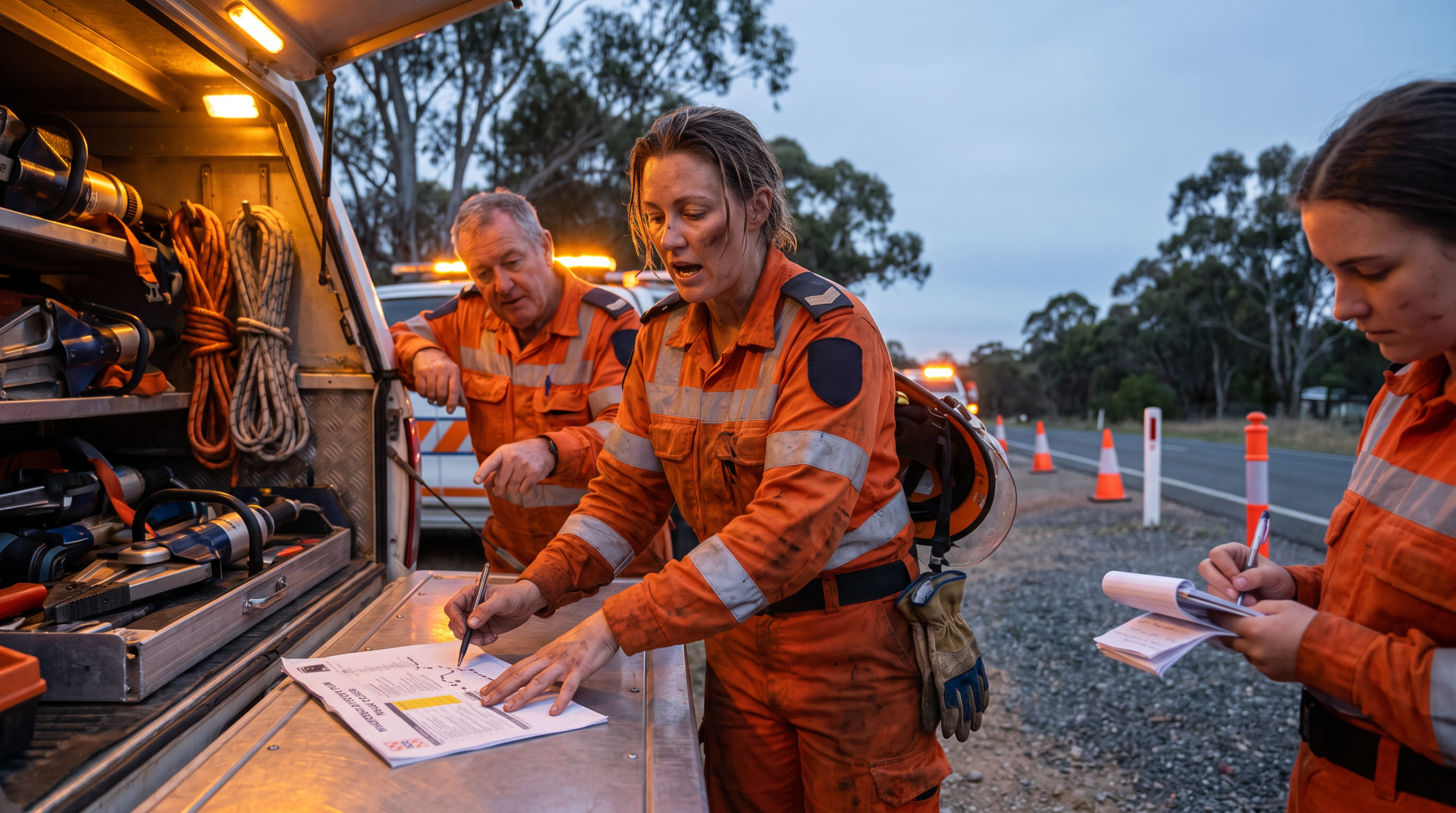

Recognition & Advancement: How 3CIR’s RPL Empowers Emergency Services Personnel
Recognition of Prior Learning (RPL) allows emergency services personnel to convert their real-world experience into nationally recognised qualifications without traditional classroom training. This assessment process acknowledges skills gained through work experience, enabling faster career advancement and formal validation of expertise in critical emergency response roles.
Emergency Services Recognition of Prior Learning
Emergency services Recognition of Prior Learning is a formal assessment process within Australia’s Vocational Education and Training (VET) system that evaluates and recognises the skills, knowledge, and competencies that emergency services personnel have acquired through their professional experience, on-the-job training, and practical application in real-world emergency situations. This process allows firefighters, paramedics, police officers, SES volunteers, and other emergency responders to obtain nationally recognised qualifications aligned with the Australian Qualifications Framework (AQF) without completing traditional classroom-based training programs. The RPL pathway acknowledges that emergency services professionals often possess extensive practical knowledge and technical expertise that meets or exceeds the requirements of formal qualifications, making it an efficient and relevant method for professional development and career advancement within the emergency services sector.
How 3CIR’s RPL Process Transforms Emergency Services Experience
Emergency services require continuous learning and skill validation to maintain operations effectively, which makes skill validation paramount. Recognising the expertise and experience of personnel working in this area, 3CIR provides emergency services personnel with a unique opportunity through Recognition of Prior Learning (RPL). RPL allows emergency services personnel to gain formal qualifications that advance their careers while also validating that their skills remain up-to-date and recognised officially.
Recognition of Prior Learning (RPL) is an assessment process that acknowledges and recognises skills and knowledge individuals have obtained through work experience, informal training or life experience. Instead of traditional classroom-based learning methods such as textbook learning methods, RPL enables emergency services personnel to convert real-world experience into formal qualifications more quickly, saving them valuable time and resources.
The comprehensive RPL process at 3CIR involves detailed portfolio development, competency mapping, and professional assessment to ensure your emergency services experience aligns with industry training packages. This approach recognises that emergency services personnel often possess skills that exceed formal qualification requirements, making RPL an ideal pathway for career advancement.
Start your emergency services RPL assessment today and discover how your experience translates into formal qualifications.
What Industries Benefit Most from Emergency Services RPL?
Emergency services encompass a broad range of specialised roles and industries that benefit significantly from RPL assessment. Fire and rescue services personnel gain recognition for their technical rescue capabilities, hazardous materials handling, and incident command experience. Police officers can leverage their investigative skills, conflict resolution expertise, and community engagement experience for qualifications in security, business, or public administration.
Paramedics and emergency medical technicians benefit from RPL in health services, training and assessment, and leadership qualifications. State Emergency Service (SES) volunteers often possess extensive project management, logistics coordination, and team leadership skills valuable across multiple industries.
Aviation emergency services, maritime rescue, and mining emergency response teams possess highly specialised technical skills that translate effectively into nationally recognised qualifications through the RPL process. These professionals often have experience in risk assessment, safety management systems, and emergency planning that meets industry standards across multiple sectors.
Why Choose 3CIR for Emergency Services RPL Assessment?
3CIR specialises in RPL assessment for emergency services personnel, understanding the unique challenges and opportunities within this sector. Our experienced assessors have extensive backgrounds in emergency services operations, ensuring they understand the practical application of skills and knowledge in real-world emergency situations.
The assessment process is designed to accommodate the shift work and operational commitments common in emergency services. Flexible scheduling, online portfolio development, and streamlined assessment procedures ensure minimal disruption to your operational duties while maximising the recognition of your professional expertise. Find out more about how to RPL for emergency services.
3CIR’s partnership with Asset College (RTO 31718) ensures all qualifications meet ASQA standards and align with industry training packages. This partnership provides access to comprehensive qualification pathways across business, leadership, project management, security, and workplace health and safety domains.
How Does the Emergency Services RPL Process Work at 3CIR?
The RPL process begins with a comprehensive consultation to identify your career goals and assess the relevance of your emergency services experience to available qualifications. Our team conducts skills gap analysis to determine which units of competency you can achieve through RPL and which may require additional training or assessment.
Portfolio development is a critical component where you document your experience, training records, performance reviews, and evidence of competency application in emergency services contexts. This documentation is mapped against the relevant training package units to demonstrate how your experience meets the required performance criteria.
Professional assessment involves review of your portfolio, competency conversations with qualified assessors, and where necessary, practical demonstration of skills. The assessment process is thorough but efficient, designed to recognise your expertise while maintaining the integrity of the qualification standards.
Upon successful completion, you receive nationally recognised qualifications that are portable across Australia and recognised by employers, professional bodies, and government agencies. These qualifications can support career advancement, salary progression, and professional development opportunities.
What Qualifications Are Available Through Emergency Services RPL?
Emergency services personnel can access qualifications across multiple AQF levels depending on their experience and career aspirations. Certificate IV in Leadership and Management recognises supervisory and team leadership capabilities developed through emergency services roles. Diploma level qualifications in Project Management acknowledge complex incident management and resource coordination experience.
Workplace Health and Safety qualifications are particularly relevant for emergency services personnel who have experience in hazard identification, risk assessment, and safety management systems. Training.gov.au provides detailed information about available qualifications and their industry applications.
Business qualifications recognise skills in operational planning, resource management, and stakeholder engagement that are common in emergency services leadership roles. Government qualifications acknowledge experience in policy implementation, community engagement, and regulatory compliance.
Security and risk management qualifications leverage emergency services experience in threat assessment, crisis response, and protective security measures. These qualifications are highly valued in private sector security, government agencies, and critical infrastructure protection roles.
Recognition of Prior Learning for Emergency Services Personnel
Recognition of Prior Learning represents a transformative opportunity for emergency services personnel to gain formal recognition for their extensive practical experience and professional expertise. The RPL process acknowledges that emergency services professionals develop sophisticated skills through real-world application that often exceeds the theoretical knowledge taught in traditional training environments.
Emergency services personnel typically possess competencies in crisis management, decision-making under pressure, team leadership, risk assessment, and technical expertise that are highly transferable across industries. RPL assessment evaluates these competencies against national standards, providing formal recognition that supports career mobility and professional development. For more information, RPL for fire and rescue personnel.
The evidence-based assessment approach ensures that your emergency services experience is thoroughly evaluated and appropriately recognised. This includes assessment of formal training completed through emergency services organisations, professional development activities, mentoring and coaching experience, and demonstrated competency in operational environments.
RPL outcomes provide emergency services personnel with credentials that are recognised by employers, support salary negotiations, and create pathways for career advancement both within and outside the emergency services sector. The formal qualifications obtained through RPL also provide a foundation for further professional development and higher-level qualifications.
Begin your RPL journey and transform your emergency services experience into recognised qualifications that advance your career prospects.
Veterans and Emergency Services RPL Benefits
3CIR recognises the significant overlap between military service and emergency services experience, particularly for Australian Defence Force (ADF) veterans who transition into emergency services roles. Many veterans possess transferable skills in leadership, logistics, crisis management, and technical expertise that are highly valued in emergency services contexts.
Current and former defence personnel, along with emergency services personnel, receive a 25% discount on all RPL assessment services at 3CIR. This recognition acknowledges the service commitment and professional expertise that veterans and emergency services personnel bring to their communities.
The veteran transition pathway through RPL provides formal recognition for military experience while acknowledging additional skills developed in emergency services roles. This comprehensive assessment ensures maximum recognition for combined military and emergency services experience, creating stronger qualification outcomes and enhanced career prospects.
Veterans in emergency services often possess unique combinations of technical skills, leadership experience, and operational expertise that are highly sought after in both public and private sectors. RPL assessment captures this diverse experience base, providing qualifications that reflect the full scope of professional capabilities.
The flexible assessment approach accommodates the diverse backgrounds of veterans in emergency services, recognising that career paths often involve multiple roles, specialisations, and professional development experiences that contribute to overall competency and expertise.
Frequently Asked Questions About Emergency Services RPL
What is Recognition of Prior Learning for emergency services personnel?
Recognition of Prior Learning (RPL) is an assessment process that evaluates and formally recognises the skills, knowledge, and competencies that emergency services personnel have gained through their work experience, training, and practical application in emergency response situations, converting this experience into nationally recognised qualifications without traditional classroom study.
How long does the RPL assessment process take for emergency services?
The RPL assessment process typically takes 4-8 weeks depending on the complexity of the qualification and the comprehensiveness of your evidence portfolio. 3CIR works with emergency services personnel to accommodate shift patterns and operational commitments, ensuring minimal disruption to your professional duties while maintaining thorough assessment standards.
What evidence do I need for emergency services RPL assessment?
You need to provide documented evidence of your emergency services experience including training certificates, performance reviews, duty statements, incident reports, project outcomes, and testimonials from supervisors or colleagues. 3CIR provides comprehensive guidance on portfolio development to ensure you present the strongest possible evidence base for assessment. You can start your free RPL assessment to find out what qualifications match your experience.
Can volunteer emergency services experience count towards RPL?
Yes, volunteer emergency services experience through organisations like SES, rural fire services, or volunteer rescue services can contribute significantly to RPL assessment. The assessment focuses on demonstrated competencies and practical application of skills regardless of whether the experience was gained through paid employment or volunteer service.
What qualifications can firefighters achieve through RPL?
Firefighters can achieve qualifications in Leadership and Management, Workplace Health and Safety, Project Management, Training and Assessment, and Business depending on their experience level and career aspirations. Fire service experience in incident command, technical rescue, hazmat response, and community education provides strong foundations for various qualification pathways.
How does RPL benefit police officers seeking career advancement?
Police officers benefit from RPL through formal recognition of their investigative skills, conflict resolution expertise, community engagement experience, and leadership capabilities. These competencies translate into qualifications that support career advancement within policing, transitions to private security, consulting roles, or government positions requiring similar skill sets.
Are paramedic qualifications available through emergency services RPL?
Paramedics can achieve qualifications in Training and Assessment, Leadership and Management, and Health Services through RPL assessment of their clinical experience, patient care expertise, mentoring responsibilities, and operational leadership roles. These qualifications support career progression in clinical education, management, and specialised health services roles.
What ADF emergency services experience qualifies for RPL assessment?
ADF personnel with emergency response experience in roles such as military police, combat engineers, medical corps, fire services, or rescue operations possess valuable competencies for RPL assessment. Military emergency response training, incident management experience, and technical rescue capabilities are highly relevant for civilian emergency services qualifications.
How much does emergency services RPL cost at 3CIR?
RPL costs vary depending on the qualification level and complexity of assessment required. Current and former defence personnel and emergency services personnel receive a 25% discount on all RPL services. Contact 3CIR for detailed pricing information and to discuss payment options that accommodate your circumstances.
Can emergency services RPL lead to higher education pathways?
Yes, nationally recognised qualifications obtained through RPL can provide pathways to higher education through recognition of prior learning at university level or advanced diploma programs. These qualifications also support professional development through continuous learning opportunities and specialised certification programs relevant to emergency services career advancement.
Ready to advance your emergency services career through formal qualification recognition? Complete your RPL assessment application today and discover how 3CIR can transform your professional experience into nationally recognised credentials that open new career opportunities.
Professional Development Videos for Emergency Services Personnel
Enhance your professional development with these comprehensive video resources covering key competency areas relevant to emergency services careers:
- Leadership: https://youtu.be/7k57ygLXncA
- HR Management: https://youtu.be/jLUKTpqOOfU
- WHS Compliance: https://youtu.be/6QHTzXlE5C0
- Security Operations: https://youtu.be/d20nwpEot8Q
- Business Management: https://youtu.be/8P_VySE0zjQ
- Marketing Strategy: https://youtu.be/VdQxJKmgZfs
- Government Relations: https://youtu.be/PV_knsJnb5E
- Project Management: https://youtu.be/kz7CyEsRNyg