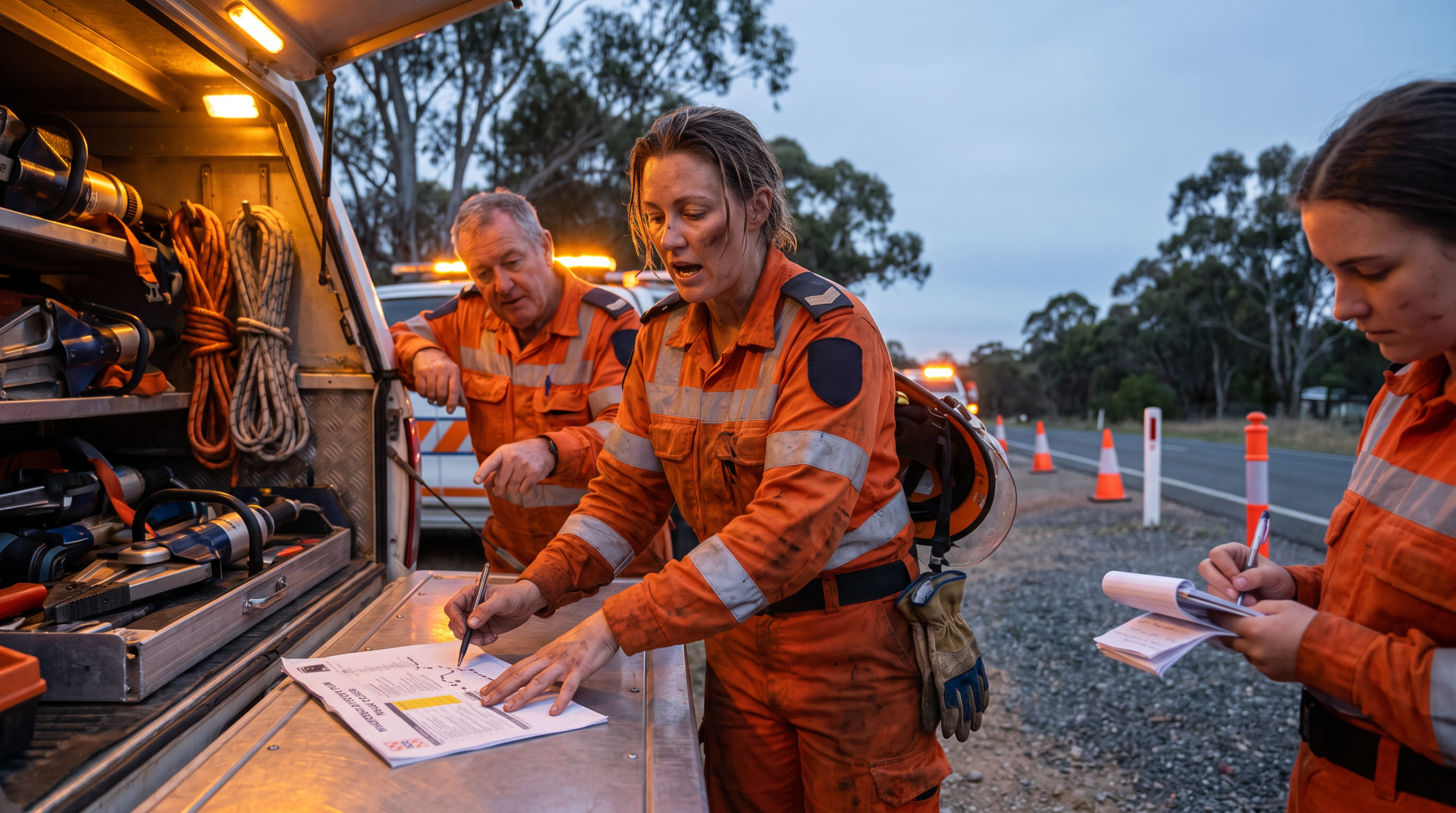

Emergency Services RPL: Transform Your Experience into Accredited Qualifications | 3CIR
Emergency services professionals can improve their real-world experience into nationally recognised qualifications through Recognition of Prior Learning (RPL), providing formal credentials that reflect their expertise and dedication.
Recognition of Prior Learning (RPL)
Recognition of Prior Learning (RPL) is a formal assessment process within Australia’s Vocational Education and Training (VET) system that acknowledges skills, knowledge, and competencies gained through work experience, life experiences, and informal learning. Regulated by the Australian Skills Quality Authority (ASQA) and aligned with the Australian Qualifications Framework (AQF), RPL enables individuals to receive credit towards nationally recognised qualifications without completing formal training. The process involves comprehensive evidence collection, competency mapping, and professional assessment to determine if an individual’s experience meets the required standards for specific units of competency or complete qualifications. For emergency services personnel, RPL represents a pathway to formalise decades of practical experience into accredited credentials recognised across Australia’s employment sectors.
How Emergency Services Experience Translates to Formal Qualifications
Australia is home to an exciting educational landscape, and 3CIR is on a transformative journey aimed at recognising our emergency service professionals and the tireless commitment they show every day. At 3CIR, we’ve witnessed their dedication, expertise and tireless commitment first-hand while understanding the value of their experiences and skills. So now, more than ever, these individuals must receive formal recognition for what they have accomplished on the ground.
Emergency services professionals possess invaluable skills developed through years of high-pressure situations, crisis management, and community service. Your experience in emergency response, incident command, risk assessment, and public safety operations represents substantial learning that deserves formal recognition. Through our emergency services RPL program, we focus on converting real-world experience to recognised qualifications through Recognition of Prior Learning (RPL). We serve emergency services professionals seeking to change their invaluable expertise into accredited learning pathways.
The Australian emergency services sector encompasses police, fire and rescue, ambulance, emergency management, and volunteer services. Each area requires specific competencies that align directly with nationally recognised training packages available through training.gov.au. Your operational experience, leadership roles, training delivery, and community engagement activities form the foundation for RPL assessment across multiple qualification levels.
Start your RPL assessment today and discover how your emergency services experience can become formal qualifications.
Why Choose 3CIR for Emergency Services Education?
More than just an institution, 3CIR is an essential partner in professional development for its members. We recognise the immense value in emergency service skills and experiences gained over time; therefore, our RPL process was created to recognise this. Providing an easy, respectful, and thorough assessment procedure transforms them into tangible assets such as an RPL Certificate.
As a veteran-owned Registered Training Organisation (RTO) based in Brisbane, Queensland, 3CIR understands the unique challenges and requirements of emergency services personnel. We deliver nationally recognised vocational qualifications online across Australia and face-to-face in Brisbane, under a third-party arrangement with Asset College (RTO 31718). Our specialisation in RPL for emergency services personnel ensures you receive assessment processes tailored to your operational background.
Our assessment methodology recognises that emergency services professionals develop competencies through practical application rather than traditional classroom learning. We evaluate your evidence against current training packages, ensuring your qualifications align with industry standards and employer requirements. The process includes comprehensive portfolio development, competency mapping, and professional assessment conducted by qualified assessors with emergency services backgrounds.
What Qualifications Are Available Through Emergency Services RPL?
Emergency services personnel can pursue qualifications across multiple sectors including public safety, business administration, leadership and management, training and assessment, and government services. Popular qualifications include Certificate III and IV in Government (Public Administration), Diploma and Advanced Diploma of Leadership and Management, Certificate IV in Training and Assessment, and various public safety qualifications.
Your emergency services experience often encompasses skills relevant to multiple training packages. For instance, incident command experience may contribute to leadership qualifications, while training delivery roles align with training and assessment credentials. Community engagement activities support government and public administration qualifications, and operational experience contributes to work health and safety credentials.
The Australian Qualifications Framework ensures all qualifications maintain consistent standards and recognition across industries. This means your emergency services RPL qualifications provide pathways to career advancement within emergency services or transition to other sectors requiring similar competencies. Find out more about how to emergency services RPL qualifications.
How Does the Emergency Services RPL Assessment Process Work?
The RPL assessment process begins with initial consultation to identify your experience and qualification goals. We conduct skills mapping to align your experience with relevant training package competencies, followed by evidence collection where you compile documentation demonstrating your skills and knowledge.
Evidence collection includes employment records, duty statements, training certificates, performance reviews, project reports, testimonials from supervisors or colleagues, and examples of work completed. Our assessors provide guidance on evidence requirements and acceptable documentation formats to ensure comprehensive portfolio development.
Professional assessment involves qualified assessors reviewing your evidence against competency standards. This may include written responses to assessment questions, practical demonstrations, or professional interviews. The assessment determines whether your experience meets the requirements for specific units of competency or complete qualifications.
Upon successful assessment, you receive your nationally recognised qualification issued through Asset College (RTO 31718). This credential provides the same recognition and portability as qualifications achieved through traditional training pathways.
What Career Benefits Do Emergency Services RPL Qualifications Provide?
Formal qualifications enhance your professional credibility and provide recognition for your expertise. Many emergency services positions require specific qualifications for advancement, and RPL provides an efficient pathway to meet these requirements without extensive additional training.
Your qualifications support career transitions within emergency services or to other sectors. Leadership and management qualifications are valued across all industries, while training and assessment credentials enable you to pursue training delivery roles. Government qualifications support transition to public sector positions outside emergency services.
Professional recognition through formal qualifications often leads to salary increases, promotion opportunities, and enhanced job security. Employers recognise the value of accredited skills and often provide preference to candidates with relevant qualifications during recruitment processes.
Recognition of Prior Learning for Emergency Services Professionals
Recognition of Prior Learning represents a fundamental shift in how we value professional experience. Rather than requiring emergency services professionals to complete formal training for skills they already possess, RPL acknowledges that substantial learning occurs through workplace experience and professional practice.
The RPL process is designed specifically for experienced professionals who have developed competencies through practical application. This approach recognises that emergency services personnel often possess skills at advanced levels through their operational roles, leadership responsibilities, and professional development activities.
Emergency services RPL is particularly valuable because your experience often encompasses multiple competency areas within single incidents or roles. Crisis management situations require leadership, communication, risk assessment, decision-making, and coordination skills simultaneously. RPL assessment recognises this integrated skill development and maps it appropriately across qualification requirements.
Our RPL specialists understand emergency services operations and can identify qualification opportunities you may not have considered. This expertise ensures maximum recognition for your experience and optimal qualification outcomes. For more information, RPL for fire and rescue personnel.
Quality assurance is maintained through ASQA regulations and continuous improvement processes. All RPL assessments meet national standards and undergo regular review to ensure currency and relevance to industry requirements.
Begin your RPL journey and develop your emergency services experience into formal qualifications.
Veterans and Emergency Services Personnel: Exclusive Benefits
3CIR proudly offers a 25% discount for all current and former defence and emergency services personnel, recognising your service and dedication to protecting Australian communities. This exclusive benefit applies to all RPL assessment services and qualification programs, making professional development more accessible for those who have served.
Our veteran-owned organisation understands the unique experiences and challenges faced by defence and emergency services personnel. This understanding informs our assessment processes, ensuring culturally appropriate recognition of military and emergency services experience.
The discount applies immediately upon verification of your service record. Simply provide evidence of your current or former emergency services or defence employment when applying for RPL assessment. This may include service certificates, employment records, or identification cards.
Many veterans transition to emergency services roles or pursue qualifications that complement their military experience. Our defence RPL program can work in conjunction with emergency services RPL to maximise qualification outcomes for those with both military and emergency services experience.
The veterans discount reflects our commitment to supporting those who have dedicated their careers to public service. We believe formal recognition of your experience should be accessible and affordable, removing barriers to professional development and career advancement.
Frequently Asked Questions About Emergency Services RPL
How long does the emergency services RPL assessment process take?
The RPL assessment timeline varies depending on qualification complexity and evidence availability, typically ranging from 4-12 weeks. Simple qualifications with comprehensive evidence may be completed faster, while complex qualifications requiring additional evidence or assessment may take longer.
What evidence do I need to provide for emergency services RPL?
Required evidence includes employment records, duty statements, training certificates, performance reviews, project documentation, and testimonials from supervisors or colleagues. Our assessors provide detailed evidence guidelines specific to your target qualification.
Can part-time or volunteer emergency services experience count towards RPL?
Yes, both paid and volunteer emergency services experience can contribute to RPL assessment. Volunteer experience is particularly valuable as it demonstrates commitment and often involves diverse responsibilities that align with multiple competency areas.
Do I need to attend face-to-face assessment sessions?
Most emergency services RPL assessments can be completed online through portfolio submission and virtual interviews. Face-to-face sessions may be required for specific practical demonstrations but can often be arranged locally through our assessment network. You can start your free RPL assessment to find out what qualifications match your experience.
What qualifications are most relevant for police officers seeking RPL?
Police officers commonly pursue qualifications in government (public administration), leadership and management, training and assessment, and work health and safety. The specific qualification depends on your role, experience level, and career goals.
How does emergency services RPL differ from traditional training?
RPL focuses on assessing existing competencies rather than delivering new training. You demonstrate your current skills and knowledge through evidence and assessment rather than attending classes or completing coursework.
Can I use emergency services RPL for university admission?
Many universities recognise RPL qualifications for admission purposes, particularly for programs in emergency management, public administration, or leadership studies. Check specific university requirements for your intended program.
What support is available during the RPL assessment process?
3CIR provides comprehensive support including initial consultation, evidence guidance, portfolio development assistance, assessment preparation, and ongoing communication throughout the process. Our assessors are available to answer questions and provide clarification.
Are there specific qualifications for fire and rescue personnel?
Fire and rescue personnel can pursue qualifications in public safety, emergency response coordination, leadership and management, training and assessment, and work health and safety. Many competencies developed in fire and rescue roles align with multiple qualification pathways.
How much does emergency services RPL cost with the veterans discount?
Costs vary depending on the qualification level and complexity, but all current and former emergency services personnel receive a 25% discount on standard fees. Contact us for specific pricing based on your qualification requirements and eligibility for additional concessions.
Ready to improve your emergency services experience into formal qualifications? Start your RPL assessment today and take the next step in your professional development journey.
Additional Learning Resources
Explore these comprehensive video resources covering key competency areas relevant to emergency services professionals:
- Leadership: https://youtu.be/7k57ygLXncA
- HR Management: https://youtu.be/jLUKTpqOOfU
- Work Health and Safety: https://youtu.be/6QHTzXlE5C0
- Security Operations: https://youtu.be/d20nwpEot8Q
- Business Administration: https://youtu.be/8P_VySE0zjQ
- Marketing and Communication: https://youtu.be/VdQxJKmgZfs
- Government Services: https://youtu.be/PV_knsJnb5E
- Project Management: https://youtu.be/kz7CyEsRNyg
Contact 3CIR today to discuss how your emergency services experience can become formally recognised qualifications through our specialised RPL programs. Begin your professional development journey with Australia’s leading emergency services education provider.