The RPL Method
Years spent supervising crews on the wharf or managing shift operations at a steelworks build skills that formal study rarely matches. The question many industrial workers ask is simple: can that experience actually be converted into a qualification? The answer is yes, and the RPL method is how it happens.
Direct Answer: Recognition of Prior Learning (RPL) is a nationally recognised assessment process that converts existing work experience — including steelworks and port operations skills — into a formal AQF qualification without requiring coursework or exams. It suits supervisors, team leaders, and operators who have practical experience but lack paper qualifications. The key benefit is a fast, evidence-based pathway to a diploma, typically completed within weeks rather than years.
Australia’s industrial and maritime sectors run on people who learned their trade on the job. Steelworks operators managing complex production lines and port supervisors coordinating cargo logistics often carry responsibilities equivalent to formally qualified managers, yet many have never held a certificate to prove it. The RPL method exists precisely to close that gap, using your work history as evidence rather than asking you to sit in a classroom again.
This article explains how the RPL method works, why steelworks and port skills are in demand, and how 3CIR’s RPL pathway — delivered under Asset College (RTO 31718) — gives industrial workers a compliant, transparent route to a nationally recognised diploma.
Ready to see if your experience qualifies? Start your free RPL assessment with 3CIR today and find out in minutes, not months.
What Is the RPL Method and How Does It Turn Experience Into a Diploma?
Recognition of Prior Learning is a formal assessment process recognised across the Australian Vocational Education and Training (VET) sector. It allows your existing skills, knowledge, and workplace experience to be mapped directly against the requirements of a nationally recognised qualification. Rather than completing new coursework, you provide evidence of what you already do.
The RPL method typically involves reviewing your role descriptions, gathering supporting documentation, and undergoing an assessment interview with a qualified assessor. Evidence can include position statements, references, incident reports, training records, and performance reviews. For a steelworks supervisor, this might mean documentation of rostering, safety compliance, and team management. For a port operations leader, it could include cargo scheduling records, WHS incident handling, and logistics coordination.
Once your evidence is assessed against the relevant units of competency, a qualified assessor determines whether you meet the standard. Where gaps exist, you may need to complete a small amount of additional evidence gathering rather than an entire unit of study. This makes the process efficient and targeted, rather than a blanket requirement to “start from scratch.”
The qualification issued through RPL carries the same standing as one earned through classroom study. It’s recorded against your Unique Student Identifier (USI) and appears on your official transcript exactly as any other nationally recognised credential would. This is not a shortcut in credibility — it’s a legitimate, ASQA-regulated assessment pathway built into the Australian Qualifications Framework (AQF) for exactly this purpose.
Understanding what RPL is and how it applies to your specific role is the first step. Every industry has its own competency mapping, and industrial and port work has clear alignment with qualifications like the Diploma of Leadership and Management and Diploma of Work Health and Safety.
Why Are Steelworks and Port Skills in High Demand Across Australian Industry?
Australia’s industrial and logistics sectors face a persistent skills shortage, particularly in supervisory and leadership roles. The Australian Bureau of Statistics has repeatedly flagged manufacturing and transport/logistics as sectors experiencing structural labour shortages, driven by an ageing workforce and insufficient pipeline of formally qualified leaders.
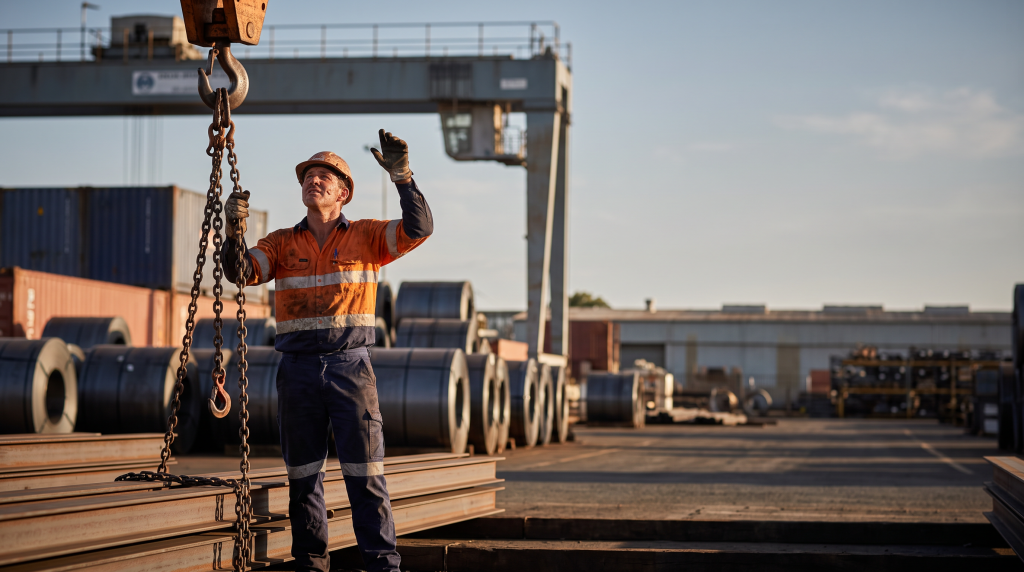
Steelworks operations require a rare combination of technical knowledge, safety compliance, and people management. Workers who progress into supervisory roles often do so through demonstrated capability rather than formal study, meaning the industry is full of highly competent leaders without matching paper qualifications. This creates a mismatch: the skills exist, but the credentials that would help these workers move into senior management, project leadership, or consulting roles often don’t.
Ports present a similar picture. Cargo handling, logistics coordination, and WHS management in port environments involve constant risk assessment and regulatory compliance. Port supervisors and operations managers are effectively running small businesses within the terminal — rostering staff, managing incidents, and ensuring compliance with maritime safety standards. Yet without a diploma or certificate to point to, career progression can stall, particularly when applying for roles outside their current employer.
This demand is why the RPL method matters so much for these two sectors specifically. Employers increasingly want to see formal qualifications attached to leadership and WHS responsibilities, partly for internal succession planning and partly for compliance and insurance purposes. A worker who has run a shift for a decade may be entirely capable of the role, but without a Diploma of Leadership and Management or Diploma of Work Health and Safety, they may be overlooked for promotion or find it harder to move employers.
Recognising this gap between capability and credential is exactly why 3CIR built its RPL service around practical, evidence-based industries like steel manufacturing and port logistics.
What Benefits Can Steelworks and Port Workers Expect from RPL Help?
Time saved is the most immediate benefit. Traditional diploma study can take twelve to eighteen months of part-time coursework. RPL assessment, by contrast, is typically completed within a matter of weeks once evidence is submitted, because you’re not learning new content — you’re demonstrating what you already know.
Cost efficiency follows closely behind. Because RPL doesn’t require delivery of training content, it’s priced differently to a full coursework qualification. For steelworks and port workers already managing shift work and family commitments, this combination of speed and affordability removes two of the biggest barriers to further qualification.
There’s also a confidence and legitimacy factor. Workers who have operated at a leadership level for years but never held a formal qualification often describe feeling underprepared in interviews or promotion panels, despite being highly capable. Holding a recognised diploma changes that dynamic, giving you documented proof of what you’ve always been able to do.
RPL help also extends to guidance through the evidence-gathering process itself, which can otherwise feel overwhelming. A good assessor knows exactly what evidence maps to which units of competency, saving you from submitting irrelevant paperwork or missing something critical. This guided support is where working with an experienced RTO partner, rather than attempting the process alone, makes a measurable difference.
Finally, RPL helps provide a pathway to further study. Many steelworks and port workers use an initial RPL-earned diploma as a stepping stone into further qualifications — a Certificate IV in Business, a Diploma of Quality Auditing, or further leadership credentials — because the recognised prior learning process demonstrates you can meet AQF standards.
How Does an RPL Qualification Impact Career Progression and Salary Outcomes?
Qualifications remain one of the clearest predictors of earnings across Australian industry. Australian Bureau of Statistics labour market data consistently shows that workers holding diploma-level qualifications earn more, on average, than those without formal credentials in comparable roles. For steelworks and port workers already performing supervisory duties, formalising that experience through RPL directly targets this earnings gap.
Beyond salary, career mobility is significantly improved. A worker with a Diploma of Leadership and Management can apply for roles across different companies and even different industries, because the qualification is transferable in a way that “ten years at Company X” is not on its own. This matters particularly in cyclical industries like steel manufacturing, where redundancies or restructuring can force workers to seek new employment.
Internal promotion pathways also open up. Many large manufacturing and port operators require a formal qualification before promoting staff into senior leadership, safety management, or operations manager roles — even when the candidate has been performing equivalent duties informally for years. An RPL-earned diploma satisfies this requirement without the lengthy delay of traditional study.
There’s also a compounding effect over a career. Workers who gain one qualification through RPL often go on to pursue further credentials, building a portfolio of recognised qualifications that supports movement into consulting, training, auditing, or project management roles later in their career. This is particularly relevant for steelworks and port employees looking beyond shift-based work toward office-based leadership or corporate roles.
Is RPL Certification Nationally Recognised and Compliant with Australian Standards?
Yes, RPL qualifications are fully recognised under the Australian Qualifications Framework and regulated by the Australian Skills Quality Authority. The AQF is the national policy for regulated qualifications, ensuring that a Diploma of Leadership and Management earned through RPL holds the same national standing as one earned through a two-year, campus-based course. This isn’t a lesser or alternative pathway — it’s built into the formal VET system by design.
ASQA, the national regulator, sets strict standards for how RTOs conduct RPL assessments, including evidence requirements, assessor qualifications, and audit processes. Any RTO offering RPL must comply with these standards or risk losing its registration. This is why choosing a properly registered RTO for your RPL assessment matters — it protects the value and recognition of the qualification you ultimately receive.
Qualifications gained through RPL are recorded against your Unique Student Identifier, the same national record system used for all VET qualifications in Australia. You can verify any RTO’s registration status directly on the official national register of RTOs and qualifications (training.gov.au) before beginning any assessment process.
3CIR delivers its RPL qualifications under a third-party arrangement with Asset College, RTO 31718, ensuring every qualification issued meets full regulatory compliance. This structure gives steelworks and port workers confidence that their diploma will be recognised by employers, other RTOs, and government bodies across Australia — not just by the provider who issued it.
How Does the RPL Method Work in Real Steelworks and Port Settings?
In practice, the RPL method starts with a straightforward eligibility conversation. A steelworks shift supervisor, for example, would discuss their day-to-day responsibilities — rostering, safety inductions, incident reporting, performance management — with an assessor who maps these against units of competency in the Diploma of Leadership and Management or Diploma of Work Health and Safety.
Evidence gathering follows. This might include position descriptions, WHS incident logs, training records for staff you’ve supervised, and written references from managers. Port operations staff often have strong documentary evidence already available through terminal operating systems, safety management software, and shift handover reports, which can be repurposed directly as RPL evidence.
An assessor then reviews this evidence against the specific requirements of each unit of competency within the target qualification. Where evidence sufficiently demonstrates competency, that unit is signed off. Where gaps exist, you may be asked to provide additional evidence or complete a short supplementary task — far less onerous than restarting an entire course of study.
Once all required units are assessed as competent, the qualification is issued and recorded against your USI. For most steelworks and port workers with genuine leadership or WHS experience, this entire process — from initial conversation to certification — takes a matter of weeks, not the twelve to eighteen months typical of coursework-based study.
Why Is 3CIR a Leading Provider of RPL Qualifications for Industrial Workers?
3CIR has built its reputation around practical, no-nonsense qualification pathways for people who’ve earned their skills on the job rather than in a lecture hall. As a veteran-owned and veteran-operated organisation, 3CIR understands the value of translating real-world experience into formal credentials — a principle that applies just as directly to steelworks and port workers as it does to Australian Defence Force veterans.
The organisation’s assessors bring direct familiarity with industrial and operational environments, meaning evidence from a steelworks or port setting is assessed by people who understand what that evidence actually represents. This reduces friction in the process and increases the likelihood of a smooth, efficient assessment outcome.
3CIR delivers its RPL qualifications under a third-party arrangement with Asset College (RTO 31718), giving every qualification full national recognition and regulatory backing. This partnership structure allows 3CIR to focus on flexible delivery and student support while ensuring compliance sits with an established, audited RTO.
Support doesn’t end at enrolment. 3CIR provides guidance throughout the evidence-gathering process, helping you identify what documentation you already have and what additional evidence might strengthen your application. For workers unfamiliar with formal VET processes, this guided support is often the difference between a stalled application and a completed diploma.
What Makes 3CIR’s RPL Method Different from Traditional Study Pathways?
Traditional study pathways assume you’re starting from zero — enrolling in coursework, attending classes or online modules, and progressing through assessments over an extended period. For someone who has already spent a decade running a production line or a port terminal, this model is inefficient and, frankly, a poor use of time.
3CIR’s RPL method instead treats your experience as the primary source of evidence. Rather than asking you to relearn leadership or WHS principles you already apply daily, the process focuses on documenting and validating what you already do. This distinction is significant — it respects the value of workplace experience rather than treating it as irrelevant until proven through a classroom assessment.
The flexibility of delivery is another key difference. 3CIR operates online across Australia, meaning shift workers in regional steelworks towns or port cities can complete assessments without needing to travel or take extended leave. For those preferring an in-person option, 3CIR also offers face-to-face training in Brisbane, giving you a choice depending on your circumstances and learning preference.
Transparency around cost and process further separates 3CIR’s approach from traditional pathways, where hidden fees and unclear timelines are common frustrations. 3CIR’s structure is built around clear expectations from the outset — you know what evidence is required, what the assessment involves, and what qualification you’ll receive.
How Does 3CIR’s RPL Price List Offer Flexible, Transparent Value for Workers?
Cost is often the first question steelworks and port workers ask when considering RPL, and rightly so. 3CIR’s RPL price list is structured around fixed, transparent pricing rather than open-ended fees that accumulate as the process unfolds. Qualifications through this pathway start from $495, giving you a clear understanding of investment before you commit.
This pricing structure reflects the efficiency of the RPL method itself. Because you’re not paying for delivered coursework, teaching resources, or extended enrolment periods, the cost structure is considerably lower than traditional study for an equivalent qualification. For steelworks and port workers weighing up whether formal qualification is worth pursuing, this fixed-price model removes much of the financial uncertainty.
Flexible payment options are also available, recognising that many industrial workers are managing this investment alongside family and household expenses. Rather than requiring a large upfront cost, 3CIR structures payment to suit working Australians balancing shift patterns and existing financial commitments.
Value extends beyond the sticker price. When you consider the earnings uplift associated with diploma-level qualifications, along with improved access to promotion and career mobility, the RPL pathway represents a strong return on investment compared to years of lost income potential while completing traditional study. Review the current RPL price list to understand exactly what’s included before starting your assessment.
RPL Assessment: What It Is, Who Qualifies, and How to Begin
RPL is the formal process of converting your existing skills and experience into a nationally recognised qualification, without requiring you to complete new coursework. It exists within the Australian VET system specifically to recognise that learning doesn’t only happen in classrooms — it happens on steelworks floors, port terminals, and job sites across the country.
You may qualify for RPL if you’ve held supervisory, safety, or operational leadership responsibilities for a meaningful period, typically several years, even if you’ve never held a formal qualification. Roles that commonly qualify include shift supervisors, team leaders, safety coordinators, and operations managers across manufacturing, steel, and port/logistics settings.
The process generally follows five steps: a free eligibility check, an initial conversation with an assessor, evidence gathering and submission, formal assessment against units of competency, and finally certification once competency is confirmed. Most candidates complete this entire journey within a few weeks, depending on how quickly evidence can be compiled.
Start today: Complete 3CIR’s free two-minute RPL eligibility assessment to find out which qualification your steelworks or port experience could unlock.
How Does 3CIR Support ADF Veterans and Emergency Services Workers Through RPL?
3CIR is proudly veteran-owned and veteran-operated, giving it a unique understanding of how military and emergency services experience translates into civilian qualifications. Many ADF roles — logistics, engineering, team leadership, safety management — map directly onto units of competency within diplomas in leadership, WHS, and business, making RPL a natural transition pathway.
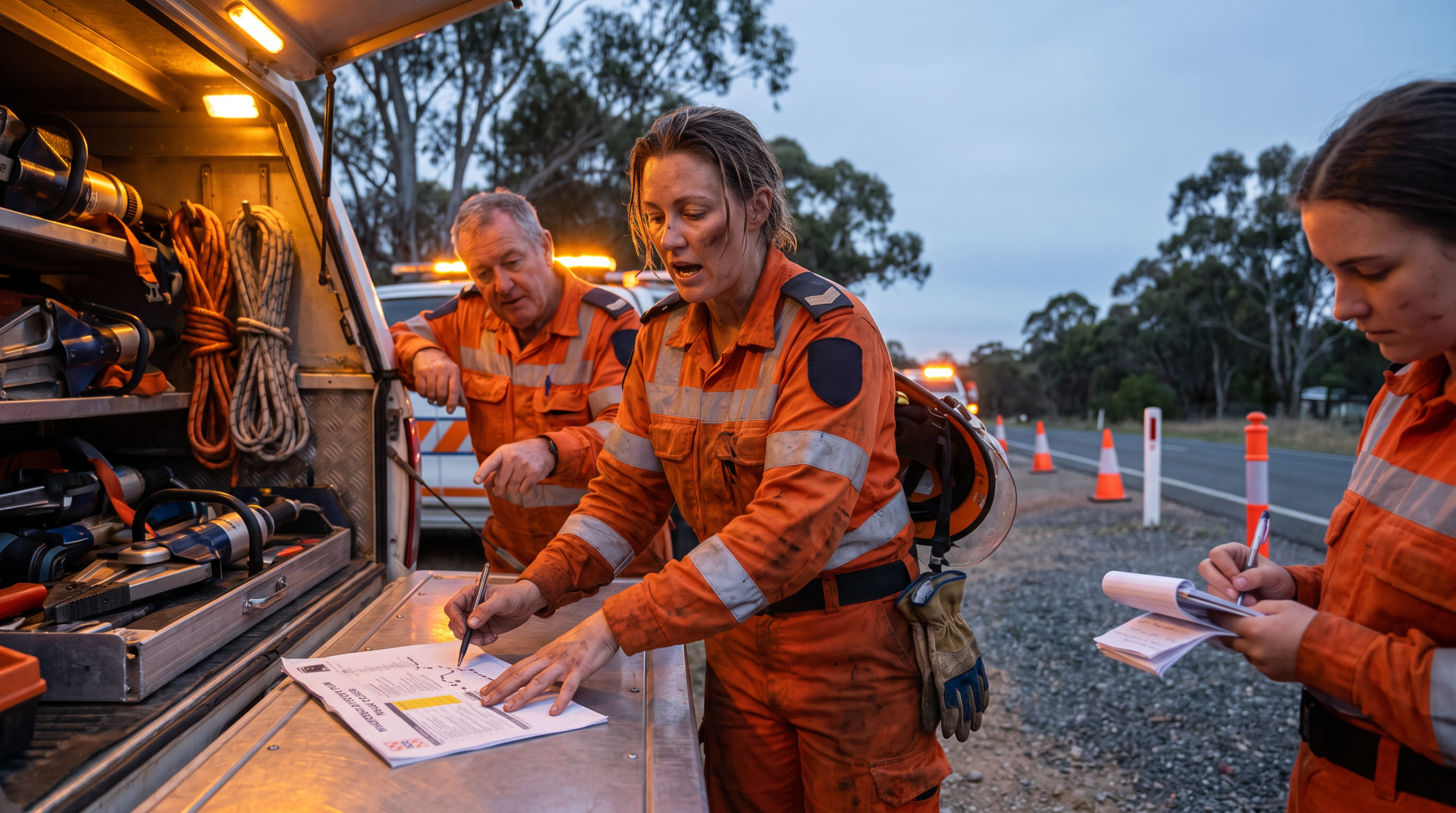
Emergency services personnel, including police, fire, and ambulance workers, often carry incident management, risk assessment, and team leadership experience equivalent to formal management qualifications. 3CIR’s assessors understand this context deeply, ensuring evidence from these roles is assessed accurately and fairly.
To support this transition, 3CIR offers a 25% discount for current and former defence and emergency services personnel across its RPL and training services. This reflects a genuine commitment to supporting those who have served, rather than a token gesture.
Whether you’re transitioning out of the ADF or moving from emergency services into a civilian leadership role, 3CIR’s RPL pathway offers a practical, respectful way to formalise the skills you’ve already built.
Frequently Asked Questions About the RPL Method
What is RPL and how does it work in Australia?
RPL, or Recognition of Prior Learning, is a formal assessment process that converts your existing work experience into a nationally recognised qualification. It works by mapping your skills and evidence against specific units of competency, rather than requiring you to complete new coursework or exams.
Can my steelworks or port experience really count toward a diploma?
Yes, genuine supervisory, safety, and operational experience in steelworks or port settings can count directly toward qualifications like the Diploma of Leadership and Management or Diploma of Work Health and Safety. The key requirement is sufficient documented evidence demonstrating competency in relevant areas.
How long does the RPL process typically take?
Most RPL assessments are completed within a few weeks, depending on how quickly you can gather supporting evidence. This is significantly faster than traditional coursework-based study, which can take twelve to eighteen months or longer.
Is an RPL qualification the same as one earned through traditional study?
Yes, an RPL-earned qualification carries identical national recognition under the Australian Qualifications Framework. It’s recorded against your USI and recognised by employers and other RTOs exactly the same as a qualification earned through classroom-based study.
How much does 3CIR’s RPL service cost?
3CIR’s RPL price list starts from $495, with fixed and transparent pricing rather than open-ended fees. Flexible payment options are also available to suit working Australians managing shift work and household budgets.
Can ADF veterans and emergency services workers use RPL too?
Yes, ADF veterans and emergency services personnel often have highly transferable leadership and safety management experience suited to RPL. 3CIR, being veteran-owned, offers a 25% discount for current and former defence and emergency services personnel completing RPL or other training.
Do I need to attend classes or sit exams for RPL?
No, RPL specifically avoids coursework and exams by assessing your existing experience instead. You’ll need to provide evidence such as position descriptions, references, and workplace records, but there’s no classroom attendance required.
Is 3CIR a legitimate and compliant RTO for RPL qualifications?
Yes, 3CIR delivers its RPL qualifications under a third-party arrangement with Asset College, RTO 31718, ensuring full ASQA compliance. You can verify this registration directly on training.gov.au before starting your assessment.
What qualifications can I get through RPL as a steelworks or port worker?
Common qualifications include the Diploma of Leadership and Management, Diploma of Work Health and Safety, Certificate IV in Business, and Diploma of Business. The right qualification depends on your specific role and documented responsibilities.
How do I start the RPL process with 3CIR?
You can start by completing 3CIR’s free, two-minute online eligibility assessment to check whether your experience qualifies. From there, an assessor will guide you through evidence gathering and the formal assessment process.
Turn Your Experience Into a Recognised Diploma Today
Your years on the steelworks floor or port terminal have already taught you what a classroom would take months to cover. The RPL method exists to recognise exactly that, converting real experience into a nationally recognised qualification without unnecessary delay or cost.
3CIR’s RPL pathway, delivered under Asset College (RTO 31718), offers a compliant, transparent, and genuinely supportive route to your next qualification. With fixed pricing from $495, flexible online delivery Australia-wide, and a 25% discount for defence and emergency services personnel, there’s little reason to delay.
Start your free RPL assessment now or enquire directly with 3CIR’s team to discuss your steelworks or port experience today.
Additional Resources
Explore these helpful video resources to learn more about career opportunities:
- Leadership: https://youtu.be/7k57ygLXncA
- HR: https://youtu.be/jLUKTpqOOfU
- WHS: https://youtu.be/6QHTzXlE5C0
- Security: https://youtu.be/d20nwpEot8Q
- Business: https://youtu.be/8P_VySE0zjQ
- Marketing: https://youtu.be/VdQxJKmgZfs
- Government: https://youtu.be/PV_knsJnb5E
- Project Management: https://youtu.be/kz7CyEsRNyg