
RPL Process Australia
Recognition of Prior Learning (RPL) is the formal assessment process that converts your existing work experience into a nationally recognised qualification without classroom attendance. This article explains the RPL process Australia workers use to fast-track diplomas, who qualifies, and how to get started. It’s built for tradespeople, managers, veterans and emergency services personnel who already have the skills but lack the paperwork.
If you’ve spent years managing teams, running safety systems, or coordinating projects, you’ve likely already developed skills equivalent to a formal diploma. The RPL process Australia relies on doesn’t ask you to relearn what you already know. Instead, it assesses your existing evidence — job records, incident reports, references, and workplace documentation — against nationally recognised training standards. For thousands of Australians, this has meant turning a decade of experience into a Diploma of Leadership and Management or Diploma of Work Health and Safety in a matter of weeks.
This guide breaks down exactly how the RPL process works, which industries use it most, and why 3CIR has become one of Australia’s most trusted providers of RPL prior learning pathways. You’ll also find a step-by-step outline of the rpl process steps, a dedicated section for veterans and emergency services workers, and answers to the questions people ask most often about eligibility, cost and recognition.
Ready to see if your experience qualifies? Start your free RPL assessment with 3CIR today and find out which diploma you could hold within weeks.
What Is RPL Prior Learning and How Does It Turn Experience into a Diploma?
Recognition of Prior Learning is a formally regulated assessment method within Australia’s Vocational Education and Training (VET) system. It allows an individual to have skills and knowledge gained through work experience, informal training or life experience assessed against the requirements of a nationally recognised qualification. RPL is governed by the Australian Skills Quality Authority (ASQA) and delivered under the Australian Qualifications Framework (AQF), meaning a diploma issued through RPL carries the same standing as one earned through TAFE or university. It is typically accessed through a Registered Training Organisation (RTO), such as Asset College (RTO 31718), which issues the qualification once assessment is complete. RPL is most relevant to experienced workers in leadership, safety, project management, and security roles who have never had their skills formally certified.
RPL prior learning exists because Australia’s VET framework recognises that competency can be demonstrated in more than one way. A traditional student proves competency by attending classes and sitting assessments across months. An experienced worker can prove the same competency through evidence gathered from years on the job — rosters, safety audits, performance reviews, incident reports, and supervisor references. Both pathways lead to the same AQF-certified outcome.
This matters enormously for industries where formal qualifications lag behind actual capability. A site supervisor who has run WHS systems for eight years may never have completed a Diploma of Work Health and Safety, despite functioning at that level daily. RPL closes that gap. It doesn’t lower the bar — it simply changes how competency is proven.
The RPL process Australia-wide follows the same principle across every state and territory, because it operates under the same national regulatory framework. Whether you’re in Newcastle, Perth, or regional Queensland, the standards assessed are identical. This consistency is what makes RPL a credible, nationally trusted alternative to classroom-based study — not a shortcut around quality, but a different route to the same destination.
How Does the RPL Process Work? A Step-by-Step Breakdown of the RPL Process Steps
The RPL process steps follow a consistent, structured sequence regardless of which qualification you’re pursuing. Understanding each stage removes uncertainty and helps you prepare the right evidence from day one. Below is the standard five-step model used across most Australian RTOs, including 3CIR.
Step 1: Free Eligibility Check. Before anything else, your work history is reviewed against the qualification you’re targeting. This initial check identifies whether you have sufficient relevant experience to proceed, and it typically takes less than 15 minutes over the phone or online.
Step 2: Expert Assessment and Gap Analysis. A qualified assessor maps your experience against each unit of competency required for the diploma. This step identifies exactly what evidence you already have and what, if anything, is missing — sometimes requiring a short supplementary task rather than a full unit of study.
Step 3: Evidence Gathering. You compile supporting documentation — position descriptions, safety records, project reports, licences, references, or performance appraisals. This is usually the most time-intensive step, but most working Australians already hold much of this material without realising it.
Step 4: Formal Assessment and Verification. A qualified assessor reviews your evidence against the AQF-mandated competency standards. Where needed, a short interview or practical demonstration may be used to confirm competency, rather than requiring you to complete coursework you’ve already mastered on the job.
Step 5: Certification and Issuance. Once competency is confirmed, your qualification is issued under a nationally registered RTO and recorded against your Unique Student Identifier (USI), the same identifier used for every VET qualification in Australia.
This rpl procedure typically takes weeks rather than the six to twelve months a traditional course demands. The compressed timeline exists not because standards are relaxed, but because you’re not being taught skills you already use every day — you’re proving them. For many applicants, particularly those in supervisory or safety-critical roles, this is the difference between waiting a year for a promotion-qualifying credential and holding it before the next hiring round.
Which Australian Industries Rely Most on the RPL Procedure to Upskill Their Workforce?
Several Australian industries lean heavily on RPL because their workforce accumulates deep practical experience faster than formal paper qualifications. Energy and utilities, construction, health, ports and logistics, and manufacturing consistently produce the highest volume of RPL applicants nationally.
Energy and utilities workers often manage complex safety and compliance systems long before completing formal WHS or leadership qualifications. National average full-time earnings in this sector reached $2,628 per week according to ABS Average Weekly Earnings data (November 2025), reflecting the seniority and responsibility already carried by workers in this space — responsibility RPL simply formalises.
Construction and infrastructure roles frequently involve supervisors and project leads managing multimillion-dollar builds without a Diploma of Project Management or Leadership and Management to match. RPL allows these workers to certify existing competency rather than step off-site for a year of study.
Health and aged care workers, including team leaders and care coordinators, often hold qualifications well below their actual scope of responsibility. Care plans, incident logs and rostering records provide strong RPL evidence for Diploma of Leadership and Management pathways.
Ports, logistics and manufacturing sectors rely on shift supervisors and operations managers who have run safety and compliance systems for years. Facilities near major ports — such as the Port of Newcastle — and hospitals such as John Hunter Hospital regularly produce RPL candidates whose day-to-day responsibilities already meet diploma-level competency.
Across all these sectors, the common thread is workers holding real responsibility without matching paper credentials. The RPL process Australia industries use doesn’t create new competency — it certifies what’s already there, which is precisely why it has become the preferred upskilling pathway across blue-collar and frontline sectors alike.
Why Is 3CIR Recognised as a Leading Provider of the RPL Process in Australia?
3CIR has built its reputation on transparent pricing, veteran leadership, and a genuinely fast RPL turnaround. As a veteran-owned and veteran-operated training provider, 3CIR understands firsthand how military and frontline experience translates into civilian qualifications — because its own leadership has made that transition personally.
Training is delivered under a third-party arrangement with Asset College (RTO 31718), giving every qualification issued through 3CIR full national recognition under the AQF. This regulatory backing means a Diploma of Work Health and Safety or Diploma of Leadership and Management earned through 3CIR carries the same legal and professional weight as one earned through TAFE or a university pathway.
3CIR’s national reputation is also reflected in independent reviews, with a 5.0-star rating across verified Google and third-party review platforms. This consistency matters in an industry where trust in an RTO’s assessment rigour directly affects whether employers respect the resulting qualification.
Unlike many providers who quote broad price ranges, 3CIR operates on fixed, all-inclusive pricing — from $495 for a Certificate II through to $3,285 for a Graduate Diploma, with Certificate IV at $1,035, Diploma at $1,350, and Advanced Diploma at $1,935. There are no hidden assessment fees or surprise charges partway through the process.
What Makes the 3CIR RPL Experience Different: Flexible Assessment, Support and Fixed Pricing
Flexibility defines the 3CIR model. You’re not required to attend fixed class times or relocate — assessment is conducted online Australia-wide, with a face-to-face option available in Brisbane for those who prefer in-person support.
Dedicated assessor support runs throughout the entire journey, from the first eligibility check through to final certification. Rather than leaving you to interpret competency units alone, 3CIR assigns experienced assessors who guide evidence collection and clarify exactly what’s required at each stage.
Fixed pricing eliminates a major source of hesitation for working Australians considering RPL. Knowing the full cost upfront — with payment plan options available — makes budgeting straightforward compared to providers who charge per-unit fees that escalate unpredictably.
Speed remains a core differentiator. Most 3CIR applicants complete their qualification in weeks, not the six-to-twelve-month timeline typical of traditional TAFE or university study. This is achieved without cutting corners on the AQF-mandated competency standards every RTO must meet under ASQA regulation.
How Does 3CIR Align RPL Pathways with Real Australian Workforce Demands?
3CIR designs its RPL pathways around qualifications employers actively demand, not generic course catalogues. Diplomas in Leadership and Management, Work Health and Safety, and Project Management are prioritised because they map directly onto supervisory and management roles across construction, health, energy and logistics.
Labour market data supports this alignment. ABS Employee Earnings figures (August 2025) show Australians holding a Diploma earn a median $1,462 per week compared to $1,000 per week for those without a post-school qualification — a gap exceeding $24,000 annually. This isn’t incidental; it reflects genuine employer demand for certified leadership and safety capability.
3CIR also tracks industry-specific licensing and compliance requirements, ensuring RPL pathways remain current with sector expectations — particularly in security, WHS and project management, where professional bodies and regulators frequently update competency expectations.
For workers targeting project management roles, alignment with frameworks recognised by bodies such as the Australian Institute of Project Management (AIPM) ensures the qualification holds weight beyond the certificate itself, supporting genuine career progression rather than a credential alone.
What Benefits and Outcomes Can You Expect from Completing RPL Instead of Traditional Study?
Time saved is the most immediate benefit. Most RPL candidates complete their diploma in a matter of weeks rather than the six to twelve months required for classroom-based study, freeing you to apply for promotions or tenders sooner.
Cost efficiency follows closely behind. Fixed RPL pricing, starting from $495 for entry-level certificates, is typically far lower than the cumulative cost of enrolling in a full diploma programme through TAFE or private college study.
No disruption to income is a further practical advantage. Because RPL doesn’t require stepping away from work to attend classes, you continue earning your full wage while your qualification is being assessed and issued.
National recognition ensures the outcome is never in question. A diploma issued through RPL under an ASQA-regulated RTO is recorded against your USI and holds identical standing to any AQF-aligned qualification, regardless of the pathway used to achieve it.
How Does a Diploma Gained Through RPL Impact Career Progression and Salary in Australia?
A diploma directly correlates with higher earnings across the Australian labour market. ABS data places median weekly earnings for diploma holders at $1,462, compared to $1,000 for workers without post-school qualifications — a measurable, documented gap that compounds significantly over a career.
Promotion eligibility often hinges on formal qualifications, even when a worker already performs at that level. Many organisations require a Diploma of Leadership and Management or WHS before considering someone for a supervisory or safety officer role, regardless of demonstrated on-the-job competency.
Tender and contract eligibility frequently depends on documented qualifications too. Construction and government contracts often specify minimum AQF qualification levels for site supervisors and project leads, making an RPL-earned diploma a practical requirement rather than a nice-to-have.
Career mobility improves substantially once a qualification is formalised. Moving between employers, states, or even industries becomes considerably easier when your competency is backed by a nationally recognised credential rather than undocumented experience alone.
RPL Prior Learning: Who Qualifies and How to Begin Your Assessment
RPL is available to anyone with relevant, demonstrable work experience — you don’t need formal training to qualify, only evidence of competency. Eligible candidates typically include supervisors, team leaders, safety officers, project coordinators, and tradespeople with several years in a relevant role.
The core RPL process steps are straightforward: a free eligibility check, expert gap assessment, evidence gathering, formal verification, and certification. Most candidates move through this sequence in weeks, supported by an assessor at each stage rather than left to navigate competency units alone.
Evidence doesn’t need to be complicated. Rosters, incident reports, position descriptions, licences, references and workplace policies you’ve written or implemented are all valid. Many workers are surprised to discover they already hold most of what’s required, simply sitting in old work emails or filing cabinets.
Not sure if you qualify? Book your free RPL assessment with 3CIR and get a clear answer on your eligibility and estimated timeline within days, not months.
How Do ADF Veterans and Emergency Services Workers Fast-Track Qualifications Through RPL?
Military and emergency services experience translates directly into civilian qualification competencies, often more comprehensively than candidates realise. Leadership roles within the ADF, incident command experience in fire and rescue, and coordination roles within ambulance or police services all map closely onto Diploma of Leadership and Management and Diploma of Work Health and Safety competency units.
3CIR is veteran-owned and veteran-operated, giving it a direct understanding of how ADF experience — command structures, risk management, logistics coordination — converts into civilian-recognised competency. This isn’t a generic RTO offering a token discount; it’s a provider built by people who’ve made this transition themselves.
Current and former defence and emergency services personnel receive a 25% discount on RPL assessment through 3CIR, reducing an already fixed-price service further. This acknowledges the financial pressure many face during civilian transition, particularly in the first year after discharge.
For ADF personnel specifically, RPL offers a practical answer to one of the most common transition questions: how do I turn military experience into a qualification employers understand? A Diploma of Leadership and Management, WHS, or Project Management earned through RPL gives that experience a civilian-recognised name and AQF-backed credibility.
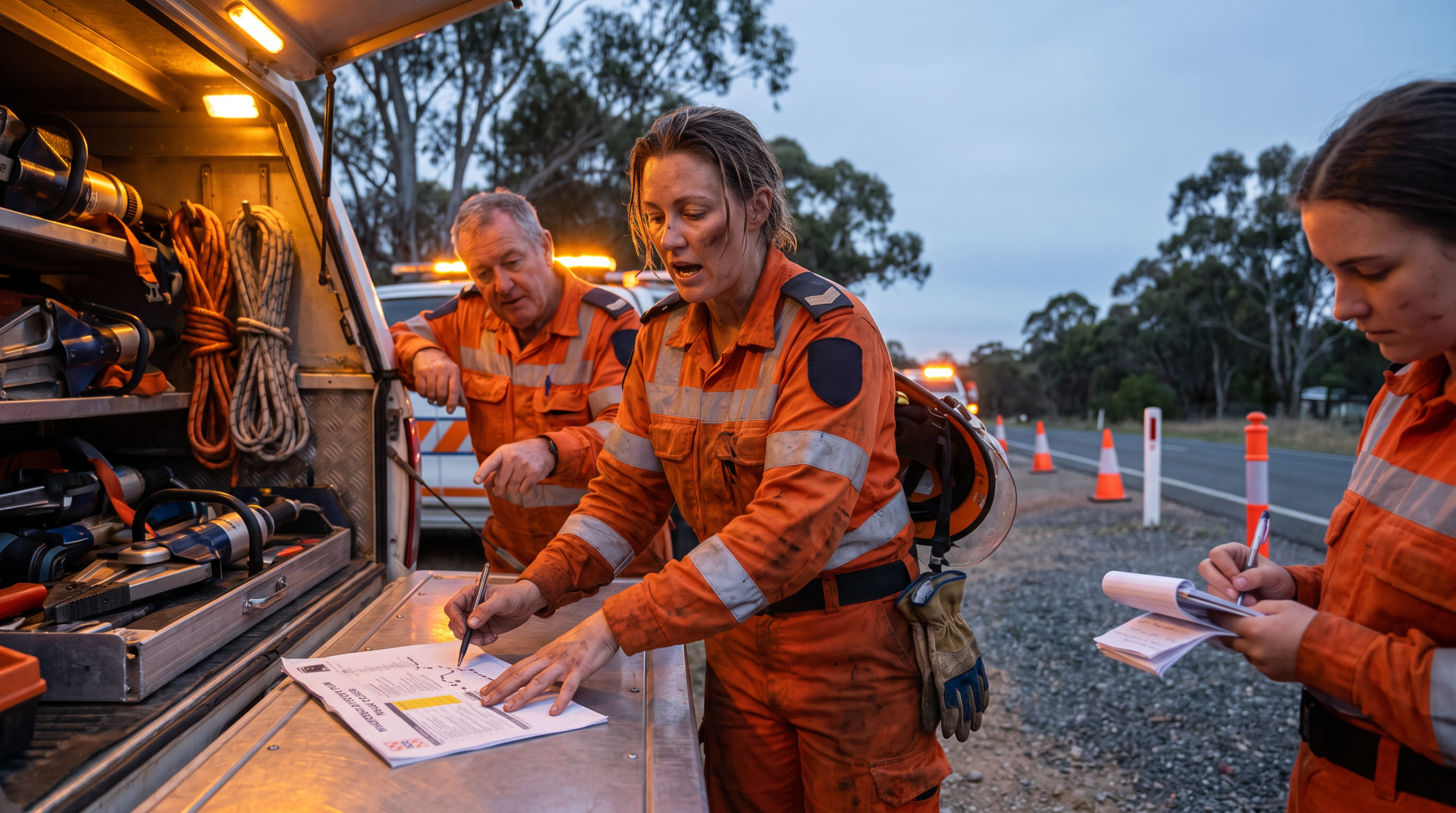
Emergency services workers face a similar gap. Years of incident command, safety coordination and team leadership rarely come with a matching civilian qualification, despite the competency clearly being there. RPL closes that gap without requiring firefighters, paramedics or police officers to step away from frontline duty for a full-time course.
Is the RPL Process Australia-Wide Compliant with ASQA and the AQF?
Yes, every legitimate RPL pathway in Australia must comply with both ASQA and AQF standards. ASQA is the national regulator overseeing all RTOs, and it audits providers to ensure RPL assessment meets the same rigour as classroom-based training.
The AQF sets the national framework defining what each qualification level — Certificate II through to Graduate Diploma — must demonstrate in terms of knowledge, skill and application.
Because 3CIR delivers RPL under a third-party arrangement with Asset College (RTO 31718), every qualification issued meets these compliance requirements in full. This means the rpl process australia candidates complete through 3CIR is not a shortcut around national standards — it is a fully audited pathway to the same AQF outcome.
What Does the Future of RPL Look Like as Australian Industries Evolve?
Demand for RPL is expected to grow as skills shortages intensify across construction, health, energy and cybersecurity sectors. Employers are increasingly prioritising demonstrated competency over traditional study pathways, particularly where project timelines don’t allow for months of classroom-based upskilling.
Digital evidence gathering is becoming more sophisticated, with online portals and digital verification tools streamlining the traditionally paperwork-heavy evidence stage. This trend is likely to further compress RPL turnaround times over the coming years.
Cybersecurity and emerging technology sectors are also beginning to adopt RPL more heavily, recognising that self-taught and on-the-job expertise often outpaces formal course content in fast-moving technical fields. Veterans with signals, intelligence or technical trades backgrounds are particularly well-positioned here.
As the AQF and ASQA continue refining national standards, RPL is positioned not as an alternative to formal education, but as an increasingly mainstream and equally credible pathway within it.
How Do You Get Started with the RPL Process Today?
Getting started requires nothing more than a conversation about your work history. 3CIR’s free eligibility check takes minutes and gives you a clear indication of which diploma or certificate you’re likely positioned to achieve.
From there, an assessor will map your experience against the qualification’s competency units, identify any gaps, and guide you through evidence collection. Most candidates are surprised at how much of the required evidence they already have sitting in old job files, emails and HR records.
Start today: Request your free RPL assessment or enquire now with the 3CIR team to discuss your eligibility, pricing and timeline directly.
Frequently Asked Questions About the RPL Process in Australia
What is RPL and how does it work in Australia?
RPL stands for Recognition of Prior Learning, a formal process that assesses your existing work experience against nationally recognised qualification standards. It works by reviewing evidence such as job records, references and workplace documentation instead of requiring classroom attendance. The outcome is an AQF-recognised qualification, issued through a registered RTO.
How long does the RPL process take compared to traditional study?
Most RPL candidates complete their qualification within weeks, compared to six to twelve months for traditional TAFE or college study. The exact timeframe depends on how quickly you can gather evidence and whether any competency gaps require additional demonstration. Straightforward applications with strong documentation move fastest.
Can emergency services experience count towards a qualification?
Yes, emergency services experience frequently maps directly onto diploma-level competencies. Incident command, safety coordination and team leadership roles align closely with Diploma of Work Health and Safety and Diploma of Leadership and Management units. Many emergency services workers are surprised how much of their existing experience qualifies as valid evidence.
How can I turn my military experience into a civilian qualification?
ADF experience translates directly through RPL, particularly leadership, logistics and risk management roles. A veteran-owned provider like 3CIR can assess your service record and workplace experience against relevant diploma competencies. This gives your military background a civilian-recognised qualification employers immediately understand.
Is RPL cheaper than doing a full diploma through TAFE or university?
Generally, yes. Fixed RPL pricing through providers like 3CIR starts from $495 for Certificate II qualifications up to $3,285 for a Graduate Diploma. This is typically lower than cumulative tuition, material and time costs associated with traditional full-time study.
Is a diploma earned through RPL nationally recognised?
Yes, absolutely. Any qualification issued through a properly regulated RPL process under an ASQA-registered RTO carries full recognition under the Australian Qualifications Framework. It is recorded against your USI and holds the same standing as a qualification earned through classroom study.
What evidence do I need to provide for an RPL application?
Evidence typically includes position descriptions, safety records, project reports, licences, performance reviews and supervisor references. Most working Australians already possess much of this documentation without realising its value. Your assessor will identify exactly which pieces are relevant to your target qualification.
Do veterans and emergency services personnel get a discount on RPL through 3CIR?
Yes, current and former defence and emergency services personnel receive a 25% discount on RPL assessment through 3CIR. This reflects 3CIR’s veteran-owned status and its focus on supporting genuine career transition. The discount applies across eligible certificate and diploma pathways.
What qualifications are commonly achieved through RPL?
Common RPL qualifications include Diploma of Work Health and Safety, Diploma of Leadership and Management, and Diploma of Project Management. Certificate IV and Advanced Diploma pathways are also frequently pursued, particularly in construction, health, energy and logistics sectors. Eligibility depends on relevant work experience in each area.
How do I know if I’m eligible for RPL?
The fastest way to check eligibility is through a free assessment, which reviews your work history against your target qualification’s requirements. This typically takes under 15 minutes and gives you a clear answer on whether you have sufficient relevant experience. 3CIR offers this eligibility check at no cost.
Take the Next Step Toward a Nationally Recognised Diploma
You don’t need to spend a year in a classroom to hold the qualification your experience already earned. The RPL process Australia workers rely on is fast, fixed-price, and fully compliant with ASQA and AQF standards — and 3CIR’s veteran-owned team is ready to guide you through every step.
Start your free RPL assessment now and find out which diploma you could hold within weeks.
Enquire now or call the 3CIR team directly to discuss your eligibility, pricing, and next steps.