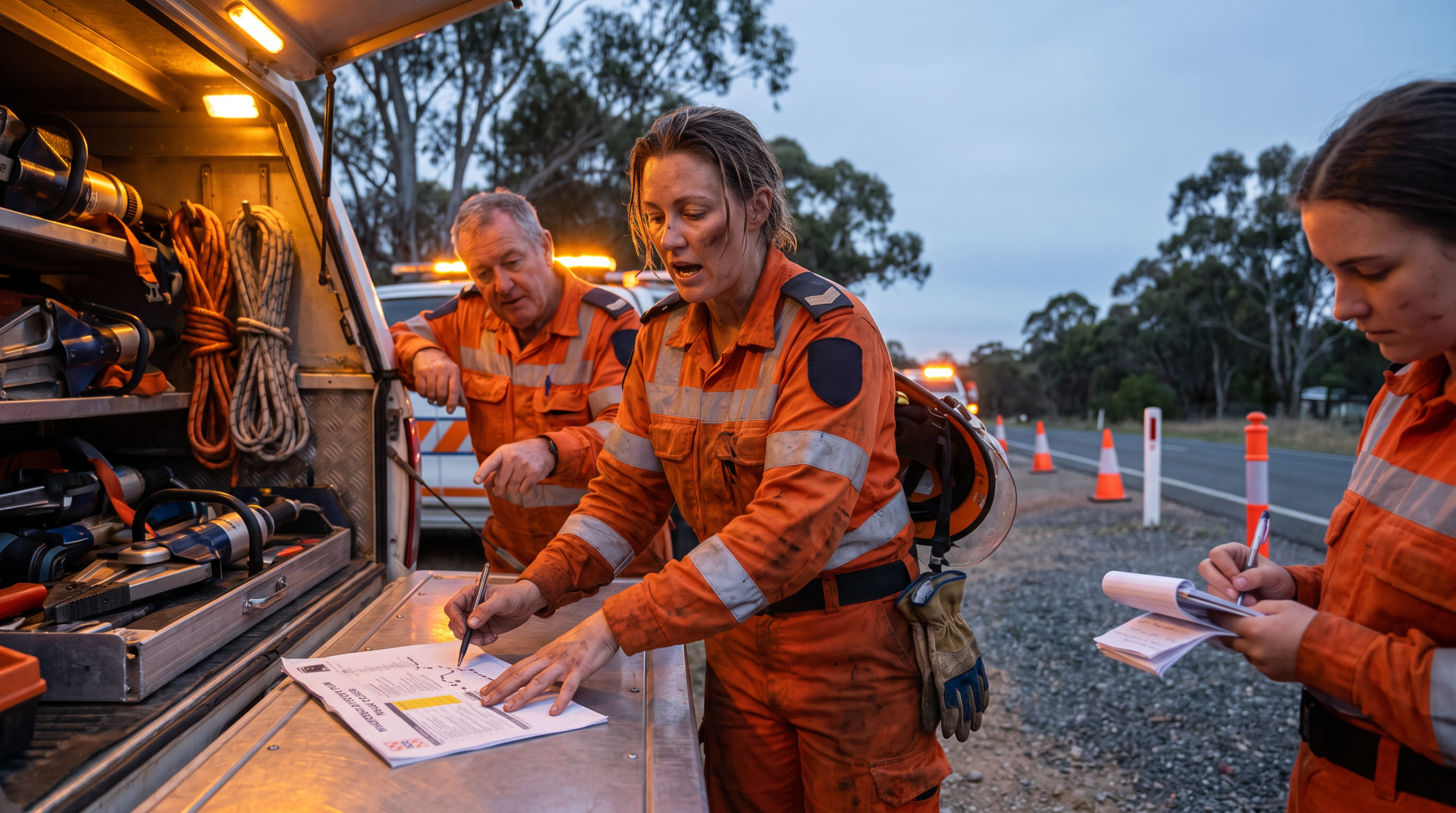

RPL Assessment Ballarat
Years of hands-on work in Ballarat’s hospitals, mines, manufacturing plants, and government offices count for more than a payslip. That experience can become a nationally recognised qualification through a formal rpl assessment — often in weeks rather than months. This guide explains how the rpl assessment process works, who qualifies, and why 3CIR is Ballarat’s trusted pathway to formal recognition.
Direct answer: An rpl assessment is a formal evaluation process that converts your existing work experience, skills, and training into a nationally recognised qualification without requiring you to sit through traditional coursework. It’s designed for experienced workers in Ballarat across health, manufacturing, government, and trades who already have the skills but lack the paperwork. The key benefit: you can gain a Certificate II through to a Graduate Diploma in weeks, not years.
If you’ve worked in a Ballarat industry for several years but never completed the formal qualification to match your skill level, you’re not alone. Thousands of Australian workers are in the same position — capable, experienced, and undervalued on paper. Recognition of Prior Learning (RPL) closes that gap by assessing what you already know against the requirements of a nationally recognised qualification.
This article walks through exactly how rpl assessment works, what it costs compared to traditional study, and why 3CIR has become a leading provider of rpl assessment services for Ballarat workers. Start with a free RPL assessment to find out which qualification your experience already qualifies you for.
What Is an RPL Assessment and How Does It Recognise Your Work Experience?
Recognition of Prior Learning, commonly known as RPL, is a formal assessment process used across Australia’s vocational education and training (VET) sector. It allows you to have your existing skills, knowledge, and work experience formally assessed against the requirements of a nationally recognised qualification. Rather than repeating training you’ve effectively already completed on the job, rpl assessment lets you demonstrate competency through evidence.
This evidence can include your employment history, references from supervisors, workplace documents, photos of completed work, licences, previous training records, and statutory declarations. A qualified assessor reviews this material against the units of competency listed on training.gov.au for your target qualification. Where your evidence meets the required standard, you’re deemed competent and issued the qualification — no classroom attendance required.
The process is particularly valuable for Ballarat workers in trades, health, government, and manufacturing roles where informal or on-the-job training has always outpaced formal paperwork. A supervisor with ten years managing rostering, safety compliance, and staff development may already hold the practical skills equivalent to a Diploma of Leadership and Management. RPL simply formalises what’s already there.
Importantly, RPL doesn’t lower the standard of the qualification. You still need to demonstrate competency against the same units of competency that a classroom-based student would complete. What changes is the pathway — evidence-based assessment replaces lectures, assignments, and workplace placements. This makes rpl assessment both rigorous and efficient, which is precisely why the Australian Skills Quality Authority (ASQA) permits and regulates it as a legitimate qualification pathway for registered training organisations (RTOs).
Why Is RPL Assessment Australia’s Fastest-Growing Pathway to Formal Qualifications?
rpl assessment has grown rapidly across Australia because it solves a persistent labour market problem: skilled workers without matching paper qualifications. According to the Australian Bureau of Statistics, workers holding a post-school qualification consistently earn more over their careers than those without one, yet many experienced Australians have never had the time, money, or opportunity to study formally while working full-time.
Traditional study models were never built for working adults. A Diploma of Leadership and Management delivered through classroom-based coursework can take 12 to 18 months, competing directly with shift work, family responsibilities, and existing job demands. rpl assessment australia-wide has expanded because it removes this barrier entirely — assessment happens around your schedule, using evidence you already possess.
The rise of online RTOs has accelerated this shift further. Where rpl assessment once required in-person portfolio reviews and paper-based evidence submission, most providers — including 3CIR — now manage the entire process online. Documents are uploaded digitally, communication happens by phone or email, and qualifications are issued electronically. This has made RPL accessible to workers in regional centres like Ballarat, not just metropolitan areas.
Government and industry bodies have also reinforced RPL’s legitimacy. The Australian Qualifications Framework (AQF), which governs all nationally recognised qualifications, treats an RPL-issued qualification identically to one earned through classroom study. There’s no distinction on the certificate itself. This equivalence has driven confidence in rpl assessment as a genuine, respected pathway — not a shortcut, but an alternative route to the same destination.
Which Ballarat Industries Benefit Most From Recognition of Prior Learning?
Ballarat’s economy is built on sectors where formal qualifications often lag behind practical skill — making it fertile ground for rpl assessment. Health and community services, one of the region’s largest employers, regularly sees experienced support workers, care coordinators, and team leaders operating well above their paper qualification level. RPL allows these workers to formalise skills gained through years of direct patient or client care.
Manufacturing and engineering remain central to Ballarat’s identity, from food processing to metal fabrication. Supervisors and leading hands in these environments frequently manage safety compliance, team performance, and operational planning — core competencies within qualifications like the Certificate IV in Leadership and Management or Diploma of Work Health and Safety. rpl assessment recognises this operational experience without requiring time away from the production floor.
Government services, including local council roles and state government departments based in Ballarat, also benefit significantly. Administrative officers, project coordinators, and compliance staff often perform duties aligned with business and project management qualifications. An rpl assessment can formally validate this experience, supporting internal promotion or job applications to other government departments.
Finally, Ballarat’s growing technology and trades sectors are increasingly turning to RPL for cybersecurity, business, and leadership qualifications. As regional Victoria continues to diversify economically, workers who’ve built skills through varied roles — rather than a single career path — find RPL particularly useful for consolidating scattered experience into one recognised credential.
What Does the RPL Assessment Process Involve From Start to Finish?
The rpl assessment process follows a structured, evidence-based sequence designed to be efficient and rigorous. The first step is a free eligibility check, where you discuss your work history and career goals with an assessor to identify which qualification best matches your experience. This conversation typically takes 15 to 20 minutes and requires no paperwork upfront.
Once a suitable qualification is identified, a qualified assessor conducts a detailed skills assessment. This involves mapping your experience against the specific units of competency listed for that qualification on training.gov.au. The assessor identifies which units you can likely demonstrate competency for and which may require additional evidence or a short knowledge check.
The third stage is evidence gathering. You’ll be guided on exactly what’s needed — this might include letters from current or former employers, position descriptions, training certificates, licences, or samples of work. Providers like 3CIR support you through this stage with templates and direct assistance, reducing the guesswork that often causes delays in less-supported RPL programmes.
Finally, once your evidence is reviewed and verified, you’re issued a nationally recognised qualification through the partnering RTO. For 3CIR’s RPL services, this is delivered through Asset College (RTO 31718), ensuring the qualification carries the same national recognition as one completed through traditional study. Total turnaround, from first enquiry to qualification issue, is typically measured in weeks rather than the six to twelve months required for classroom-based study.
How Does RPL Compare to Traditional Study in Cost, Time and Outcomes?
Cost is one of the most significant differences between RPL and traditional study. A Diploma-level qualification delivered through standard coursework can cost several thousand dollars in tuition, plus indirect costs like reduced work hours or travel. rpl assessment, by contrast, is typically priced as a fixed fee based on qualification level — for example, 3CIR’s RPL pricing starts at $495 for a Certificate II and scales up to $3,285 for a Graduate Diploma, with flexible payment options available.
Time is the other major differentiator. Traditional VET study generally requires six to twelve months of coursework, assignments, and possibly work placements. rpl assessment compresses this timeline dramatically because it doesn’t require you to learn new content — only to demonstrate what you already know. Most RPL candidates complete their assessment and receive their qualification within a matter of weeks.
Outcomes, however, are identical. Both pathways result in a nationally recognised qualification under the Australian Qualifications Framework, issued by a registered training organisation and recorded against your Unique Student Identifier (USI). Employers, government departments, and industry bodies cannot distinguish between a qualification earned through coursework versus one earned through RPL — both carry equal standing.
The main trade-off is suitability. rpl assessment works best for workers who already have substantial, relevant experience. If you’re starting a completely new career direction with no prior exposure, traditional study or a blended pathway combining some RPL with additional training may be more appropriate. An initial eligibility conversation with an RPL assessor will clarify which path fits your situation.
How Does RPL Assessment Impact Career Progression and Earning Potential in Australia?
Formal qualifications remain a significant factor in Australian hiring and promotion decisions, even when a candidate has the practical skills to match. Many internal promotion processes, particularly in government and larger corporate structures, require a specific qualification level before a worker can be considered for a leadership or supervisory role. rpl assessment removes this barrier by formalising skills already demonstrated on the job.
Australian Bureau of Statistics labour market data consistently shows that workers holding post-school qualifications earn more on average across their working lives compared to those without formal recognition. While experience alone can support performance, a recognised qualification often determines eligibility for higher pay bands, tender applications, and leadership pathways — particularly in government contracts and regulated industries.
For Ballarat workers considering a move between industries — from manufacturing into government services, for example — a recognised qualification also increases transferability. Experience alone can be difficult for a new employer to verify or benchmark, whereas a nationally recognised qualification provides an immediate, trusted reference point regardless of sector.
rpl assessment can also support tender and contract requirements for self-employed tradespeople and small business owners. Many government and corporate contracts specify minimum qualification levels for work health and safety, project management, or leadership roles. Holding the formal qualification — rather than relying on experience alone — can be the deciding factor in winning or retaining contract work.
What Compliance Standards and RTO Regulations Govern RPL Assessment in Australia?
rpl assessment in Australia operates under strict regulatory oversight to ensure qualifications retain integrity and national recognition. The Australian Skills Quality Authority (ASQA) is the national regulator responsible for registered training organisations and VET accredited courses across most of Australia, including Victoria. ASQA sets the standards that govern how RTOs must conduct RPL assessments, including evidence requirements and assessor qualifications.
Every rpl assessment must align with the Standards for RTOs 2015, which require that assessment — including RPL — be valid, reliable, fair, and flexible. This means assessors must gather sufficient evidence to be confident you can perform to the standard required in the workplace, not simply that you’ve worked in a related role. This is why detailed evidence gathering remains a core part of the rpl assessment process, even though it’s faster than classroom-based study.
The Australian Qualifications Framework (AQF) further governs the qualification levels themselves, defining what a Certificate III, Diploma, or Graduate Diploma must demonstrate in terms of knowledge, skills, and application. RPL-issued qualifications must meet these AQF criteria precisely — there’s no reduced standard for evidence-based assessment.
Because compliance is central to RPL’s legitimacy, it’s essential to work with a properly registered RTO or an organisation partnering with one. 3CIR delivers its rpl assessment services in partnership with Asset College (RTO 31718), ensuring every qualification issued is fully compliant with ASQA standards and nationally recognised across Australia.
Why Is 3CIR a Leading Provider of RPL Assessment Services in Ballarat?
3CIR has built a reputation as a trusted rpl assessment provider by focusing specifically on making the process accessible to working Australians, including those in regional centres like Ballarat. Rather than treating RPL as a secondary offering, it’s positioned as 3CIR’s flagship service — reflecting a belief that experience should count as much as classroom attendance in gaining formal recognition.
A key differentiator is 3CIR’s veteran-owned and veteran-operated status. This background shapes how the organisation approaches assessment: with discipline, clear process, and respect for the practical skills gained through real-world roles, whether military, emergency services, or civilian employment. This ethos extends across all industries 3CIR supports, including Ballarat’s health, government, and manufacturing sectors.
3CIR’s entire rpl assessment process is delivered online, meaning Ballarat workers don’t need to travel to Melbourne or interstate to access qualified assessors. Every stage — from the initial eligibility check through to evidence submission — happens remotely, supported by direct phone and email contact with an assessor throughout.
Qualifications are issued through Asset College (RTO 31718), a registered training organisation recognised by ASQA. This third-party arrangement ensures every qualification 3CIR facilitates carries full national recognition under the AQF, giving Ballarat workers the same regulatory confidence they’d expect from a large capital-city provider, without the added cost or travel.
What Makes 3CIR’s RPL Process Different: Flexible Support, Pricing and Fast Turnaround?
Fixed, transparent pricing sets 3CIR apart from many RPL providers who quote on a case-by-case basis. Pricing for 3CIR’s rpl assessment starts at $495 for a Certificate II qualification and scales up to $3,285 for a Graduate Diploma, with flexible payment plans available to spread the cost. This transparency allows Ballarat workers to budget confidently before committing to the process.
Turnaround speed is another significant advantage. While some RPL providers can take months to review evidence and issue outcomes, 3CIR’s structured four-step process — free eligibility check, expert assessment, evidence gathering, and qualification issuance — is designed to move quickly. Most candidates complete the full journey in a matter of weeks, not the six to twelve months typical of coursework-based study.
Support throughout the process is hands-on rather than self-service. 3CIR provides direct guidance on what evidence is needed for your specific qualification, along with templates and examples to remove uncertainty. This significantly reduces the drop-out rate common in RPL programmes where candidates are left to interpret evidence requirements alone.
Explore 3CIR’s RPL assessment process to see exactly how your work history could translate into a recognised qualification, and request a free assessment to get a clear answer within days.
How Is RPL Assessment Evolving to Meet Australia’s Future Workforce Needs?
Australia’s skills shortages across health, trades, and technology sectors are pushing government and industry to recognise alternative qualification pathways more readily. rpl assessment is increasingly viewed not as a workaround but as a legitimate solution to formally credentialing an already-skilled workforce, particularly in regional areas where access to campus-based training is limited.
Digital delivery has transformed what rpl assessment looks like in practice. Where evidence gathering once relied on physical paperwork and in-person meetings, most reputable RTOs and partner organisations now manage the entire process online — from document upload to digital qualification issuance. This shift has particularly benefited regional Victorian workers, including those in Ballarat, who previously faced longer wait times or travel requirements.
Emerging qualification areas, including cybersecurity, project management, and workplace health and safety, are also seeing growing RPL demand as industries formalise skills that were previously learned informally on the job. As these sectors continue expanding under Australia’s broader digital and safety compliance requirements, rpl assessment is likely to play an increasing role in closing skills gaps quickly.
Government policy continues to support RPL as part of the broader VET reform agenda, recognising it as essential to addressing skills shortages without adding years to a worker’s qualification journey. As this recognition grows, expect rpl assessment to become an even more mainstream pathway across Australia’s vocational education landscape.
How Do Veterans and Emergency Services Workers Benefit From RPL Assessment With 3CIR?
Military and emergency services experience translates directly into civilian qualifications through rpl assessment, and 3CIR’s veteran-owned background makes this a particular area of focus. Skills gained in logistics, leadership, safety management, and operational planning during ADF service or emergency services roles frequently align closely with civilian qualifications in leadership, WHS, and project management.
3CIR offers a 25% discount for current and former defence and emergency services personnel across its rpl assessment and training services. This reflects a direct commitment to supporting career transition for those who’ve served, recognising that military and emergency services training rarely comes with a civilian paper qualification attached, despite the depth of skill involved.
For ADF veterans transitioning to civilian careers, rpl assessment can formalise years of command, logistics, or technical experience into qualifications like a Diploma of Leadership and Management or Certificate IV in Work Health and Safety — both highly regarded in civilian workplaces and government contracts. This removes one of the most common barriers veterans face: translating military experience into terms civilian employers immediately understand and trust.
Emergency services workers — including police, ambulance, and fire and rescue personnel — often carry equivalent experience in incident management, team leadership, and compliance. Enquire now about how your service record could fast-track a nationally recognised qualification through 3CIR’s rpl assessment process.
Frequently Asked Questions About RPL Assessment
What is RPL assessment and who is it for?
rpl assessment, or Recognition of Prior Learning, formally evaluates your existing skills and work experience against a nationally recognised qualification. It’s for experienced workers — including tradespeople, health workers, veterans, and emergency services personnel — who have relevant skills but no matching formal qualification.
How much does an RPL assessment cost in Australia?
Cost varies by qualification level and provider. Through 3CIR, pricing is fixed and transparent, starting at $495 for a Certificate II and reaching $3,285 for a Graduate Diploma, with payment plans available to manage the cost over time.
How long does the RPL assessment process take?
Most RPL assessments through 3CIR are completed within weeks, not months. This compares favourably to traditional coursework-based study, which typically takes six to twelve months depending on the qualification level and delivery mode.
Is an RPL-issued qualification the same as one earned through study?
Yes, an RPL-issued qualification carries identical national recognition under the Australian Qualifications Framework. Employers and government bodies cannot distinguish between a qualification earned through rpl assessment versus classroom-based coursework — both hold equal standing.
Can ADF veterans use RPL to gain a civilian qualification?
Yes, military experience in logistics, leadership, and operations often aligns closely with civilian qualifications like Leadership and Management or WHS. 3CIR, as a veteran-owned RTO partner, offers a 25% discount for current and former defence personnel completing rpl assessment.
Does emergency services experience count towards a qualification through RPL?
Yes, experience in incident command, team leadership, and safety compliance from police, fire, or ambulance roles frequently maps to civilian leadership and WHS qualifications. An RPL assessor can identify exactly which units of competency your service experience satisfies.
Do I need to attend classes or sit exams for an RPL assessment?
No, rpl assessment is entirely evidence-based and doesn’t require classroom attendance or formal exams. You’ll provide documentation such as employer references, work samples, and licences, which an assessor reviews against the qualification’s requirements.
Is 3CIR a legitimate, nationally recognised RPL provider?
Yes, 3CIR delivers rpl assessment services in partnership with Asset College (RTO 31718), a registered training organisation regulated by ASQA. Every qualification issued is nationally recognised under the AQF and recorded against your Unique Student Identifier.
How do I start the RPL assessment process with 3CIR?
Starting is simple — book a free eligibility check where an assessor reviews your work history against potential qualifications. From there, you’ll move through expert assessment, evidence gathering, and qualification issuance, typically within weeks.
Turn Your Ballarat Work Experience Into a Recognised Qualification Today
Your years of hands-on experience in Ballarat’s health, manufacturing, government, or trades sectors deserve formal recognition — not just a job title. rpl assessment offers a faster, more affordable pathway to a nationally recognised qualification than traditional study, without compromising on standards or national recognition under the AQF.
3CIR’s veteran-owned team, transparent pricing, and fully online rpl assessment process make it straightforward to convert your experience into a Certificate, Diploma, or Graduate Diploma in weeks rather than years. Request your free RPL assessment today to find out exactly which qualification your work history already supports, or enquire now to speak directly with an assessor.
Additional Resources
Explore these helpful video resources to learn more about career opportunities:
- Leadership: https://youtu.be/7k57ygLXncA
- HR: https://youtu.be/jLUKTpqOOfU
- WHS: https://youtu.be/6QHTzXlE5C0
- Security: https://youtu.be/d20nwpEot8Q
- Business: https://youtu.be/8P_VySE0zjQ
- Marketing: https://youtu.be/VdQxJKmgZfs
- Government: https://youtu.be/PV_knsJnb5E
- Project Management: https://youtu.be/kz7CyEsRNyg