Recognition Of Prior Learning Process
Updated July 2026. This article explains the recognition of prior learning process and what you need to know.
The recognition of prior learning process converts your existing skills, work history and training into a nationally recognised qualification, without repeating study you have already effectively completed. It suits working Australians who have gained genuine competency on the job but never received formal certification for it. If you want a clear picture of where you stand, a free RPL assessment is the fastest way to find out.
Across Queensland and the rest of the country, the recognition of prior learning process — often shortened to the RPL process — has become a mainstream pathway into formal qualifications for people already working in leadership, project management, government, quality auditing and work health and safety roles. This guide walks through how the process works, who it suits, what it costs, and how to get started, using the current standards that apply in 2026.
What Is the Recognition of Prior Learning Process and How Does It Work?
The recognition of prior learning process is a formal assessment method that matches your existing knowledge, skills and workplace experience against the requirements of a nationally recognised qualification. Rather than enrolling in a full course and completing every module from the start, you submit evidence for review by a qualified assessor, and where that evidence demonstrates competency, the unit or qualification is awarded.
The evidence you submit typically includes resumes, position descriptions, references, work samples and prior training records. Where that evidence demonstrates competency, you are awarded the unit or qualification without needing to sit through content you already know.
This model sits within Australia’s vocational education and training (VET) system, which is regulated nationally rather than state by state. Qualifications issued through RPL carry the same Australian Qualifications Framework (AQF) status as those completed through classroom study, meaning a Diploma awarded via RPL is equivalent to one earned through a full course. The AQF sets the framework for qualification levels from Certificate I through to Doctoral degrees, and RPL simply changes the pathway to a qualification, not its standing.
The recognition of prior learning process typically follows four stages: an initial skills review, evidence submission, assessor mapping of that evidence against unit requirements, and issuance of the qualification for units where competency is demonstrated. Where gaps exist, you are usually offered a small amount of targeted “gap training” to close them, rather than being pushed back into a full course. This keeps the process efficient while still meeting the rigour required under the Standards for RTOs.
3CIR delivers this process for a wide range of qualifications, including leadership and management, project management, government, quality auditing, and work health and safety. Training and assessment are delivered under a third-party arrangement with Asset College (RTO 31718), the Registered Training Organisation legally accountable for the qualifications issued. You can review the RPL qualifications 3CIR supports to see which courses are eligible.
Why Is The RPL Process Gaining Momentum Across Australian Industries?
The RPL process is gaining momentum because employers increasingly expect formal proof of skills that workers have long held informally. Where a qualification has become a stated minimum for a role, recognition of existing competency removes a paperwork barrier without years of additional study.
Many industries — construction, government, community services, corporate operations — now list a specific AQF qualification as a minimum requirement for supervisory or compliance roles, even when the person doing the job has performed it competently for years without paperwork.
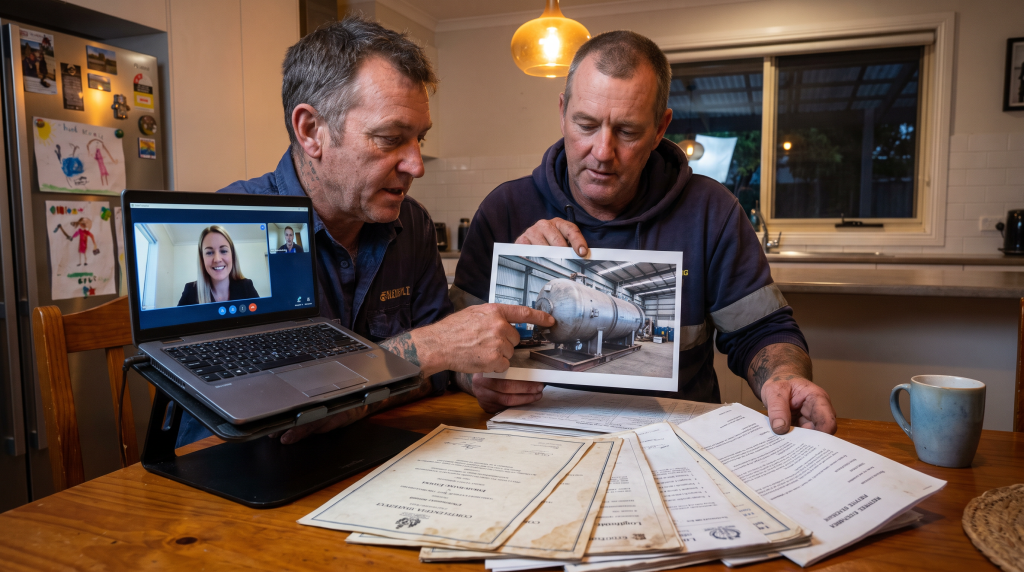
Digital evidence collection has also made the process more accessible. A decade ago, compiling a portfolio meant physical paperwork and in-person interviews. Now, most RPL providers — including 3CIR — accept scanned documents, digital references and online interviews, meaning a worker based regionally or working shift patterns can complete an assessment without taking leave or travelling to a training centre.
Finally, cost and time pressure on both individuals and employers has made RPL more attractive than traditional study. Traditional coursework for an equivalent qualification generally runs across several months of part-time attendance. RPL compresses that timeframe when sufficient evidence already exists, which matters to workers who cannot step away from full-time roles for extended study.
What Benefits And Outcomes Can You Expect From Completing The RPL Process?
The primary benefit is a nationally recognised qualification without duplicating learning you have already mastered on the job. That means less time away from work, lower cost than full enrolment, and formal paperwork that can support promotion applications, tender submissions or job applications requiring a stated qualification level.
Beyond the certificate itself, completing the process often clarifies exactly where your skills sit against a formal competency framework. Some workers discover they are only one or two units short of a higher-level qualification, prompting a short and targeted gap-training plan rather than a full re-enrolment. Others find their experience maps cleanly across multiple qualifications, opening pathways they had not previously considered — for example, someone with supervisory and compliance experience might qualify for both a Diploma of Leadership and Management and elements of a Work Health and Safety qualification.
For many, the practical outcome matters as much as the paper one. Having a qualification that reflects genuine, demonstrated competency tends to sit more comfortably with experienced workers who have felt overlooked on paper despite strong on-the-job performance.
3CIR’s published turnaround for the RPL process is typically two to four weeks once complete evidence is submitted, which is shorter than the months usually required for full coursework. Timelines vary with the qualification and the completeness of your evidence.
How Does The RPL Process Support Career Progression In Australia?
The RPL process supports career progression by giving you formal proof of the competency you already hold, which can be a gatekeeping requirement for promotion or tender eligibility. It does not create new skills — it certifies existing ones — but that certification is frequently the missing piece in an internal promotion case or external job application.
It is worth being cautious here: RPL certifies what you can already do. It does not, by itself, guarantee a pay rise or promotion. What it does is remove a common administrative barrier — many employers and government tender processes specify a minimum AQF qualification level, and without that paperwork, otherwise well-qualified staff can be excluded from consideration regardless of actual ability.
For workers weighing whether RPL is worth pursuing, the more reliable framing is opportunity cost: a qualification assessed through evidence you already hold, at a fraction of traditional course pricing, removes a barrier that might otherwise take months of part-time study to clear through conventional enrolment.
What Compliance Standards and Regulations Govern the RPL Process in Australia?
The rpl process is governed by the same national VET regulatory framework that governs all formal training in Australia. The Australian Skills Quality Authority (ASQA) is the national regulator responsible for ensuring Registered Training Organisations meet the Standards for RTOs, including how RPL assessments are conducted, evidenced and recorded.
Every RPL-issued qualification must be listed on training.gov.au, Australia’s National Register of VET, which is maintained by the Australian Government’s Department of Employment and Workplace Relations rather than by ASQA. This register is the authoritative source for confirming a qualification’s currency, its unit structure, and which RTOs are authorised to issue it — a fact you can verify for any 3CIR-supported qualification before enrolling.
The AQF governs qualification levels themselves, ensuring a Certificate IV, Diploma or Advanced Diploma issued via RPL carries the same national standing as one completed through classroom delivery. This is a common misconception worth addressing directly: an RPL-issued qualification is not a “lesser” version — it is the same AQF-certified outcome, assessed via a different evidence pathway.
Every learner is also required to hold a Unique Student Identifier (USI), a mandatory requirement for anyone undertaking nationally recognised training in Australia, linking your training records across providers into a single lifetime transcript. Assessors must be suitably qualified under the Standards for RTOs, and evidence must be sufficient, current, authentic and valid — meaning a five-year-old reference letter alone is unlikely to satisfy an assessor without supporting current evidence.
How Is the Recognition of Prior Learning Process Applied in Real Australian Workplaces?
In practice, the recognition of prior learning process is applied wherever a worker’s demonstrated experience outpaces their paper qualifications. A team leader who has managed rostering, budgets and staff performance reviews for several years, but never completed a formal leadership qualification, is a strong candidate for RPL against a Diploma of Leadership and Management.
Similarly, a compliance officer who has run internal audits, incident investigations and safety reporting processes for a mid-sized organisation may hold sufficient evidence to be assessed against a Work Health and Safety qualification, without attending a single classroom session. In government and quality auditing contexts, staff who have written policy documents, conducted stakeholder consultations or managed procurement processes often carry more than enough documented evidence to support an RPL application.
| Workplace Role | Evidence Typically Held | Resulting Qualification Pathway |
|---|---|---|
| Team leader/supervisor | Rosters, performance reviews, staff management records | Diploma of Leadership and Management |
| Compliance or safety officer | Incident reports, audits, safety procedures | Work Health and Safety qualification |
| Project coordinator | Project plans, budgets, stakeholder reports | Diploma or Advanced Diploma in Project Management |
| Government or policy officer | Policy documents, procurement records, briefings | Diploma in Government |
| Quality assurance staff | Audit reports, non-conformance records, ISO documentation | Diploma of Quality Auditing |
This table reflects common patterns rather than guaranteed outcomes — every assessment is individual, and the exact evidence required depends on the specific units within the target qualification, which you can review on the 3CIR RPL course page.
What Does The RPL Process Look Like Through 3CIR, And Who Qualifies?
3CIR assesses your existing work history, training records and workplace evidence against a specific nationally recognised qualification, with training and assessment delivered under 3CIR’s third-party arrangement with Asset College (RTO 31718). You qualify if you can demonstrate genuine, current competency in the relevant occupational area — typically two or more years of relevant work experience is a useful benchmark, though the exact evidence threshold depends on the qualification and its unit requirements.
The process generally runs through five steps:
- Initial enquiry and eligibility check — a short conversation or online form to confirm which qualification best matches your experience.
- Evidence gathering — collecting resumes, position descriptions, references, prior certificates, and work samples.
- Assessor mapping — a qualified assessor maps your evidence against each unit of competency in the target qualification.
- Gap identification — where evidence is insufficient for a unit, you are offered targeted gap training rather than a full course.
- Certification — once competency is confirmed across required units, Asset College (RTO 31718) issues your nationally recognised qualification.
If you want to understand exactly where your experience sits, start with a free RPL assessment to get a clear, no-obligation picture of your eligibility before committing to anything.
How Much Does The RPL Process Cost Through 3CIR?
Pricing is set by qualification level, with all figures GST-free and inclusive of assessment. As an indicative guide, standard 3CIR RPL pricing ranges from around $765 for a Certificate III to approximately $3,285 for a Graduate Diploma, with Certificate IV, Diploma and Advanced Diploma levels sitting between those two figures.
RPL is not automatically cheaper for every learner — it depends on how much of the qualification your existing evidence already covers — but for workers with strong, demonstrable experience, it is frequently the more cost-efficient route to the same AQF-recognised outcome.
For an exact quote against the specific qualification you are targeting, review current pricing and unit details on the 3CIR RPL course and pricing page or speak with a 3CIR adviser directly.
Who Benefits Most From The RPL Process As A Working Australian?
Working Australians in supervisory, compliance, project coordination or administrative roles tend to benefit most, particularly where a formal qualification has become a stated requirement for promotion, tender eligibility or a new job application. If you have been performing at a certain level for years without the paperwork to prove it, RPL is designed for your situation.
Outcomes vary by individual, but the practical next step is consistent: gather your evidence — position descriptions, references, past training certificates, examples of work — and have it reviewed against the specific qualification you are targeting. From there, an assessor can advise whether you are likely to qualify in full, partially, or need a structured plan to close remaining gaps.
3CIR also offers face-to-face support options from its Brisbane base for learners who prefer an in-person conversation about their evidence, alongside its primary flexible, online-first delivery model available Australia-wide. This flexibility suits shift workers, regional employees and anyone balancing full-time work with the assessment process. 3CIR is a veteran-owned organisation, and its student support structures are built to accommodate working adults managing study alongside employment.
Frequently Asked Questions
What documents do I need to start the RPL process?
You typically need a current resume, position descriptions, references from supervisors, and any prior training certificates or work samples. The more specific and current your evidence, the faster an assessor can map it against the qualification’s units of competency.
How long does the recognition of prior learning process take to complete?
3CIR’s published turnaround is typically two to four weeks once complete evidence is submitted. Some straightforward applications with strong evidence can move faster, while applications requiring gap training may take longer depending on the units involved.
Can the RPL process replace formal study entirely?
Yes, where your evidence fully demonstrates competency across every required unit, RPL can replace formal study entirely. Where gaps exist, you are usually only required to complete targeted gap training for those specific units, not the whole course again.
Is the RPL process recognised by employers across Australia?
Yes, qualifications issued via RPL carry the same AQF standing as those completed through classroom study, because they are issued by the same nationally registered RTO. Many employers across various sectors accept RPL-issued qualifications as equivalent, provided the qualification is listed on training.gov.au.
How much does the RPL process cost through 3CIR?
Indicative 3CIR RPL pricing ranges from around $765 for a Certificate III to approximately $3,285 for a Graduate Diploma, all GST-free. Exact pricing depends on the qualification level, and you can confirm the figure for your specific course on the 3CIR RPL course and pricing page.
Do I need a Unique Student Identifier (USI) to complete RPL?
Yes, a USI is mandatory for anyone undertaking nationally recognised training in Australia, including RPL. It is free to create online and links your training records across providers into a single lifetime transcript.
What happens if my evidence doesn’t fully cover a qualification?
If your evidence only partially covers a qualification, you are offered targeted gap training for the specific units not yet demonstrated. This avoids repeating an entire course and keeps the process efficient and proportionate to what you already know.
How is RPL different from just uploading my resume?
RPL involves a qualified assessor formally mapping your evidence against specific units of competency, not simply reviewing your resume informally. This structured mapping is what gives the resulting qualification its nationally recognised, AQF-equivalent status.
Start Your RPL Assessment
If your experience already reflects the skills a formal qualification is meant to certify, the recognition of prior learning process is the most direct way to close that gap without repeating study you have effectively completed. Training and assessment are delivered under 3CIR’s third-party arrangement with Asset College (RTO 31718), and the organisation has earned hundreds of five-star customer reviews on Trustindex. Start with a free RPL assessment to find out exactly where you stand, or enquire now to speak with an adviser about the qualification that best matches your work history.