
Launceston Workers with Recognition of Prior Learning?
Recognition of prior learning has become one of the most-searched pathways for Tasmanian workers seeking a faster, more affordable route to a nationally recognised qualification. If you’ve spent years working in healthcare, agriculture, manufacturing, or retail without ever holding formal paperwork to show for it, this article explains exactly how that experience can be converted into a qualification without stepping into a classroom.
Recognition of prior learning (RPL) allows Launceston workers to convert existing job skills and experience into a nationally recognised qualification without attending TAFE classes, sitting exams, or completing coursework. It’s designed for experienced workers across health, food manufacturing, agriculture, and retail sectors who already perform the skills a qualification certifies. The process is assessed against the same competency standards as TAFE, meaning the result carries identical national standing.
Prior learning recognition Australia-wide has surged in popularity because it respects the reality of the modern workforce — people learn on the job, not just in classrooms. For Launceston workers juggling shift work, family responsibilities, and long commutes to Hobart or Devonport for study, RPL removes the biggest barrier to formal qualification: time. Instead of enrolling in a 6–12 month TAFE programme, you can have your existing skills assessed and formally certified in a matter of weeks.
If you want to find out whether your experience qualifies, 3CIR’s free RPL assessment is the fastest way to get a clear answer. There’s no obligation, no cost, and no risk in checking eligibility before you commit to anything further.
What Is Recognition of Prior Learning and How Does It Work in Australia?
Recognition of prior learning is a formal assessment process used across the Australian vocational education and training (VET) system. It allows an assessor to evaluate your existing knowledge and skills — gained through work, informal training, or life experience — against the requirements of a nationally recognised qualification. If you can demonstrate you already meet those requirements, you’re issued the qualification without needing to complete additional study.
This isn’t a shortcut that produces a lesser certificate. An RPL-issued qualification is identical to one earned through classroom-based study at TAFE. Both are recorded on your Unique Student Identifier (USI) transcript and recognised by employers, industry bodies, and further education providers across Australia. The only difference is the pathway taken to demonstrate competency.
The process typically involves an eligibility check, a skills assessment against the relevant training package, and the collection of evidence — payslips, references, photos of completed work, or third-party statements from supervisors. An assessor from a Registered Training Organisation (RTO) reviews this evidence and determines whether you meet the standard. Where gaps exist, you may need to complete a small amount of targeted training to close them.
For Launceston-based tradespeople, health workers, and supervisors, this means years of on-the-job experience — often undervalued on a resume — can finally be converted into a credential that opens doors to promotion, higher pay, and pathways to further study at institutions like the University of Tasmania (UTAS).
Why Is Prior Learning Recognition Australia-Wide Gaining Popularity Among Experienced Workers?
Demand for RPL has grown steadily as more Australians realise formal study isn’t the only route to a qualification. According to the Australian Bureau of Statistics, full-time workers in Tasmania earn an average of $1,821 per week, yet many without post-school qualifications are capped well below that figure. The earnings gap between qualified and unqualified workers is a major driver behind the growing interest in prior learning recognition Australia-wide.
Traditional TAFE study demands time most working adults simply don’t have. A Diploma-level qualification delivered in the classroom can take 12 months or more, often requiring set class times that clash with shift work or caring responsibilities. RPL flips this model — instead of learning new content, you’re proving what you already know, which dramatically shortens the timeline.
Cost is another major factor. Traditional study pathways can run into thousands of dollars once you factor in course fees, materials, and lost income from reduced work hours. RPL pricing is typically fixed and transparent, with providers like 3CIR offering qualifications from $495 for a Certificate II through to $3,285 for a Graduate Diploma — GST-free, with no hidden fees.
There’s also a psychological shift underway. Experienced workers are increasingly unwilling to sit in a classroom being taught skills they’ve practised for a decade. RPL respects that expertise, treating work experience as legitimate evidence rather than requiring it be re-learned in a textbook format. This shift is reshaping how Tasmanian employers view qualifications, and how workers view their own career potential.
Which Launceston Industries Benefit Most from RPL, from Healthcare to Agriculture?
Healthcare is one of the strongest RPL candidates in the Launceston region. Workers supporting the Launceston General Hospital or aged care facilities across northern Tasmania often have years of hands-on patient care experience without a formal Certificate III or IV to match. National full-time health care and social assistance earnings sit at $1,420 per week according to the ABS — a figure that formal qualification can help unlock more fully through promotion and higher classifications.
Agriculture is another standout sector. Tasmania’s agricultural base, from dairy and cropping around the Tamar Valley to livestock operations across the north, employs thousands of workers with deep practical knowledge but limited paper qualifications. RPL allows farm supervisors and operations staff to formalise skills in leadership, work health and safety, and quality auditing — critical for those stepping into management roles.
Food manufacturing, a major employer in Launceston, given the region’s processing plants, similarly benefits. Line supervisors and quality control staff frequently have the skills for a Certificate IV or Diploma but lack the paperwork to prove it during a job application or internal promotion round.
Retail management is a fourth key beneficiary. Store managers and team leaders across Launceston’s CBD and shopping precincts often possess years of leadership experience without any formal Diploma of Leadership and Management. Converting that experience into a qualification strengthens both internal promotion prospects and external job market competitiveness — a clear demonstration of the purpose of recognition of prior learning as a career-advancement tool rather than just a paperwork exercise.
What Does the Process of RPL Actually Involve, Step by Step?
The process of RPL follows a structured, evidence-based methodology regulated by national VET standards. It begins with a free eligibility check, where you discuss your work history and the qualification you’re targeting with an assessor or enrolment adviser. This step establishes whether your experience is likely to align with the relevant training package before any fees are paid.
Next comes expert assessment. A qualified assessor maps your stated experience against the specific units of competency required for the qualification. This is where the real technical work happens — identifying exactly what evidence will be needed to demonstrate each unit has been met, and flagging any gaps early so there are no surprises later.
Evidence gathering follows. You’ll compile documentation such as position descriptions, payslips, references from supervisors, photos of completed work, training certificates, and any other material that demonstrates competency. This step usually takes the most time, though providers with strong support structures — such as dedicated case managers — can significantly speed this up by guiding you on exactly what’s needed.
Finally, once your evidence is reviewed and approved, you’re issued the qualification. It’s recorded nationally and appears on your USI transcript, with the same status as a TAFE-issued credential. The entire process, from eligibility check to qualification, commonly takes weeks rather than the months or years required for full classroom-based study — a stark contrast that explains why RPL has become such an attractive option for busy Launceston workers.
How Is RPL Regulated? Understanding ASQA, AQF and Nationally Recognised Qualifications
RPL doesn’t operate outside the formal VET system — it’s tightly regulated within it. The Australian Skills Quality Authority (ASQA) is the national regulator responsible for ensuring RTOs deliver training and assessment, including RPL, to consistent, auditable standards. Any RTO offering RPL must comply with the same quality requirements, whether a student studies via classroom, online delivery, or prior learning assessment.
The Australian Qualifications Framework (AQF) sets the national standard for every qualification level, from Certificate I through to Doctoral degrees. An RPL-issued Diploma sits at exactly the same AQF level as one completed through two years of TAFE attendance. This framework gives employers, universities, and industry bodies confidence that a qualification means the same thing, no matter how it was earned.
You can verify any nationally recognised qualification and its associated training package on training.gov.au, the official national register for VET in Australia. This searchable database confirms which RTOs are authorised to deliver specific qualifications, ensuring you’re never left wondering whether a credential is legitimate.
Because 3CIR delivers RPL qualifications under a third-party arrangement with Asset College (RTO 31718), every qualification issued is fully compliant with ASQA standards and appears on the national register. This regulatory backing is critical — it’s the reason employers across Tasmania and Australia accept RPL-issued credentials with the same confidence as a traditional TAFE certificate.
What Is the Real Purpose of Recognition of Prior Learning for Career Progression?
The purpose of recognition of prior learning goes well beyond simply issuing paperwork — it’s about closing the gap between demonstrated ability and formal recognition. Many experienced Launceston workers are already performing at a Diploma or Certificate IV level in their day-to-day roles, but are overlooked for promotion because they lack the credentials HR systems require.
RPL directly addresses this mismatch. By assessing real workplace evidence rather than requiring a return to study, it allows genuinely skilled workers to access promotions, tender for higher-level roles, or move into supervisory and management positions without a career pause. This is particularly valuable in industries facing skills shortages, where employers are eager to promote from within but constrained by formal qualification requirements.
There’s also a broader economic purpose. The Australian VET sector was built to create flexible, responsive skills recognition pathways that keep pace with a changing labour market. RPL supports this by validating skills gained through non-traditional means — defence service, volunteer work, or years of unstructured on-the-job learning — ensuring the system doesn’t penalise people simply because they learned differently.
For many workers, RPL also opens doors to further study. Holding a nationally recognised Diploma can provide credit toward higher education courses at institutions like UTAS, shortening degree pathways for those wanting to progress even further. In this sense, the purpose of recognition of prior learning is as much about future opportunity as it is about present recognition.
How Can an RPL Qualification Boost Earning Potential for Tasmanian Workers?
The earnings data make a compelling case for pursuing RPL. According to ABS Employee Earnings figures (August 2025), Australians holding a Diploma earn a median $1,462 per week, compared to just $1,000 per week for those without a post-school qualification — a gap exceeding $24,000 annually. For Tasmanian workers, where full-time earnings average $1,821 per week, formal qualification is often the deciding factor in reaching or exceeding that benchmark.
This earnings gap isn’t hypothetical — it reflects how employers structure pay scales, award classifications, and promotion criteria. A worker with a Diploma of Leadership and Management is typically eligible for supervisory pay bands unavailable to unqualified colleagues, regardless of how capable they are in practice. RPL provides a direct route to that pay band without the year-long delay of traditional study.
Beyond base salary, formal qualifications often unlock access to tender opportunities, government contracts, and roles requiring minimum qualification thresholds — particularly relevant in Tasmania’s construction, health, and agriculture sectors. Workers without formal credentials are frequently excluded from these opportunities entirely, regardless of experience.
There’s also a compounding effect. A Certificate IV or Diploma gained through RPL can serve as a stepping stone to further qualifications, each incrementally increasing earning potential and job security. For Launceston workers weighing up the investment, the maths is straightforward: a one-off RPL fee, often under $1,500 for a Diploma, can pay for itself within the first few months of a pay rise or promotion.
Why Is 3CIR a Leading Provider of RPL Qualifications for Launceston Workers?
3CIR has built a reputation as a leading provider of RPL qualifications for workers across Launceston and northern Tasmania. As a veteran-owned and veteran-operated organisation, 3CIR understands better than most the value of skills gained outside a traditional classroom — a philosophy that shapes how the entire RPL process is delivered.
Qualifications are issued under a third-party arrangement with Asset College (RTO 31718), giving every credential full national recognition and ASQA compliance. This regulatory backing means Launceston workers can trust that a 3CIR-issued Diploma of Leadership and Management, Diploma of Work Health and Safety, or Diploma of Quality Auditing carries the same weight as one issued by any TAFE institution in Australia.
Pricing transparency sets 3CIR apart from many providers. Qualifications range from a fixed $495 for Certificate II level through to $3,285 for a Graduate Diploma, with popular options like the Diploma of Leadership and Management discounted from $1,500 to $1,350. There are no hidden fees, and flexible payment options, including Afterpay, Klarna, Zip, GoCardless, and DebitSuccess, make the cost manageable for working Tasmanians.
3CIR’s 100% online delivery model removes the tyranny of distance that affects so many regional Tasmanian workers. There’s no need to travel to Hobart or interstate for assessment — the entire process, from initial enquiry to final qualification, happens remotely with dedicated support along the way.
What Makes Completing RPL Through 3CIR Different from Traditional TAFE Study?
Traditional TAFE study is built around a fixed curriculum, set class times, and a semester-based calendar — a structure that works well for school leavers but poorly for working adults with existing skills. Completing RPL through 3CIR strips away this rigidity, focusing purely on evidence of what you already know rather than requiring you to sit through content you’ve long since mastered.
Timeframes are the most obvious difference. Where a TAFE Diploma might take 12–24 months of part-time study, 3CIR’s RPL pathway is designed to move at the pace of your evidence gathering — often completed within a matter of weeks once documentation is submitted. This suits shift workers, parents, and anyone unable to commit to fixed class schedules.
Support structures also differ significantly. Rather than being one of hundreds of students in a lecture theatre, you’re guided by a dedicated assessor who understands exactly what evidence your qualification requires. This one-on-one approach reduces the guesswork and anxiety that often accompany formal assessment processes.
Cost structure is another clear point of difference. 3CIR’s fixed, published pricing means you know the total cost upfront — no enrolment fees, no resource charges, no surprise invoices partway through. This transparency, combined with flexible payment plans, makes RPL a genuinely accessible alternative to the often opaque costs associated with traditional TAFE enrolment.
How Do Launceston Workers Get Started with 3CIR’s Online RPL Process?
Getting started is deliberately simple. The first step is a free RPL assessment, where you discuss your work history, current role, and the qualification you’re targeting with 3CIR’s team. This conversation establishes your eligibility before you spend a single dollar, ensuring you proceed only if there’s a genuine pathway to qualification.
From there, an assessor maps your experience against the specific units of competency required and identifies the evidence you’ll need to provide. This might include payslips, position descriptions, supervisor references, or photographic evidence of work performed — all coordinated through 3CIR’s online portal rather than requiring in-person visits.
Once evidence is submitted, 3CIR’s assessment team reviews everything against the qualification’s requirements. If gaps exist, you’ll be advised exactly what additional evidence or brief training is needed — no ambiguity, no wasted effort. This structured feedback loop is designed to keep the process moving efficiently toward completion.
The final step is qualification issuance. Once your evidence satisfies all requirements, your nationally recognised qualification is issued and recorded against your USI. For Launceston workers ready to convert years of hard-earned experience into a formal credential, enquiring now is the fastest way to begin.
Frequently Asked Questions
What is RPL and how does it work in Australia?
RPL, or recognition of prior learning, assesses your existing skills and work experience against the requirements of a nationally recognised qualification. If your evidence demonstrates competency, you’re issued the qualification without needing to study. It’s regulated under the same AQF and ASQA standards as TAFE and university-delivered courses across Australia.
Can I get a qualification through RPL without going to TAFE?
Yes, RPL is specifically designed as an alternative to TAFE attendance. Instead of classroom learning, you provide evidence of skills already gained through work experience. The resulting qualification is nationally recognised and identical in standing to one earned through traditional TAFE study.
How long does RPL take compared to a traditional diploma?
RPL typically takes weeks rather than the 12–24 months required for a traditional Diploma. The timeline depends largely on how quickly you can gather required evidence such as payslips, references, and work samples. Providers with dedicated assessor support, like 3CIR, can significantly speed up this process.
How much does an RPL qualification cost in Australia?
RPL pricing varies by qualification level, typically starting around $495 for a Certificate II and reaching $3,285 for a Graduate Diploma. Popular Diploma-level qualifications often sit around $1,350 after discount. Fixed, transparent pricing with no hidden fees is standard among reputable RTOs like 3CIR.
Can emergency services experience count towards a qualification?
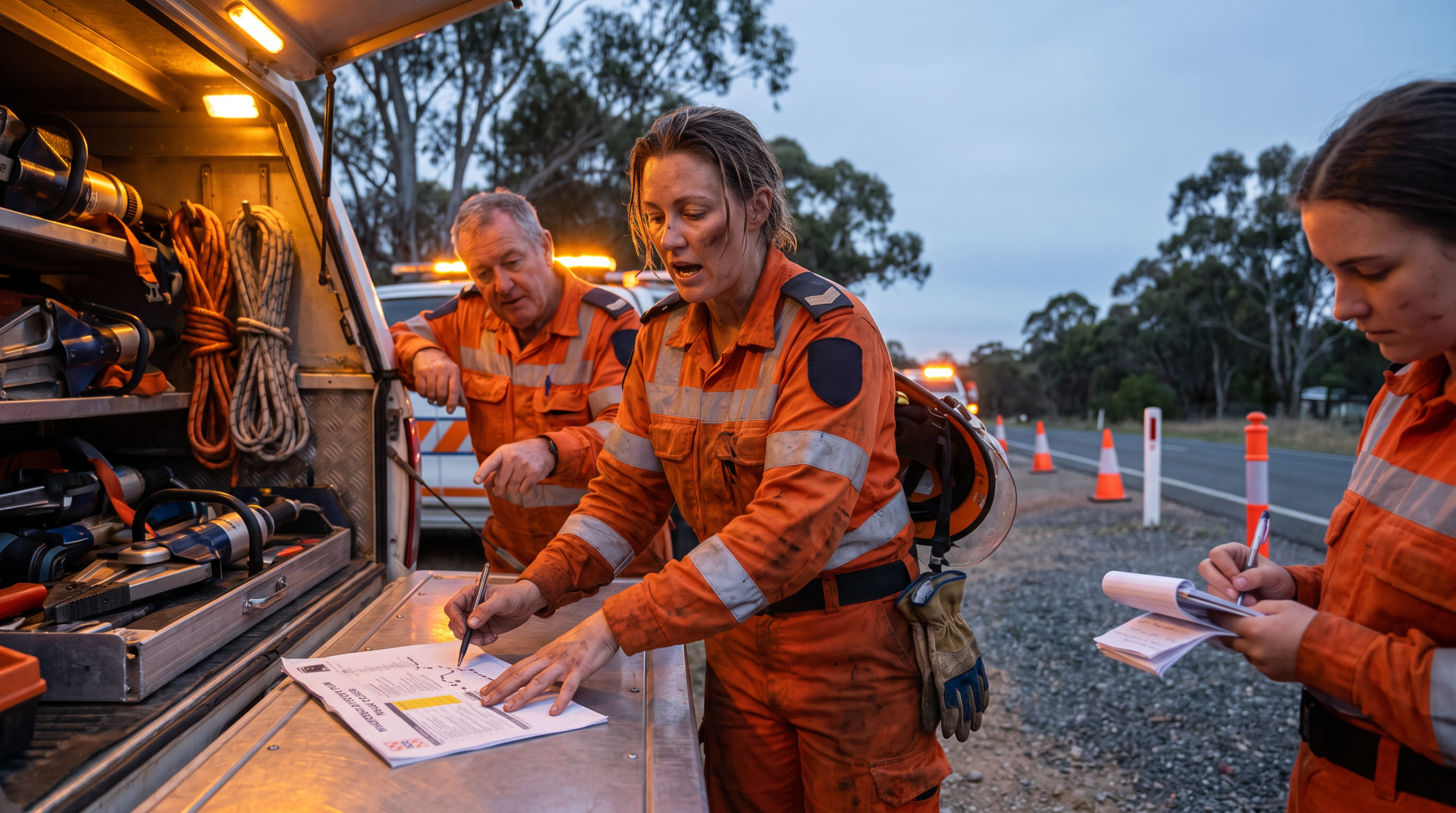
Yes, emergency services experience often aligns closely with qualifications in leadership, work health and safety, and operations management. Incident command, risk assessment, and team leadership skills developed on the job are exactly the kind of evidence RPL assessors look for. 3CIR offers a 25% discount for emergency services personnel pursuing these pathways.
How can I turn my military experience into a civilian qualification?
Military experience in leadership, logistics, and safety management translates directly into civilian qualifications through RPL. An assessor maps your ADF roles and responsibilities against relevant units of competency, identifying where your service already meets the standard. 3CIR, being veteran-owned, specialises in guiding this transition with a 25% veteran discount available.
Is an RPL qualification recognised by employers Australia-wide?
Yes, RPL-issued qualifications are nationally recognised under the Australian Qualifications Framework and appear on your USI transcript identically to TAFE-issued credentials. Employers across Australia treat them with equal standing. You can verify any qualification’s national recognition status via training.gov.au.
What happens if I don’t have enough evidence for full RPL?
If evidence gaps exist, your assessor will identify exactly what’s missing and outline options to close them. This may involve gathering additional documentation or completing a small amount of targeted training. It doesn’t mean you’re ineligible — it simply means part of the qualification may require supplementary evidence or study.
Do I need to attend Launceston or Hobart in person for RPL assessment?
No, 3CIR delivers its entire RPL process online, meaning Launceston workers don’t need to travel to Hobart or elsewhere. Evidence submission, assessor communication, and qualification issuance all happen remotely. This removes a major barrier for regional Tasmanian workers previously reliant on in-person TAFE attendance.
What qualifications can I get through 3CIR’s RPL pathway?
3CIR offers RPL pathways across Diploma of Leadership and Management, Diploma of Work Health and Safety, Diploma of Quality Auditing, Certificate IV in Business, Certificate IV in Work Health and Safety, and Diploma of Project Management, among others. Each is issued under Asset College (RTO 31718) and nationally recognised across all industries and states.
Take the Next Step Toward a Nationally Recognised Qualification
Years of hard-earned experience deserve formal recognition — and recognition of prior learning gives Launceston workers exactly that, without the time, cost, or disruption of traditional TAFE study. Whether you’re in healthcare, agriculture, food manufacturing, or retail management, your existing skills may already meet the standard for a nationally recognised Certificate or Diploma.
Start with a free RPL assessment to find out where you stand, with no cost and no obligation. If you’re ready to discuss your options directly, enquire now and speak with 3CIR’s team about the fastest pathway to your qualification.
Watch Our Course Information Videos
Learn more about relevant qualifications and career pathways:
- Leadership: https://youtu.be/7k57ygLXncA
- HR: https://youtu.be/jLUKTpqOOfU
- WHS: https://youtu.be/6QHTzXlE5C0
- Security: https://youtu.be/d20nwpEot8Q
- Business: https://youtu.be/8P_VySE0zjQ
- Marketing: https://youtu.be/VdQxJKmgZfs
- Government: https://youtu.be/PV_knsJnb5E
- Project Management: https://youtu.be/kz7CyEsRNyg