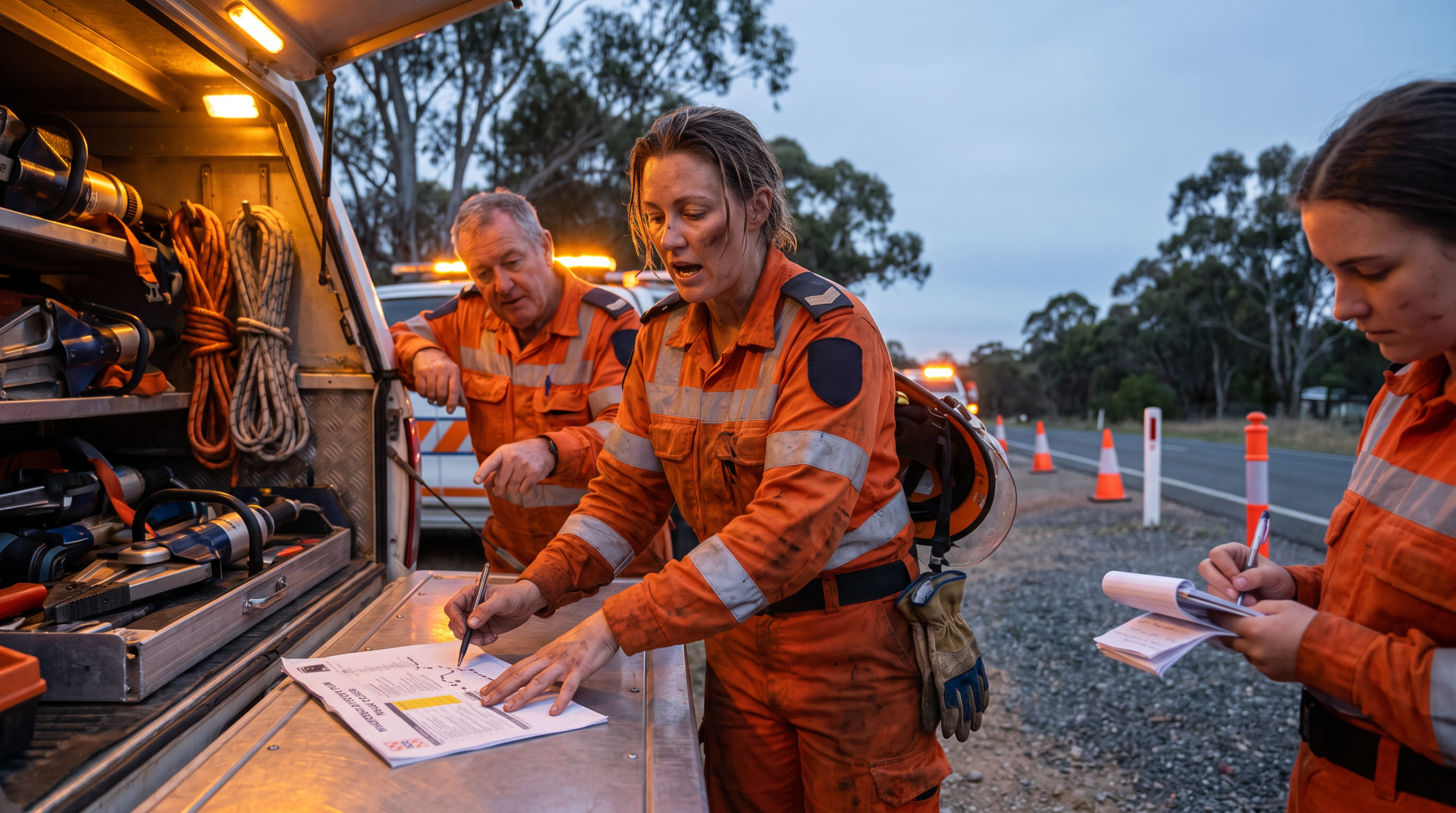

Empowering Emergency Responders: The Advantages of Formal Education
Emergency responders deserve recognition through formal qualifications that validate their expertise and open career advancement opportunities. Recognition of Prior Learning (RPL) enables firefighters, paramedics, police officers and emergency services personnel to convert their valuable experience into nationally recognised qualifications without traditional study.
Emergency responders are heroes who brave the risks every day to save others’ lives, including firefighters and paramedics, police officers, SES volunteers, disaster relief workers, and countless other dedicated professionals who serve our communities during critical moments.
What is Recognition of Prior Learning (RPL)?
Recognition of Prior Learning (RPL) is a formal assessment process within Australia’s Vocational Education and Training (VET) system that evaluates and recognises skills, knowledge and competencies individuals have gained through work experience, volunteer activities, life experiences, or informal training. Administered by Registered Training Organisations (RTOs) under the Australian Qualifications Framework (AQF), RPL acknowledges that valuable learning occurs in many environments beyond traditional classroom settings. This process allows experienced professionals, particularly those in emergency services and defence roles, to demonstrate their competencies through evidence portfolios, workplace assessments, and professional interviews rather than completing lengthy courses. RPL represents a crucial pathway for career advancement and professional recognition, enabling individuals to obtain nationally recognised qualifications that reflect their actual capabilities and expertise developed through practical experience in their respective fields.
Why Emergency Responders Need Formal Qualifications
Emergency responders possess vast experiences and skills developed through years of dedicated service, yet they may lack formal qualifications that accurately reflect their expertise. This gap between practical knowledge and formal recognition creates barriers to career advancement and professional development opportunities.
That is where Recognition of Prior Learning (RPL) steps in. RPL allows emergency responders to convert their knowledge and expertise into nationally recognised qualifications using evidence instead of exams or assignments. RPL acknowledges that learning occurs everywhere, not just inside classroom walls.
The formal education landscape for emergency services personnel has evolved significantly, with employers increasingly recognising the value of certified competencies alongside practical experience. Modern emergency response requires sophisticated decision-making, advanced technical skills, and leadership capabilities that formal qualifications help validate and enhance.
What Are the Key Advantages of Formal Education for Emergency Responders?
RPL education for emergency responders can bring many advantages. Here are the primary benefits of formalised instruction for emergency services professionals:
Career Advancement: Earning formal qualifications can open doors to career advancement, promotion or transition for emergency responders and help them stand out amongst competitors whilst demonstrating professionalism and competence. These qualifications provide concrete evidence of skills and knowledge that supervisors and recruitment panels can easily assess and value.
Recognition and Respect: Emergency responders deserve recognition and respect, which a formal qualification can provide by validating and acknowledging all their hard work in providing emergency response services to communities across their region. Furthermore, earning qualifications builds self-confidence and enhances reputation among peers and employers.
Personal Development: Completing formal qualifications through RPL represents significant personal achievement and professional growth. This process encourages reflection on skills and experiences whilst identifying areas for continued development and learning.
How Does RPL Improve Emergency Services Experience Into Qualifications?
The RPL process specifically designed for emergency services personnel recognises the unique nature of their work environment and skill development. Unlike traditional students, emergency responders have gained competencies through high-pressure situations, continuous on-the-job training, and real-world problem-solving experiences.
Through comprehensive assessment methods including skills demonstrations, workplace observations, and detailed evidence portfolios, emergency responders can showcase their abilities in areas such as crisis management, team leadership, risk assessment, communication under pressure, and technical expertise specific to their field.
The assessment process acknowledges various forms of evidence including incident reports, training certificates, supervisor testimonials, photographic evidence of work completed, and detailed reflective statements that demonstrate understanding of underlying principles and procedures.
Professional assessors with emergency services backgrounds understand the context and complexity of this work, ensuring fair and accurate evaluation of competencies against national training package standards.
Which Qualifications Are Available for Emergency Services Personnel?
Emergency services personnel can access numerous qualification pathways through RPL across various Australian Qualifications Framework levels. These include certificates and diplomas in Public Safety, Leadership and Management, Risk Management, Training and Assessment, and specialised emergency response qualifications.
Popular qualification areas include Workplace Health and Safety, Project Management, Government sector roles, Human Resources, and Business Administration. Many emergency responders also pursue qualifications in Training and Assessment, enabling them to share their expertise with future generations of emergency services personnel.
Higher-level qualifications such as Advanced Diplomas and Graduate Certificates provide pathways into senior management roles, policy development positions, and consulting opportunities within the emergency services sector.
The flexibility of RPL means emergency responders can pursue qualifications aligned with their career aspirations whilst building upon their existing knowledge and experience base.
What Is the RPL Assessment Process for Emergency Services?
The RPL assessment process begins with detailed consultation to understand each applicant’s background, experience, and qualification goals. Experienced assessors work collaboratively with emergency services personnel to identify relevant competencies and map experiences against qualification requirements.
Evidence collection forms the cornerstone of RPL assessment, with emergency responders compiling comprehensive portfolios demonstrating their skills and knowledge. This evidence includes workplace documentation, training records, performance reviews, incident reports, and detailed accounts of professional experiences.
Assessment methods are tailored to emergency services contexts, often including practical demonstrations in simulated emergency scenarios, professional interviews with industry-experienced assessors, and workplace-based observations where appropriate.
The collaborative approach ensures emergency responders receive appropriate support throughout the assessment process, with assessors providing guidance on evidence collection and portfolio development whilst maintaining assessment integrity and standards.
Start your RPL journey with a free consultation to explore your qualification options.
How Can Emergency Responders Strengthen Their Applications?
Successful RPL applications require strategic evidence collection and presentation. Emergency responders should maintain detailed records of their professional development activities, training completions, and significant incident responses throughout their careers.
Supervisor endorsements and peer testimonials provide valuable third-party validation of skills and competencies, particularly when these references can speak to specific examples of leadership, problem-solving, or technical expertise demonstrated in workplace situations.
Professional development activities such as conference attendance, additional training courses, and involvement in emergency services organisations all contribute valuable evidence for RPL portfolios whilst demonstrating commitment to continuous improvement. For more information, RPL for fire and rescue personnel.
Reflective practice documentation helps emergency responders articulate the learning gained from their experiences, connecting practical activities to theoretical knowledge and demonstrating deeper understanding of emergency response principles and procedures.
Recognition of Prior Learning (RPL) for Emergency Services Personnel
3CIR specialises in RPL assessment for emergency services personnel, understanding the unique skills and experiences these professionals bring to their roles. Our assessment process is designed specifically for firefighters, paramedics, police officers, SES volunteers, disaster relief workers, and other emergency response professionals.
Our experienced assessors have extensive backgrounds in emergency services, ensuring they understand the context, complexity, and significance of your professional experiences. This industry knowledge enables fair, accurate, and comprehensive assessment of your competencies against national standards.
The RPL pathway offers significant advantages for emergency services personnel, including recognition of extensive practical experience, faster completion times compared to traditional study, flexible assessment scheduling to accommodate shift work, and qualification outcomes that accurately reflect your professional capabilities.
3CIR’s partnership with Asset College (RTO 31718) ensures all qualifications meet Australian Skills Quality Authority (ASQA) standards and are nationally recognised across Australia. Our online delivery model provides flexibility for emergency services personnel working irregular hours or in remote locations.
Popular qualification pathways for emergency services include Leadership and Management, Workplace Health and Safety, Training and Assessment, Risk Management, and Public Safety qualifications. Higher-level qualifications provide pathways into senior management roles, policy development, and specialised consulting opportunities.
Special Recognition for Veterans and Emergency Services Personnel
3CIR proudly offers a 25% discount for all current and former defence and emergency services personnel, recognising the valuable service these professionals provide to our communities. This discount applies to all RPL assessment services and qualification pathways.
Our veteran-owned organisation understands the unique challenges faced by current and former emergency services personnel transitioning between roles or seeking career advancement. The combination of industry understanding, flexible delivery, and financial recognition makes 3CIR the preferred choice for emergency services RPL.
Emergency services personnel often possess transferable skills highly valued in civilian employment sectors. RPL provides the formal recognition necessary to demonstrate these capabilities to potential employers, whether within emergency services organisations or in related fields such as risk management, training, consulting, or project management.
The 25% discount recognises the significant contribution emergency services personnel make to community safety and acknowledges that formal recognition of their skills and experience should be accessible and affordable.
Current and former emergency services personnel can combine this discount with flexible payment options and personalised assessment scheduling to make their RPL journey as convenient and cost-effective as possible.
Frequently Asked Questions
What is Recognition of Prior Learning for emergency services personnel?
RPL for emergency services personnel is an assessment process that recognises skills and knowledge gained through professional experience in firefighting, paramedicine, policing, disaster response, or other emergency services roles. The process converts practical experience into nationally recognised qualifications without traditional study requirements, providing formal credentials that reflect actual workplace competencies and professional expertise. You can start your free RPL assessment to find out what qualifications match your experience.
How long does the RPL assessment process take for emergency responders?
The RPL assessment timeline varies depending on qualification level and individual circumstances, typically ranging from 6-12 weeks. Emergency services personnel often complete assessments faster due to their extensive practical experience and well-documented training records, with some straightforward assessments completed within 4-6 weeks of application submission.
Which qualifications can firefighters obtain through RPL?
Firefighters can pursue various qualifications through RPL including Leadership and Management, Workplace Health and Safety, Risk Management, Training and Assessment, and Public Safety qualifications. Popular pathways include Advanced Diploma of Leadership and Management, Certificate IV in Training and Assessment, and Diploma of Work Health and Safety, all recognising firefighting experience and skills.
Can police officers use RPL for career advancement?
Yes, police officers can leverage RPL for significant career advancement opportunities within law enforcement or transition to related fields. RPL recognises policing experience for qualifications in Leadership, Risk Management, Training, Investigation, and Public Safety, opening pathways to senior positions, training roles, security consulting, or government policy positions.
What evidence do paramedics need for RPL assessment?
Paramedics typically provide evidence including employment records, incident reports, patient care documentation, training certificates, supervisor references, and detailed descriptions of clinical experiences. Additional evidence may include continuing professional development records, peer testimonials, and reflective statements demonstrating clinical decision-making and patient care competencies aligned with qualification requirements.
How much does RPL cost for emergency services personnel?
3CIR offers a 25% discount for all current and former emergency services personnel on RPL assessment services. Costs vary depending on qualification level and complexity, with Certificate IV qualifications starting from approximately a competitive salary and Diploma/Advanced Diploma qualifications ranging from a competitive salary after discount application.
Are RPL qualifications recognised by emergency services employers?
Yes, RPL qualifications are nationally recognised under the Australian Qualifications Framework and accepted by emergency services employers across Australia. These qualifications carry the same recognition and value as traditionally completed qualifications, meeting employment requirements, promotion criteria, and professional development standards within emergency services organisations.
Can volunteer emergency services personnel access RPL?
Absolutely, volunteer emergency services personnel including SES volunteers, volunteer firefighters, and rescue service volunteers can access RPL to recognise their valuable experience and skills. Volunteer experience is assessed using the same standards as paid employment, with evidence including training records, incident responses, leadership roles, and community service contributions.
What support is available during the RPL process?
3CIR provides comprehensive support throughout the RPL process including initial consultation, evidence collection guidance, portfolio development assistance, assessment scheduling flexibility, and ongoing communication with experienced assessors. Emergency services personnel receive personalised support recognising their unique work environments and shift patterns to ensure successful completion.
Can RPL lead to university pathway opportunities?
Yes, RPL qualifications provide pathways to higher education including university degrees in Emergency Management, Public Safety, Leadership, or related fields. Many universities recognise VET qualifications for credit transfer or entry requirements, enabling emergency services personnel to pursue bachelor or postgraduate degrees building upon their practical experience and formal qualifications.
Relevant Video Resources
Explore these educational resources to learn more about qualification pathways:
- Leadership qualifications: Leadership Training Video
- HR qualifications: Human Resources Training
- WHS qualifications: Workplace Health and Safety
- Security qualifications: Security Training
- Business qualifications: Business Management
- Marketing qualifications: Marketing Training
- Government qualifications: Government Sector
- Project Management qualifications: Project Management