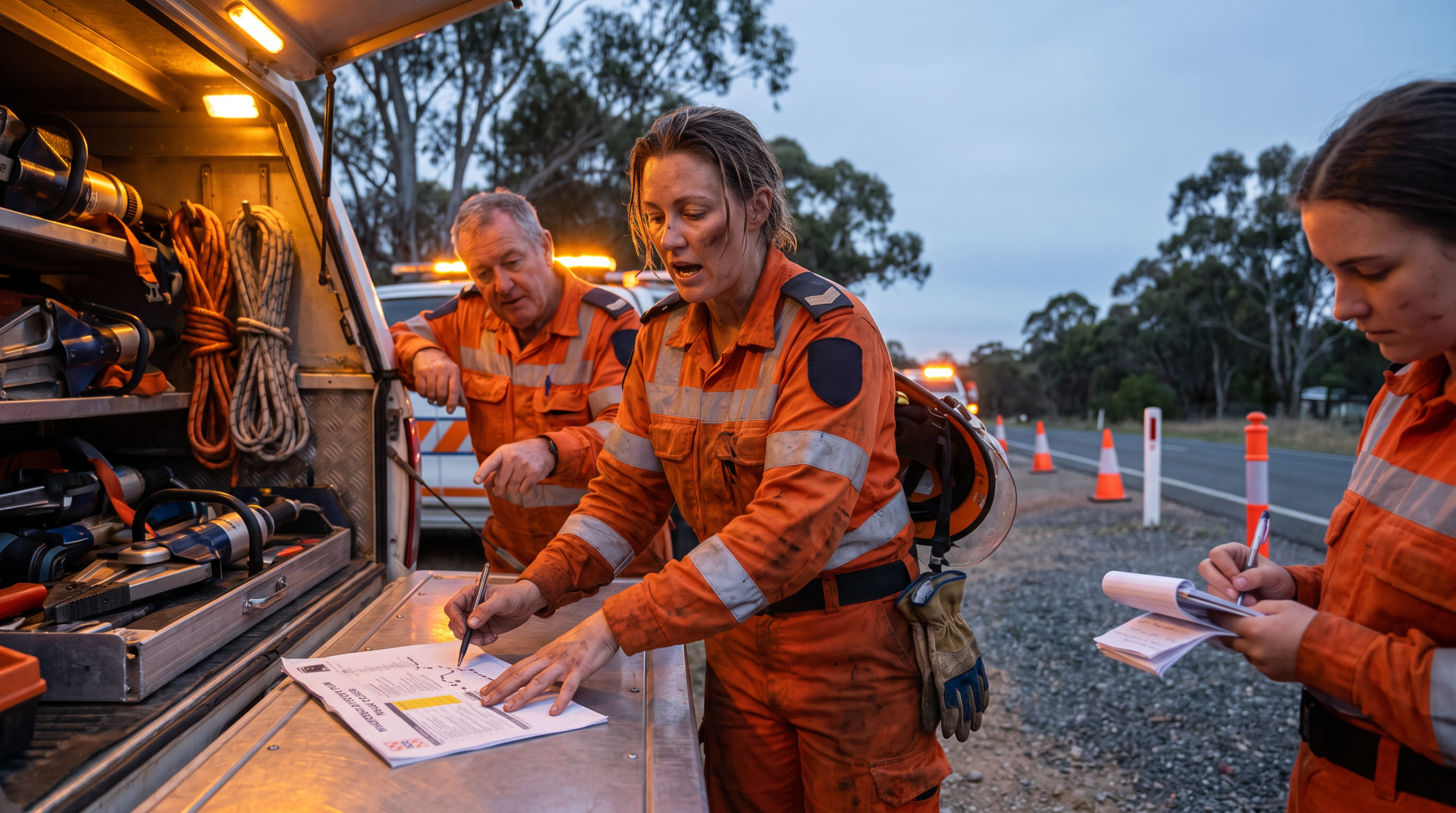

Formal Qualifications for Emergency Services – Serving Those Who Protect
What are Emergency Services Qualifications?
Emergency services qualifications are formal credentials recognised under the Australian Qualifications Framework (AQF) that validate the knowledge, skills, and competencies required for roles within police, fire, ambulance, and other emergency response organisations. These nationally recognised qualifications ensure standardised training outcomes across Australia’s emergency services sector and provide pathways for career advancement within and between agencies. The qualifications encompass various AQF levels from Certificate III through to Advanced Diploma, covering specialised areas including emergency management, public safety, incident response, and leadership within emergency services contexts.
Australian emergency services personnel play an essential role in society, saving lives and making daily sacrifices while contributing to national security. But are their efforts being recognised with career progression opportunities? This is where Recognition of Prior Learning (RPL) comes into play – let’s dive deep into Emergency Services RPL to see how 3CIR can assist these brave souls in obtaining qualifications they have rightly earned!
Emergency services professionals across Australia dedicate their careers to protecting communities, responding to crises, and maintaining public safety. From firefighters battling blazes to paramedics saving lives, these professionals develop extensive skills and knowledge through their daily experiences. However, without formal qualifications, their expertise may not be fully recognised in career advancement opportunities or when transitioning between roles or sectors.
Why Are Formal Qualifications Crucial for Emergency Services Personnel?
Like in any profession, credentials play a vital role. Emergency service workers need formal qualifications as part of their credentials for employment:
Validate Experience: Emergency services professionals often possess extensive experience. Formal qualifications serve to recognise and validate their skills, providing official recognition of competencies developed through years of practical application in high-pressure environments.
Enhance Your Career Opportunities: Formal qualifications can open the doors to promotions, lateral moves, or switching sectors within emergency services. Many senior positions require specific qualification levels, making formal credentials essential for advancement to leadership roles or specialised positions.
Confidence-Boosting Certification or Qualification: Earning an industry certification can boost self-assurance, reinforcing industry-approved skills and providing professional validation that enhances both personal confidence and peer recognition.
Cross-Sector Mobility: Qualifications enable movement between different emergency services sectors, allowing professionals to leverage their skills across police, fire, ambulance, and emergency management roles while maintaining recognised competency standards.
Ready to recognise your emergency services experience? Start your RPL assessment today and discover how your skills translate into formal qualifications.
What Types of Qualifications Are Available for Emergency Services Personnel?
The Australian VET sector offers numerous pathways for emergency services personnel to gain formal recognition. Through training.gov.au, you can explore various qualifications specifically designed for public safety and emergency response roles. These qualifications span multiple AQF levels and cover diverse specialisations within the emergency services sector.
Certificate III and IV qualifications provide foundational knowledge and skills for operational roles, while diploma and advanced diploma levels focus on management, coordination, and strategic planning responsibilities. Specialised qualifications cover areas such as emergency management, public safety, fire safety, emergency response coordination, and incident command.
The qualifications align with industry standards and regulatory requirements, ensuring that emergency services personnel meet the competency expectations of their employing organisations and regulatory bodies. This alignment supports professional development and maintains the high standards expected within Australia’s emergency services sector.
How Do Emergency Services Personnel Develop Their Skills?
Emergency services personnel develop their expertise through a combination of formal training, on-the-job experience, and continuous professional development. Initial training programs provide foundational knowledge, while daily operational experience builds practical competencies in emergency response, crisis management, and public interaction.
Ongoing professional development includes specialised courses, scenario-based training, inter-agency exercises, and leadership development programs. These experiences create a comprehensive skill set that encompasses technical competencies, decision-making abilities, communication skills, and team coordination capabilities.
However, much of this learning occurs outside formal education environments, making RPL an ideal pathway for recognising and credentialing these valuable competencies. Emergency services professionals often possess skills equivalent to or exceeding formal qualification requirements, developed through real-world application in critical situations.
What Challenges Do Emergency Services Workers Face in Career Advancement?
Despite their extensive experience and critical skills, emergency services personnel face several challenges in career advancement. Many positions, particularly at management levels, require formal qualifications that may not reflect the practical competencies developed through operational experience.
Time constraints represent another significant challenge. Emergency services personnel work demanding schedules that make traditional study pathways difficult to pursue. Shift work, on-call responsibilities, and the unpredictable nature of emergency response can limit opportunities for classroom-based learning.
Additionally, the unique nature of emergency services work means that relevant skills may not be immediately recognisable as meeting formal qualification requirements. The practical, experience-based learning that characterises emergency services development requires assessment methods that can effectively evaluate competency demonstration in real-world contexts.
Struggling with qualification requirements for promotion? Explore RPL options that recognise your emergency services experience as formal qualifications.
How Can Technology and Innovation Support Emergency Services Qualifications?
Modern emergency services increasingly rely on technology and innovation, creating new skill requirements and qualification pathways. Digital communication systems, advanced rescue equipment, data management platforms, and coordination technologies all require specific competencies that can be recognised through formal qualifications.
Online learning platforms and virtual reality training systems provide flexible options for emergency services personnel to develop additional skills while maintaining their operational commitments. These technologies enable competency development and assessment in ways that accommodate the unique scheduling demands of emergency services work.
The integration of technology in emergency services also creates opportunities for cross-sector skill application. Personnel with experience in emergency communication systems, data analysis, or coordination technologies may find their skills applicable to broader public safety or private sector roles when supported by appropriate qualifications.
What Role Do Qualifications Play in Inter-Agency Coordination?
Emergency response often requires coordination between multiple agencies, each with different training standards and operational procedures. Nationally recognised qualifications provide a common framework for understanding competency levels and role capabilities across different emergency services organisations.
Formal qualifications facilitate personnel exchange programs, mutual aid agreements, and joint training initiatives. When emergency services personnel hold recognised qualifications, their competencies can be readily understood and utilised by other agencies during multi-agency responses or temporary assignments.
This standardisation supports the development of a more flexible and responsive emergency services sector, where personnel can contribute effectively regardless of their primary employing organisation. The Australian Qualifications Framework provides the structure for this cross-agency recognition and mobility.
Recognition of Prior Learning for Emergency Services Personnel
Recognition of Prior Learning (RPL) represents the most effective pathway for emergency services personnel to convert their extensive experience into formal qualifications. RPL acknowledges that learning occurs in many environments beyond traditional classrooms, including workplaces, volunteer activities, and life experiences. For more information, RPL for fire and rescue personnel.
For emergency services personnel, RPL offers a streamlined approach to gaining qualifications that reflect their existing competencies. Rather than completing courses covering skills they already possess, RPL allows direct assessment of current capabilities against national training standards.
The RPL process involves comprehensive assessment of evidence demonstrating competency achievement. This evidence can include work samples, supervisor testimonials, training certificates, operational reports, and practical demonstrations. The RPL assessment process is designed to be thorough yet efficient, recognising the value of practical experience in competency development.
Emergency services RPL assessments consider the unique context of emergency response work, including high-pressure decision-making, team coordination under stress, and public interaction during crisis situations. These contextual factors are essential elements of emergency services competency that RPL can effectively recognise and credential.
Through RPL, emergency services personnel can gain qualifications in areas such as leadership, project management, workplace health and safety, risk management, and public sector administration. These qualifications support career advancement within emergency services while also providing credentials for potential transition to related fields.
Want to understand how RPL works for emergency services? Request a comprehensive RPL assessment tailored to your emergency services background.
Veterans and Emergency Services Personnel: Exclusive Benefits
3CIR recognises the valuable service provided by current and former defence personnel and emergency services workers through our exclusive 25% discount program. This substantial discount acknowledges the significant contribution these professionals make to Australian society and removes financial barriers to qualification achievement.
The discount applies to all RPL services and qualification programs, making formal credentials more accessible to those who have dedicated their careers to protecting others. This initiative reflects 3CIR’s commitment to supporting those who serve, whether in military or civilian emergency response roles.
Veterans transitioning from military service to emergency services careers can particularly benefit from this program, as their military experience often translates directly to emergency services competencies. The combination of RPL recognition and veteran discounts creates an accessible pathway for career transition and advancement.
Emergency services personnel, whether current or retired, can utilise this discount to pursue qualifications that enhance their career prospects, support promotion opportunities, or facilitate transition to related fields. The program recognises that service to the community extends beyond individual organisations and deserves ongoing support.
To access the 25% discount, eligible personnel need only provide evidence of their current or former service in defence or emergency services roles. 3CIR’s streamlined verification process ensures that deserving professionals can quickly access these benefits and begin their qualification journey.
Frequently Asked Questions
What qualifications can emergency services personnel achieve through RPL?
Emergency services personnel can achieve various AQF qualifications including certificates, diplomas, and advanced diplomas in areas such as emergency management, public safety, leadership, project management, workplace health and safety, and business administration. The specific qualifications depend on your experience and career goals.
How long does the RPL process take for emergency services workers?
The RPL timeline varies depending on qualification complexity and evidence preparation, but typically ranges from 4-12 weeks. Emergency services professionals often have extensive documentation that can expedite the process, and 3CIR works with your schedule to accommodate operational commitments. You can start your free RPL assessment to find out what qualifications match your experience.
What evidence do I need for emergency services RPL assessment?
Evidence includes training certificates, duty statements, performance reviews, incident reports, testimonials from supervisors, work samples, and documentation of roles and responsibilities. Your emergency services experience provides rich evidence sources for competency demonstration.
Can ADF veterans use their military experience for emergency services qualifications?
Yes, ADF veterans possess transferable skills highly relevant to emergency services roles. Military experience in leadership, crisis management, logistics, communications, and team coordination directly supports emergency services qualifications, and veterans receive a 25% discount on all 3CIR services.
Will employers recognise RPL qualifications from emergency services experience?
RPL qualifications are nationally recognised credentials equivalent to traditional study-based qualifications. Employers, including government agencies and private organisations, accept RPL qualifications as meeting formal qualification requirements for positions and promotions.
How much does RPL cost for emergency services personnel?
RPL costs vary by qualification level and complexity. Current and former emergency services personnel receive a 25% discount on all services. Contact 3CIR for specific pricing based on your target qualification and experience level.
Can part-time or volunteer emergency services workers access RPL?
Yes, part-time and volunteer emergency services workers can access RPL based on their experience and competency development. The assessment focuses on skills and knowledge rather than employment status, making qualifications accessible to all emergency services contributors.
What ongoing support does 3CIR provide after RPL completion?
3CIR provides ongoing support including career guidance, additional qualification pathways, and assistance with credential verification for employers. We maintain relationships with graduates to support continued professional development and career advancement.
How do emergency services RPL qualifications support career mobility?
RPL qualifications provide formal credentials that enable movement between emergency services sectors, promotion to management roles, and transition to related fields such as private security, corporate emergency management, or public sector administration.
What makes 3CIR different for emergency services RPL?
3CIR specialises in RPL for service professionals, understanding the unique context of emergency services work. Our assessors recognise the value of operational experience, and our veteran-owned organisation provides dedicated support with flexible processes designed for emergency services schedules and requirements.
Transform Your Emergency Services Experience Into Recognised Qualifications
Your dedication to protecting others deserves formal recognition. 3CIR’s specialised RPL process converts your emergency services experience into nationally recognised qualifications, supporting career advancement and professional development.
25% discount for all current and former defence and emergency services personnel
Related Training Videos
- Leadership Training: https://youtu.be/7k57ygLXncA
- Human Resources: https://youtu.be/jLUKTpqOOfU
- Work Health & Safety: https://youtu.be/6QHTzXlE5C0
- Security Services: https://youtu.be/d20nwpEot8Q
- Business Administration: https://youtu.be/8P_VySE0zjQ
- Marketing: https://youtu.be/VdQxJKmgZfs
- Government: https://youtu.be/PV_knsJnb5E
- Project Management: https://youtu.be/kz7CyEsRNyg