
Get RPL in Darwin
Recognition of Prior Learning gives Darwin workers a fast, credible pathway to a nationally recognised diploma without stepping into a classroom. This article explains how RPL works, who qualifies, and why it matters for professionals in Darwin’s construction, defence, tourism, and public sector industries. You’ll learn the exact process, timelines, and how to get started with a free assessment.
If you’ve spent years working in leadership, project coordination, security, or health and safety roles across the Northern Territory, you likely already hold the skills required for a formal qualification. The question isn’t whether you’re capable — it’s whether that capability has been documented and certified. That’s precisely the gap RPL closes, and it’s why an increasing number of Darwin-based workers are turning to this pathway instead of enrolling in lengthy, classroom-based courses.
Ready to see what your experience is worth? Start with a free RPL assessment and find out which diploma pathway fits your career.
What Is the Definition of Recognition of Prior Learning and How Does It Work?
Recognition of Prior Learning, commonly abbreviated as RPL, is a formal assessment process used across Australia’s vocational education and training (VET) sector. The definition of recognition of prior learning centres on one principle: skills and knowledge gained through work experience, informal training, or life experience can be assessed against the requirements of a nationally recognised qualification. If your experience matches the required competencies, you’re issued the qualification — without attending classes or sitting exams.
To define recognition of prior learning simply: it is the process of comparing your existing evidence — job descriptions, references, licences, project records, and workplace documentation — against the units of competency listed in a training package. Assessors employed or contracted by a Registered Training Organisation (RTO) review this evidence to determine whether you meet the standard expected of someone who completed the course through traditional means. Where gaps exist, additional evidence or a short task might be requested to close them.
This isn’t a shortcut that lowers standards. It’s a formal, ASQA-regulated process that ensures every qualification issued continues to meet the competency benchmarks set by the Australian Qualifications Framework (AQF). The rigour is identical — only the delivery method changes. For further details on how this process is structured, see the official RPL explainer.
For Darwin workers, this matters enormously. Many people in the NT workforce — particularly in construction, logistics, and government roles — have accumulated a decade or more of hands-on experience without ever converting that into a paper qualification. RPL exists specifically to correct that imbalance, recognising competency wherever it was earned, not just where it was formally taught.
Why Recognition of Prior Learning Matters for Darwin’s Growing Industries
Darwin’s economy is expanding rapidly, driven by defence infrastructure projects, resource development, tourism recovery, and public sector growth. This growth is creating sustained demand for qualified supervisors, project coordinators, WHS officers, and managers — roles that increasingly require a formal qualification as a baseline hiring criterion, even when the applicant already has the practical skill.
The Northern Territory’s construction sector alone has seen significant investment tied to defence and infrastructure projects, and employers are under pressure to demonstrate compliance with safety and management standards. This has pushed many organisations to require formal qualifications for tender eligibility and insurance purposes, not just personal development. Workers without a diploma can find themselves overlooked for promotions despite years of proven capability.
Government and public sector employment in Darwin also continues to expand, with roles in administration, project management, and risk management often tied to enterprise agreements that reward formal qualifications with salary progression. Without a recognised credential, experienced workers can be capped at a pay grade regardless of demonstrated performance.
Tourism and hospitality, both critical to Darwin’s identity, face similar pressures as businesses professionalise their management structures post-pandemic. Supervisors who’ve run operations for years without formal recognition are now finding that qualifications matter when applying for regional or interstate opportunities. RPL provides a fast, accurate way to close this gap without pausing a career to study full-time.
Which Diploma RPL Pathways Are Available to Darwin Workers?
Multiple diploma rpl pathways are available to Darwin-based workers across in-demand industry areas. These include Diploma of Leadership and Management, Diploma of Business, Diploma of Work Health and Safety, Diploma of Project Management, Diploma of Government, and Diploma of Quality Auditing, among others. Each pathway is mapped to real workplace competencies common in Darwin’s key industries.
Leadership and management qualifications suit supervisors, team leaders, and operations staff across construction, mining services, and government departments. If you’ve been responsible for rostering, performance management, budgeting, or reporting, you likely already meet several core units within this qualification.
Work Health and Safety diplomas are particularly relevant given the NT’s heavy construction and industrial activity. WHS officers, safety coordinators, and site supervisors with several years of frontline safety responsibility are strong candidates for this pathway, especially where they’ve managed incident reporting, risk assessments, and safety audits.
Project management, security and risk management, and cybersecurity diplomas round out the options for Darwin’s more specialised sectors, including defence-adjacent contractors and public sector risk teams. Across all these pathways, more than 37 qualifications are available from Certificate III through to Graduate Diploma level, giving Darwin workers genuine choice depending on their career stage and goals.
What Are the Key Benefits and Outcomes of Choosing Fast RPL?
Fast rpl delivers a formal qualification in weeks rather than months or years. Where a traditional diploma might take 12–18 months of part-time study, an RPL pathway can be completed in as little as 2–6 weeks, depending on how quickly evidence is gathered and submitted. This speed doesn’t compromise quality — it simply reflects that the competency already exists.
Cost efficiency is another major benefit. Because RPL doesn’t require the delivery of new training content, it’s typically more affordable than a full enrolment, with pricing structured by qualification level rather than hours of instruction. This makes it accessible for individuals paying privately, not just those with employer sponsorship.
Flexibility is built into the process. There’s no need to take leave from work, relocate, or attend scheduled classes. Evidence can be gathered progressively, uploaded online, and reviewed remotely by qualified assessors — ideal for shift workers, FIFO employees, and those in remote NT locations where classroom access is limited or non-existent.
The outcome is a genuine, nationally recognised qualification — not a certificate of attendance or a lesser alternative. It carries the same standing on your resume, in job applications, and with employers as a qualification earned through years of classroom study, because it’s issued against the same competency standards under the AQF.
How Can Getting RPL Boost Your Career Progression and Earning Potential in Australia?
Getting RPL directly correlates with improved employment outcomes and higher earning potential across Australia. Data from the Australian Bureau of Statistics consistently shows that individuals holding a post-school qualification report higher median weekly earnings than those without one, alongside improved employment stability. For Darwin workers already performing at a qualified level, RPL simply formalises what employers are already paying for informally.
Promotion eligibility is often the most immediate benefit. Many organisations, particularly in government and construction, use qualifications as a gatekeeping requirement for supervisory and management tiers. Workers who’ve been performing management duties without the title often find that an RPL-issued diploma unlocks the promotion that experience alone hadn’t secured.
Qualifications also support mobility between industries and states. A Diploma of Leadership and Management or WHS obtained through RPL is portable — recognised by employers in Perth, Brisbane, or Adelaide exactly as it would be in Darwin, since it’s certified under the same national framework. This matters for NT workers considering interstate opportunities or FIFO arrangements.
Tender and contract eligibility is a further consideration for self-employed tradespeople and small business owners in Darwin. Government and major project tenders frequently require nominated personnel to hold specific qualifications. Without them, otherwise qualified operators can be excluded from bidding altogether, regardless of their track record.
What Compliance Standards and National Recognition Apply to RPL Qualifications?
All RPL qualifications must comply with standards set by the Australian Skills Quality Authority (ASQA), the national regulator for the VET sector. ASQA audits Registered Training Organisations to ensure assessment processes — including RPL — meet consistent, defensible standards regardless of which provider issues the qualification.
The Australian Qualifications Framework (AQF) governs the structure and level of every qualification issued in Australia, from Certificate I through to Doctoral degrees. A Diploma issued via RPL sits at the same AQF level as one earned through classroom delivery, meaning employers, universities, and licensing bodies treat it the same way.
Every qualification issued is recorded under your Unique Student Identifier (USI), which is required for all nationally recognised training in Australia. This creates a permanent, verifiable record of your qualification that employers can check, and that follows you regardless of which RTO issued it or where you relocate.
Delivery under a properly registered RTO is non-negotiable. Training discussed in this article is delivered under a third-party arrangement with Asset College, RTO #31718, ensuring every qualification issued meets full regulatory compliance and carries genuine national recognition — not a private certificate with no formal standing.
Why Is 3CIR a Leading Provider for Diploma RPL in Darwin?
3CIR has built a reputation as a leading provider for diploma rpl by combining assessment expertise with a genuine understanding of the workplaces Darwin professionals operate in. As a veteran-owned and veteran-operated organisation, 3CIR brings firsthand understanding of structured, competency-based environments — the same environments many Darwin workers in defence, construction, and government have come from.
Coverage spans more than 37 qualifications across eight career areas, including leadership and management, business, work health and safety, project management, security and risk management, government, cybersecurity, and quality auditing. This breadth means Darwin workers aren’t forced into a generic pathway — the qualification is matched to their actual role and evidence.
Pricing is transparent and GST-free, ranging from $495 for a Certificate II through to $3,285 for a Graduate Diploma, with flexible payment plans available through Afterpay, Klarna, Zip, GoCardless, and DebitSuccess. This removes the financial barrier that often stops experienced workers from formalising their skills.
3CIR’s national delivery model means Darwin-based applicants aren’t disadvantaged by geography. The entire assessment process occurs online, with dedicated support staff guiding applicants through evidence collection — a critical step in a city where face-to-face RTO options are limited compared to southern capitals.
How Does 3CIR’s Fast RPL Process Deliver Flexible, Support-Driven Results?
3CIR’s fast rpl process follows four clear steps: submit an application, complete a free assessment, enrol and gather evidence, then receive your qualification. Each stage is designed to minimise friction and keep momentum, particularly for shift workers and those in remote NT locations juggling irregular schedules.
The free assessment stage is critical — it identifies which qualification and units you’re likely to meet based on your work history, before you commit financially. This upfront transparency means you know your likely outcome before paying anything, reducing risk for applicants unsure whether their experience qualifies.
Evidence gathering is supported, not left to guesswork. Applicants are guided on exactly what documentation strengthens their case — position descriptions, supervisor references, project records, licences, and photographic evidence where relevant. This structured support materially increases the speed and success rate of applications compared to self-managed processes.
Ongoing support continues through to qualification issue, with assessors available to clarify requirements and applicants kept informed of progress. This support-driven model is what allows genuinely fast turnaround — often within weeks — without sacrificing the integrity of the assessment.
What Is the RPL Pathway and How Do You Qualify for It Through 3CIR?
RPL is 3CIR’s flagship service, built specifically for Australians who’ve gained real skills through work but never received formal recognition. You qualify if you have relevant paid or unpaid work experience, supervisory responsibility, or informal training that aligns with a nationally recognised qualification — no minimum years are fixed, as it depends entirely on the depth of your evidence.
The pathway follows five practical steps: submit your application detailing your work history, complete a free eligibility assessment with a 3CIR advisor, enrol in the matched qualification, gather and submit supporting evidence, and receive your nationally recognised certificate upon successful assessment. Most Darwin applicants move through this process within 2–6 weeks.
Eligible applicants include tradespeople, supervisors, project coordinators, safety officers, ADF veterans, emergency services personnel, and public servants — essentially anyone whose day-to-day role has involved responsibilities matching a diploma or certificate-level competency. If you’re unsure whether your background qualifies, a free assessment will clarify this without obligation.
Don’t let years of unrecognised experience limit your next opportunity. Book your free RPL assessment today and find out exactly which qualification matches your work history.
How Are Darwin Professionals Using RPL Qualifications in Real Workplaces?
Darwin professionals are using RPL qualifications to secure promotions, meet tender requirements, and transition into new industries without pausing their income. A construction supervisor with eight years of site experience, for example, might use a Diploma of Work Health and Safety obtained through RPL to satisfy a principal contractor’s requirement for a qualified safety lead on a major project.
Public sector employees are using leadership and management diplomas to meet the formal qualification criteria attached to enterprise agreement pay bands, converting years of informal team leadership into a documented credential that unlocks salary progression. This is particularly common in NT government departments where structured career pathways require evidence of formal qualification.
Small business owners and independent contractors in Darwin’s trades and logistics sectors are using diplomas to qualify for government tenders that mandate nominated personnel hold specific credentials. Without this, businesses with strong track records can be excluded from bidding purely on paperwork grounds — RPL closes that gap quickly.
Veterans transitioning out of the ADF and based in Darwin are using RPL to convert military leadership, logistics, and security experience directly into civilian-recognised diplomas, significantly shortening their transition into structured civilian employment.
How Are ADF Veterans and Emergency Services Workers Supported Through 3CIR’s RPL Pathway?
3CIR is a veteran-owned and veteran-operated organisation, giving it a distinctive understanding of how military and emergency services experience translates into civilian qualifications. ADF roles involving logistics, leadership, security, and risk management frequently map directly onto diploma-level competencies, and 3CIR’s assessors are specifically experienced in identifying this alignment.
Current and former defence and emergency services personnel receive a 25% discount on RPL qualifications through 3CIR, recognising both the value of their service and the transferability of their skills. This applies across leadership, WHS, security, and project management pathways relevant to Darwin’s defence-adjacent industries.
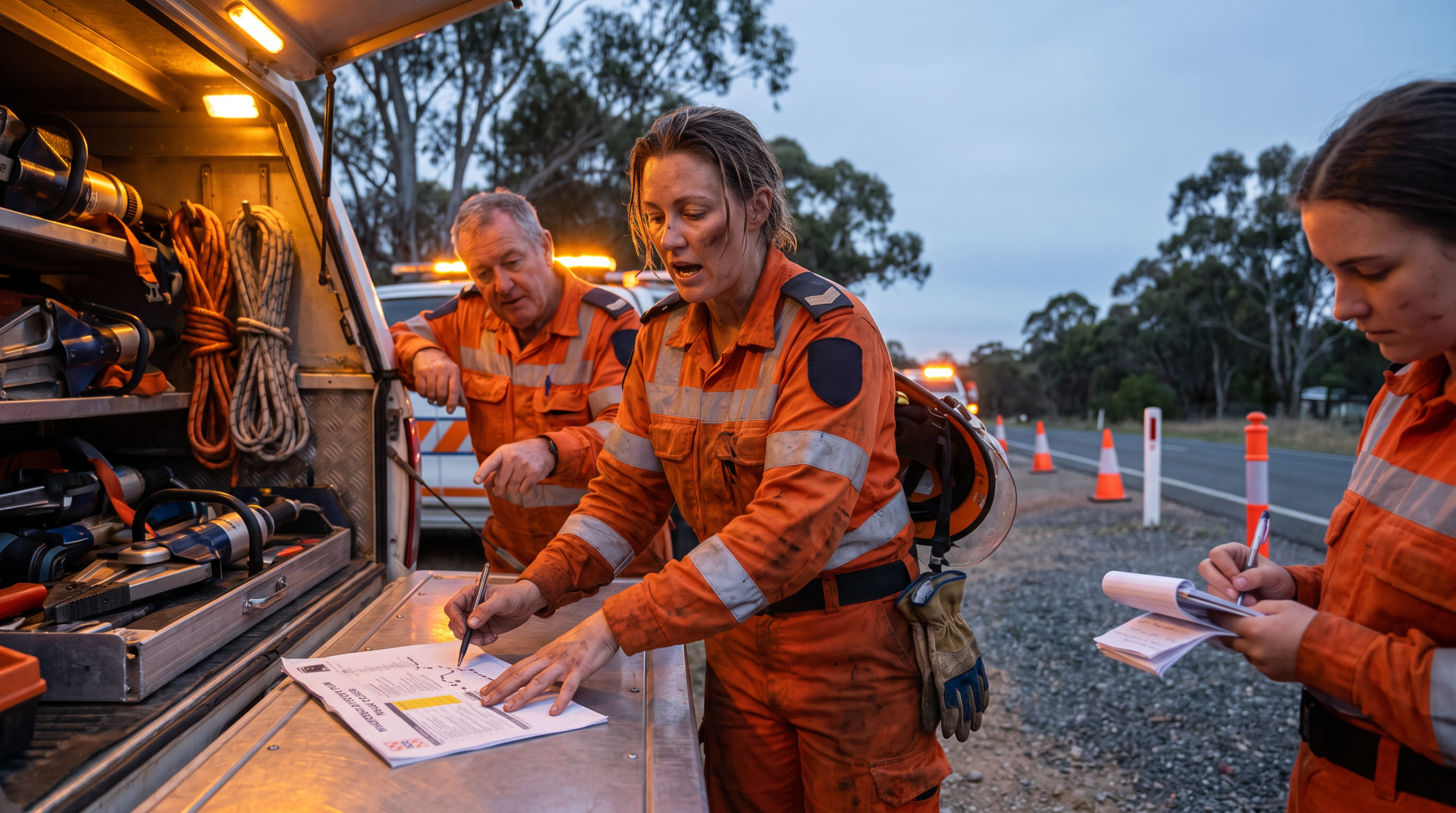
Emergency services workers — including police, fire, and ambulance personnel — often hold incident command, risk assessment, and team leadership experience that aligns closely with WHS and management diplomas. 3CIR’s assessment process is built to recognise this operational experience, even where it wasn’t gained in a traditional corporate setting.
For veterans transitioning from ADF service, this pathway offers a practical answer to one of the hardest transition questions: how to translate military rank and responsibility into a credential civilian employers understand immediately. A nationally recognised diploma does exactly that.
What’s Next for Recognition of Prior Learning as Australian Workforce Needs Evolve?
Recognition of Prior Learning is expected to grow in importance as Australia’s skills shortages persist across construction, health and safety, project management, and cybersecurity. Government and industry bodies continue to emphasise skills recognition as a faster lever than traditional training pipelines for addressing workforce gaps, particularly in regional centres like Darwin.
Digital verification is likely to become more prominent, with USI records and digital credentialing making it easier for employers to verify RPL-issued qualifications instantly. This reduces friction for both applicants and hiring organisations, reinforcing confidence in RPL as equivalent to traditionally delivered qualifications.
Industry bodies, including those overseeing project management and work health and safety standards, continue to refine competency frameworks to ensure RPL assessments remain rigorous as workplace practices evolve. This ongoing alignment protects the long-term credibility of RPL-issued qualifications.
For Darwin workers, this trajectory means RPL will likely remain — and strengthen as — the fastest, most credible route to formal recognition, particularly as employers lean further into qualification-based hiring and promotion criteria across the NT’s key growth industries.
How Do You Get RPL Started with 3CIR Today?
When you’re ready to get rpl under way, getting started with 3CIR is straightforward: submit your details for a free RPL assessment, discuss your work history with an advisor, and receive a clear recommendation on which qualification fits your experience. There’s no cost and no obligation at this stage — it’s designed purely to give you clarity.
From there, enrolment and evidence gathering are supported every step of the way, with dedicated staff available to answer questions about documentation, timelines, and payment options. Flexible payment plans, including Afterpay, Klarna, and Zip, make the process accessible regardless of your financial situation.
Whether you’re in Darwin’s construction sector, public service, tourism industry, or transitioning from ADF service, your experience already carries value — RPL simply makes that value visible on paper.
Frequently Asked Questions About RPL in Darwin
What is the definition of Recognition of Prior Learning?
Recognition of Prior Learning is a formal assessment process that compares your existing work experience and skills against the requirements of a nationally recognised qualification. If your evidence demonstrates the required competencies, you’re issued the qualification without classroom attendance, making it a legitimate alternative pathway under the AQF.
How fast is fast RPL through 3CIR?
Fast RPL through 3CIR typically takes between two and six weeks, depending on how quickly you gather and submit supporting evidence. This is significantly faster than traditional study, which can take 12–18 months, because no new content delivery is required — only assessment of existing competency.
Do I need formal training records to get RPL?
No, formal training records aren’t required to get RPL. Evidence can include job descriptions, supervisor references, licences, project documentation, and workplace records that demonstrate your practical competency, even where no certificate was issued at the time.
Can ADF veterans use RPL to get a civilian qualification?
Yes, ADF veterans can use RPL to convert military experience — particularly in leadership, logistics, and security roles — into a nationally recognised civilian diploma. 3CIR, as a veteran-owned RTO partner, also offers a 25% discount for current and former defence personnel using this pathway.
Is a diploma obtained through RPL nationally recognised?
Yes, a diploma obtained through RPL carries identical national recognition under the Australian Qualifications Framework as one earned through classroom study. It’s recorded against your Unique Student Identifier and recognised by employers Australia-wide, not just in the Northern Territory.
How much does diploma RPL cost in Darwin?
Diploma RPL pricing through 3CIR ranges from $495 for a Certificate II up to $3,285 for a Graduate Diploma, with GST-free pricing and flexible payment plans available. Costs vary depending on qualification level and complexity of assessment required.
Are emergency services workers eligible for RPL discounts?
Yes, current and former emergency services personnel are eligible for a 25% discount on RPL qualifications through 3CIR. This recognises the leadership, risk management, and safety competencies developed through frontline emergency service roles.
What happens if I don’t have enough evidence for RPL?
If your evidence doesn’t fully cover a qualification’s requirements, 3CIR’s assessors will identify the specific gaps and recommend additional evidence or a short supplementary task. This ensures you’re not disqualified outright but guided toward meeting the full competency standard.
Get Your Free RPL Assessment with 3CIR Today
Your years of workplace experience deserve formal recognition — and RPL makes that possible in weeks, not years. 3CIR’s veteran-owned team, national online delivery, and support-driven process mean Darwin workers no longer need to choose between career progression and time away from work.
Start your free RPL assessment now or enquire today to find out which diploma pathway matches your experience.
Watch Our Course Information Videos
Learn more about relevant qualifications and career pathways:
- Leadership: https://youtu.be/7k57ygLXncA
- HR: https://youtu.be/jLUKTpqOOfU
- WHS: https://youtu.be/6QHTzXlE5C0
- Security: https://youtu.be/d20nwpEot8Q
- Business: https://youtu.be/8P_VySE0zjQ
- Marketing: https://youtu.be/VdQxJKmgZfs
- Government: https://youtu.be/PV_knsJnb5E
- Project Management: https://youtu.be/kz7CyEsRNyg