Convert Frontline Command Into a Nationally Recognised Credential
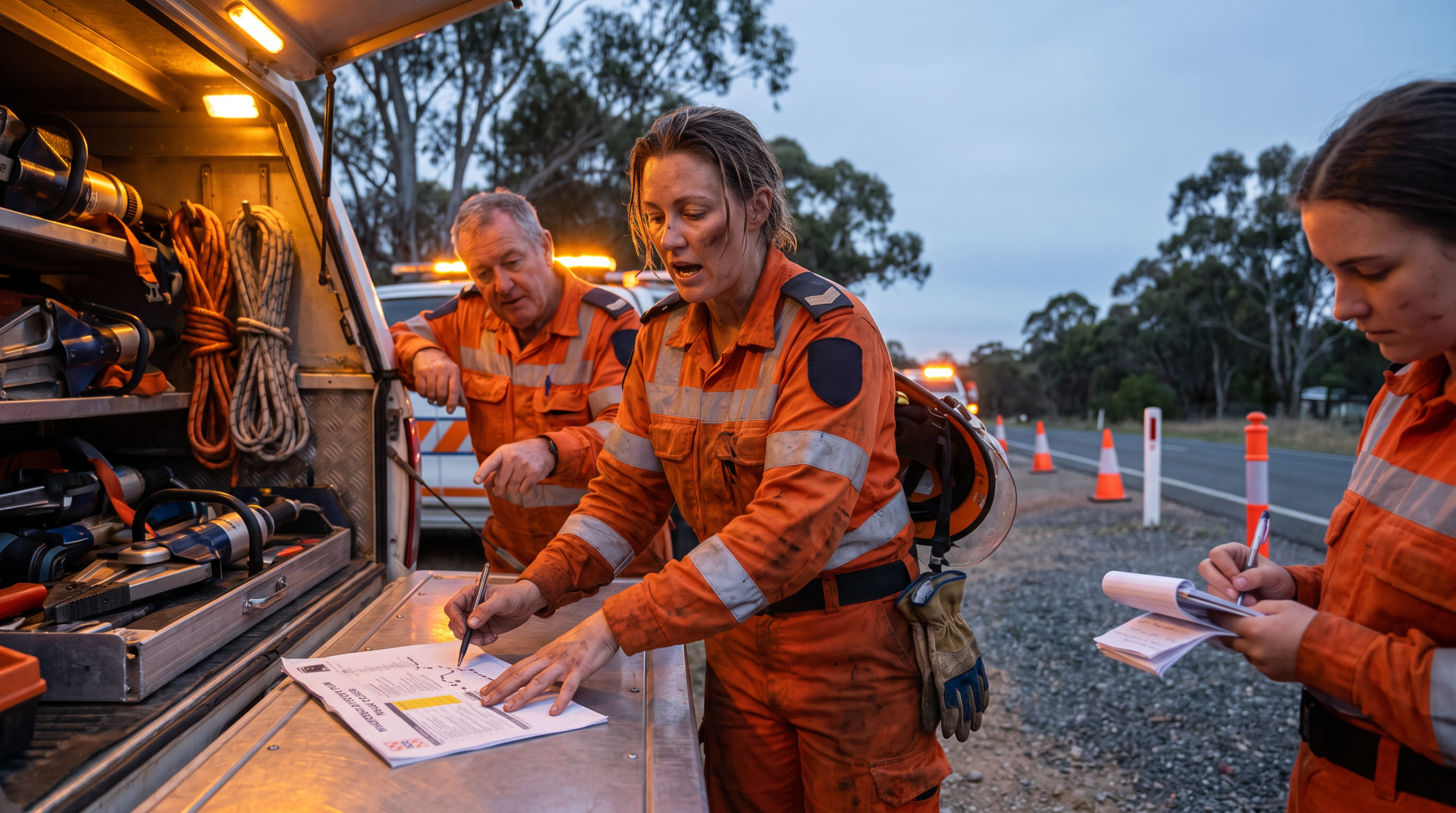
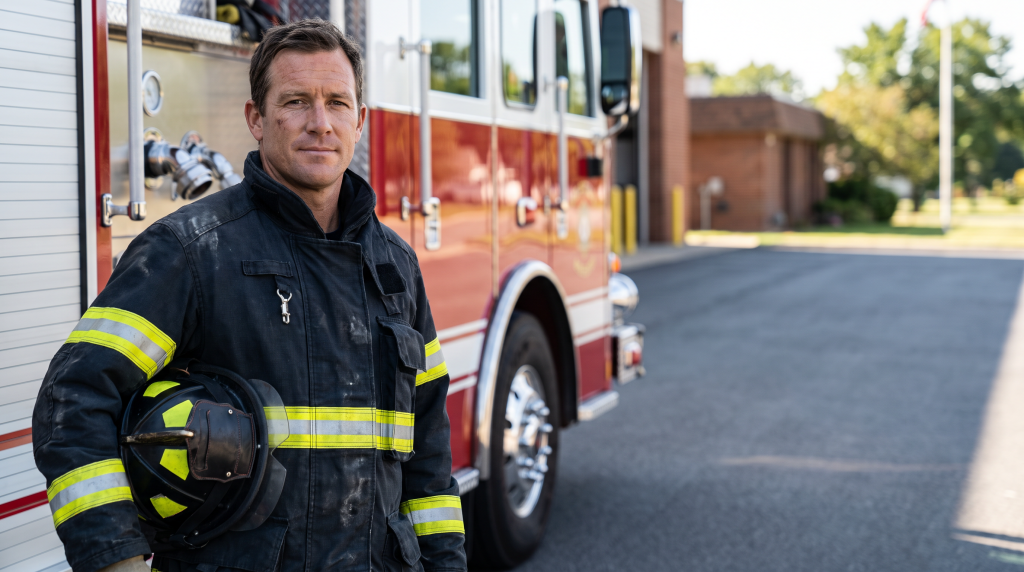
Fire rescue officers make split-second command decisions every shift, yet many leave the fireground without a formal qualification reflecting that expertise. RPL for fire rescue personnel converts years of incident command, crew supervision and multi-agency coordination into a nationally recognised Diploma of Leadership and Management — without classroom attendance or exams. This pathway benefits station officers, crew leaders and commanders across Australia’s fire and rescue services, delivering a credential with the same standing as one earned through years of formal study.
If you’ve commanded a fireground, supervised a crew, or coordinated a multi-agency response, you already hold leadership capability equivalent to formal management training. The challenge has never been competence — it’s been translating that competence into paper qualifications that employers, recruiters and further education providers recognise. That’s where Recognition of Prior Learning changes the equation entirely.
3CIR, a veteran-owned Australian Registered Training Organisation, specialises in converting frontline command experience — across fire, ambulance, police and defence — into qualifications recognised under the Australian Qualifications Framework (AQF). If you’re ready to see how your service record stacks up, start with a free RPL assessment today.
What Is RPL for Fire Rescue Personnel and How Does It Work?
Recognition of Prior Learning is a formal assessment process that matches your existing skills and experience against the units of competency within a nationally recognised qualification. For fire rescue personnel, this means your incident command decisions, crew briefings, risk assessments and after-action reviews are assessed as evidence of competency — not theoretical knowledge tested in an exam room.
The process typically targets the Diploma of Leadership and Management (BSB50420), an AQF Level 5 qualification designed for individuals who lead teams, manage resources and make operational decisions under pressure. Fire rescue officers commanding a truck, a shift, or a multi-crew response are already performing at this level daily. RPL simply provides the paper trail to prove it.
Rather than sitting through 12–24 months of coursework, you gather evidence — incident reports, performance appraisals, training records, statements from supervising officers — and submit it against the qualification’s ten units of competency (five core, five elective). An assessor reviews this evidence, may conduct a short interview or workplace observation, and determines whether you meet the standard. Where gaps exist, targeted evidence or a brief task can close them without restarting the whole process.
This is not a shortcut that lowers standards. It’s a legitimate, ASQA-regulated pathway recognised across Australia’s vocational education and training (VET) sector. Every qualification issued via RPL has the same standing as one completed through classroom delivery, and it’s recorded against your Unique Student Identifier (USI) for permanent verification.
For fire rescue personnel juggling shift work, family commitments and further study ambitions, RPL removes the biggest barrier to formal recognition: time. Most candidates complete the process in 4–8 weeks from initial assessment to qualification issue, compared to 18–24 months for traditional coursework.
Why Frontline Command Experience Matters Across Australia’s Emergency Services Sector
Fireground command is leadership under maximum pressure. Incident controllers make rapid decisions that affect crew safety, public safety, and resource allocation — often with incomplete information and life-safety consequences. This is precisely the capability the Diploma of Leadership and Management is designed to certify, yet it’s rarely recognised outside the fire service itself.
Australia’s emergency services sector employs tens of thousands of career and volunteer firefighters across state and territory fire and rescue services, including Fire and Rescue NSW, Fire Rescue Victoria, and Queensland Fire and Emergency Services. Command structures within these organisations closely mirror corporate management hierarchies — chain of command, resource planning, budget accountability, workforce supervision, and continuous improvement processes all feature prominently in senior fire rescue roles.
Despite this, fire rescue officers transitioning into corporate, government or private-sector leadership roles frequently find their experience undervalued on paper. Recruiters and HR departments that filter applications using qualification-matching software often overlook candidates without a formal diploma listed on their resumes, even when those candidates demonstrate leadership capabilities. This creates a genuine equity gap between capability and recognised credentialing.
Formalising this experience matters for several practical reasons. First, it meets the minimum qualifications for many public-sector and corporate management roles. Second, it strengthens applications for internal promotion within fire services themselves, where formal qualifications increasingly feature in selection criteria. Third, it provides a credential that remains valid and transferable if you later leave emergency services for civilian employment.
The Australian labour market increasingly values verified qualifications over experience alone, particularly as employers standardise recruitment against the AQF. A Diploma of Leadership and Management signals to any employer, in any sector, that you can lead people, manage change and deliver operational outcomes — because you’ve already been assessed as doing exactly that.
How Do RPL Pathways Compare Across Fire, Ambulance and Police Leadership Roles?
Emergency services RPL pathways share a common qualification target but differ slightly in the evidence collected and the operational context assessed. Understanding these distinctions helps you see where your experience fits and how it compares to colleagues across other frontline agencies.
RPL for fire rescue personnel typically draws evidence from incident command logs, crew management records, hazard and risk assessments, and post-incident debriefs. Station officers and commanders demonstrate competency in team leadership, workplace health and safety management, and operational planning — all core units within the Diploma of Leadership and Management.
RPL for ambulance personnel follows a similar structure but draws heavily on clinical team coordination, resource dispatch decisions, and multi-casualty incident management. Paramedic team leaders and operations supervisors demonstrate the same underlying competencies — leading under pressure, managing performance, and coordinating resources — but the evidence reflects clinical and dispatch environments rather than fireground command.
Diploma of leadership and management RPL for police candidates typically present evidence from watch-house supervision, patrol command, investigation team leadership and community engagement initiatives. Police sergeants, senior constables and inspectors demonstrate structured decision-making, staff development and stakeholder management — competencies directly aligned with the diploma’s core units.
Across all three pathways, the underlying assessment criteria remain consistent because the qualification framework doesn’t vary by employer. What changes is the context of the evidence — a fireground briefing, an ambulance dispatch decision, or a police operation debrief all demonstrate the same leadership competency through different operational lenses.
This consistency matters for multi-disciplinary emergency services personnel who’ve worked across agencies, or for those comparing pathways before committing. 3CIR assesses fire, ambulance and police candidates using the same rigorous, ASQA-compliant framework, ensuring equity across the emergency services sector regardless of which uniform you’ve worn.
What Are the Career and Salary Benefits of Turning Command Experience Into a Diploma of Leadership and Management?
Formal qualifications directly influence salary bands, promotion eligibility and post-service career mobility. For fire rescue personnel, a Diploma of Leadership and Management opens doors both within emergency services and across broader civilian management roles.
Within fire and rescue services, many senior officer and district commander positions now list formal management qualifications as desirable or essential selection criteria. Holding a diploma strengthens promotion applications and demonstrates commitment to professional development — a factor increasingly weighted in competitive internal recruitment processes.
Beyond the fire service, this qualification supports transition into operations management, project coordination, workplace health and safety leadership, and general management roles. Australian salary data for management roles requiring this qualification level typically ranges from $85,000 to $130,000 annually, depending on industry, location and role seniority, according to figures reported by Seek, Indeed and Glassdoor throughout 2024–2025.
For fire rescue personnel considering retirement, medical discharge, or a planned transition after 15–20 years of service, this qualification provides immediate civilian credibility. Command experience alone rarely translates automatically on a resume — a recognised diploma bridges that gap instantly, signalling verified competency to employers unfamiliar with fire service rank structures.
The value extends further for those pursuing higher qualifications. A Diploma of Leadership and Management (BSB50420) forms a recognised stepping stone toward the Advanced Diploma of Leadership and Management (BSB60420) and pathways into university-level business and management degrees, often with credit transfer arrangements reducing further study time.
How Does 3CIR’s RPL Process Ensure Compliance With ASQA and the Australian Qualifications Framework?
Every qualification 3CIR issues is delivered under strict regulatory oversight to guarantee it holds genuine national standing. Training is delivered under a third-party arrangement with Asset College (RTO 31718), ensuring all assessments meet the standards enforced by the Australian Skills Quality Authority (ASQA) — the national regulator for Australia’s vocational education and training sector.
ASQA sets and audits the standards RTOs must meet, covering assessment validity, evidence sufficiency and qualification integrity. Every RPL candidate’s evidence is assessed against these standards, ensuring no shortcuts compromise the credibility of the final qualification.
The qualification itself sits within the Australian Qualifications Framework (AQF), the national policy governing all education qualifications from certificates through to doctoral degrees. The Diploma of Leadership and Management sits at AQF Level 5, positioned between vocational certificates and bachelor’s degrees.
3CIR’s compliance-first approach means every RPL candidate undergoes genuine assessment — evidence review, competency mapping against the ten required units, and, where necessary, supplementary tasks or interviews to confirm competency. This isn’t a rubber-stamp process; assessors require sufficient, verifiable evidence before recommending a qualification issue. This rigour protects the credential’s value for every fire rescue officer who earns it, ensuring employers and further education providers treat it with full confidence.
Why Is 3CIR the Trusted Provider for RPL for Ambulance Personnel and Fire Rescue Leaders?
3CIR has built its reputation specifically around recognising frontline and operational leadership experience that traditional education providers routinely overlook. As a veteran-owned and veteran-operated training organisation, the team understands the unique command structures, terminology and pressures of emergency services and defence roles because many staff have lived it themselves.
This lived understanding shapes how evidence is assessed. Rather than expecting fire rescue officers to translate their experience into generic business-school language, 3CIR’s assessors understand fireground command reports, incident action plans and crew debriefs at face value. This reduces friction, speeds up the evidence-gathering process, and results in more accurate competency mapping.
3CIR’s five-star Google rating, drawn from hundreds of Australian reviews, reflects consistent delivery of accurate, timely and genuinely supportive RPL outcomes. Candidates repeatedly cite the clarity of the process, the responsiveness of assessors, and the tangible career outcomes achieved within weeks, not years.
For fire rescue personnel specifically, 3CIR’s dedicated RPL pathway considers shift-based evidence gathering, incident command documentation, and multi-agency response records as primary evidence sources — recognising that fire service documentation differs from corporate paperwork but carries equal competency value. Learn more via the 3CIR RPL pathway.
What Makes 3CIR’s Flexible Assessment and Payment Options a Better Fit for Emergency Services Workers?
Shift work, irregular rosters and unpredictable callouts make traditional classroom-based study almost impossible for active fire rescue personnel. 3CIR’s fully online RPL model removes this barrier entirely — evidence submission, assessor communication and document uploads all happen on your schedule, whether that’s a quiet moment between callouts or a rostered day off.
Cost is a legitimate concern for many considering formal qualifications, and 3CIR addresses this through transparent, all-inclusive pricing with no hidden fees. Payment plans through Afterpay, Klarna, Zip, or weekly direct debit via DebitSuccess or GoCardless (from approximately $37 per week) make the qualification accessible without requiring a lump-sum payment upfront.
Current and former defence and emergency services personnel receive a 25% discount off standard pricing — a direct acknowledgement of the value 3CIR places on frontline service. This applies to active fire rescue officers, veterans, and ambulance and police personnel alike, reflecting the organisation’s broader commitment to the emergency services and defence community.
For candidates preferring in-person support, 3CIR also offers face-to-face consultation options in Brisbane, allowing you to work directly with an assessor to review evidence, clarify requirements and finalise submissions — a hybrid approach rare among competing RTOs.
How Do Incident Command and Crew Management Skills Translate Into Recognised Units of Competency?
The Diploma of Leadership and Management comprises ten units — five core and five elective — each mapping directly to the skills fire rescue officers routinely exercise. Understanding this mapping demystifies the RPL process and shows precisely how frontline experience becomes formal competency.
Core units typically include leading and managing team effectiveness, communicating with influence, developing and using emotional intelligence, and leading workplace health and safety. A fire rescue officer briefing a crew before entering a structure fire, managing crew stress after a critical incident, or enforcing safety protocols on the fireground demonstrates every one of these competencies in real time.
Elective units often cover leading change and innovation, managing budgets and resources, and building leadership capability within a team. Officers responsible for equipment budgets, roster planning, or mentoring junior firefighters toward promotion generate exactly the evidence assessors need to confirm competency in these areas.
Post-incident debriefs deserve particular mention — these formal reviews, standard practice across Australian fire services, provide rich, ready-made evidence of critical reflection, performance evaluation, and continuous improvement, all of which are explicitly assessed within the diploma’s framework.
Why RPL and Recognition of Prior Learning Matter for Your Next Career Step
RPL is the formal process of assessing your existing skills and workplace experience against a nationally recognised qualification’s requirements, without requiring you to complete redundant training you’ve already mastered on the job. It exists because Australia’s VET system recognises that competency can be demonstrated through work performance, not only classroom attendance.
You likely qualify for RPL if you’ve held a supervisory, command or leadership role for two or more years, with documented evidence such as performance reviews, incident reports, training records or references from supervising officers. Fire rescue personnel at the station officer level and above typically hold more than sufficient evidence without realising it.
The process follows five practical steps: complete a free eligibility assessment, gather supporting evidence, submit it for assessor review, address any identified gaps through supplementary evidence or brief tasks, and receive your qualification upon successful assessment. Most candidates complete this entire journey in four to eight weeks.
If you’re ready to see exactly where your fireground command experience stands against the Diploma of Leadership and Management, start your free RPL assessment with 3CIR today — there’s no obligation and no cost to find out.
Where Is Leadership Recognition Heading Next for Australia’s Fire and Rescue Workforce?
Formal recognition of frontline leadership experience is gaining momentum across Australia’s emergency services sector. State fire services increasingly reference nationally recognised qualifications within promotion frameworks, and cross-agency mobility between fire, ambulance and police leadership roles is becoming more common as agencies collaborate on integrated emergency management.
Workforce data from Australian fire and rescue services suggests growing recruitment competition for experienced commanders, particularly as senior officers retire and services seek qualified replacements. This trend increases the value of formally recognised leadership qualifications, both for internal promotion and for officers considering lateral movement into government emergency management roles.
RPL is likely to become an even more mainstream pathway as fire services partner directly with RTOs to fast-track recognition of qualifications for serving personnel, reducing reliance on traditional training academies alone. 3CIR anticipates continued growth in demand from fire rescue personnel seeking to formalise decades of unrecognised command capability.
How Can Fire Rescue Personnel Start Their RPL Assessment With 3CIR Today?
Starting is straightforward and carries no financial risk. Begin with 3CIR’s free online eligibility assessment, which takes only a few minutes to complete and provides immediate, indicative feedback on your likely eligibility.
Following this, a 3CIR assessor will contact you to discuss evidence requirements specific to your role and service history. You’ll then gather supporting documentation — incident reports, appraisals, training records and references — before submitting for formal assessment.
Contact 3CIR directly on 1300 517 039, via SMS on 0429 774 862, or through the 24/7 online chat assistant for immediate answers to any questions about your eligibility, evidence requirements or payment options.
Frequently Asked Questions
What is RPL and how does it work in Australia?
RPL, or Recognition of Prior Learning, assesses your existing skills and workplace experience against the units of competency of a nationally recognised qualification. Instead of completing coursework, you submit evidence — reports, appraisals, references — for assessor review. If you demonstrate sufficient competency, you receive the qualification without sitting exams or attending classes.
Can fire rescue personnel really get a diploma without studying?
Yes, if you can demonstrate existing competency through documented evidence. Fire rescue officers with command experience, crew supervision records and incident reports typically already possess sufficient evidence. RPL doesn’t skip standards — it recognises skills you’ve already proven on the job, verified through rigorous ASQA-compliant assessment.
How long does RPL take for fire rescue personnel?
Most fire rescue candidates complete the RPL process in four to eight weeks from initial assessment to qualification issue. This depends on the availability of evidence and response times during assessor review. It’s significantly faster than the 18–24 months typically required for traditional classroom-based diploma study.
Is 3CIR a good RTO for emergency services personnel?
3CIR holds a five-star Google rating based on hundreds of Australian reviews and specialises in emergency services and defence RPL pathways. As a veteran-owned organisation, staff understand fireground, ambulance and police terminology directly, reducing friction during evidence assessment and improving accuracy of competency mapping.
Do ADF veterans qualify for RPL through 3CIR?
Yes, ADF veterans frequently qualify for RPL given the leadership, logistics and command experience gained during service. 3CIR specialises in translating military experience into civilian qualifications, including leadership, WHS, security and cybersecurity credentials. Veterans also receive a 25% discount on all 3CIR qualifications.
What discount is available for emergency services workers?
Current and former defence and emergency services personnel receive a 25% discount off standard 3CIR pricing. This applies to fire, ambulance, police, and ADF personnel, reflecting 3CIR’s commitment to supporting frontline workers in transitioning their experience into recognised civilian qualifications.
Is the qualification I receive through RPL fully recognised?
Yes, qualifications issued through RPL have the same standing as those completed through traditional study. They’re recorded against your Unique Student Identifier (USI), regulated by ASQA, and positioned within the Australian Qualifications Framework exactly as any other AQF-aligned qualification.
How much does the RPL process cost through 3CIR?
Pricing varies by qualification, though 3CIR offers transparent, all-inclusive fees with no hidden costs. Payment plans through Afterpay, Klarna, Zip or weekly direct debit make qualifications accessible without an upfront lump-sum payment. Defence and emergency services personnel receive a 25% discount on standard pricing.
Can ambulance personnel use the same RPL pathway as fire rescue officers?
Yes, ambulance personnel follow a comparable RPL pathway toward the same Diploma of Leadership and Management. Evidence differs slightly — from clinical team coordination and dispatch management to fireground command — but the underlying competencies and assessment framework remain consistent across all emergency services roles.
What happens if my evidence doesn’t fully meet the requirements?
Assessors identify specific gaps and recommend supplementary evidence or a brief task to address them. This rarely means starting over — most candidates only need to provide additional documentation or complete a short, structured activity to close any remaining competency gaps before qualification is issued.
Ready to Formalise Your Command Experience?
Your fireground leadership already meets the standard of a nationally recognised diploma — the only missing step is formal verification. 3CIR’s RPL pathway removes the time, cost and classroom barriers that have kept experienced fire rescue officers from holding the qualification their leadership has already earned.
Start with a free RPL assessment today and find out exactly where your experience stands. Alternatively, enquire now or call 3CIR directly on 1300 517 039 to speak with a team that understands emergency services command from the inside.
Additional Training Resources
Explore these comprehensive training videos to understand more about business qualifications and career opportunities:
- Leadership Training: https://youtu.be/7k57ygLXncA
- HR Management: https://youtu.be/jLUKTpqOOfU
- WHS Compliance: https://youtu.be/6QHTzXlE5C0
- Security Management: https://youtu.be/d20nwpEot8Q
- Business Operations: https://youtu.be/8P_VySE0zjQ
- Marketing Strategies: https://youtu.be/VdQxJKmgZfs
- Government Services: https://youtu.be/PV_knsJnb5E
- Project Management: https://youtu.be/kz7CyEsRNyg